
DUSHANBE, June 12, 2015, Asia-Plus – Tajikistan’s Customs Service press center reports the Asian Development Bank (ADB) is supporting improvement of the country’s border services.
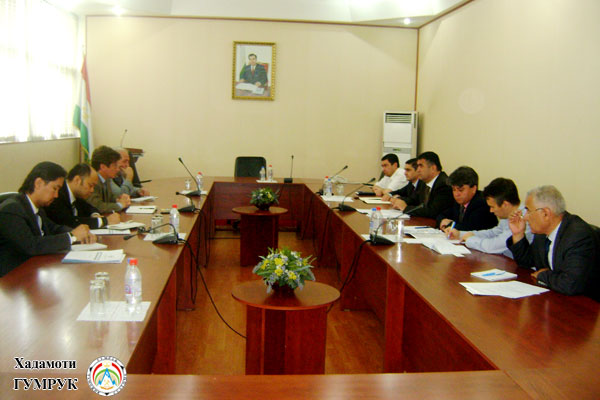
This issue was reportedly discussed at a meeting of Khurshed Karimzoda, the first deputy head of the Customs Service under the Government of Tajikistan with ADB representatives Oleg Samukhin and Zoran Veselinovic.
The sides discussed issues related to implementation of the Central Asia Regional Economic Cooperation (CAREC) Regional Improvement of Border Services Project. The project was launched in 2014 and is expected to be finished in 2018.
The project supports the CAREC transport and trade facilitation strategy, which aims to streamline transport, trade logistics, customs, and other border control operations to increase cross-border trade in Central Asia.
From 2007 to 2009, CAREC ministerial conferences endorsed a transport and trade facilitation strategy and its implementation action plan, and a plan to address physical infrastructure needs at border crossing points (BCPs) along priority CAREC corridors, and to establish and network national single window (NSW) facilities. The goal was to develop seamless corridors to enhance economic competitiveness of the region
BCPs are identified as the major impediments to cross-border transport and trade in the CAREC region.
In Tajikistan, at the Guliston border crossing point (BCP), located in a key conduit of the regional Osh–Khujand highway, facilities will be upgraded and equipped, including infrastructure for vehicle inspection and two new border check posts, and water supply and sewerage facilities provided.
The project supports the establishment of NSW facilities to streamline data submission to international trade regulators, and ensure conformity of submitted data with the requirements of business processes in various stages of trade and transport in the international supply chain. International standards will be adopted to ensure regional interoperability.
The project provides funding to engage project management consultants for the project implementation unit (PIU) of each project country to provide oversight and supervision.