The 2026 Asian Boxing Championships, set to take place from March 30 to April 11 in Mongolia’s capital, Ulaanbaatar, are expected to be one of the key tournaments of the season and the first major continental event under the auspices of World Boxing.
The new governing body, which now oversees Olympic boxing, is shaping a new global system for the sport. In this context, the tournament in Mongolia goes beyond a traditional continental championship, serving as a starting point for a new competitive hierarchy ahead of the 2028 Olympic Games.
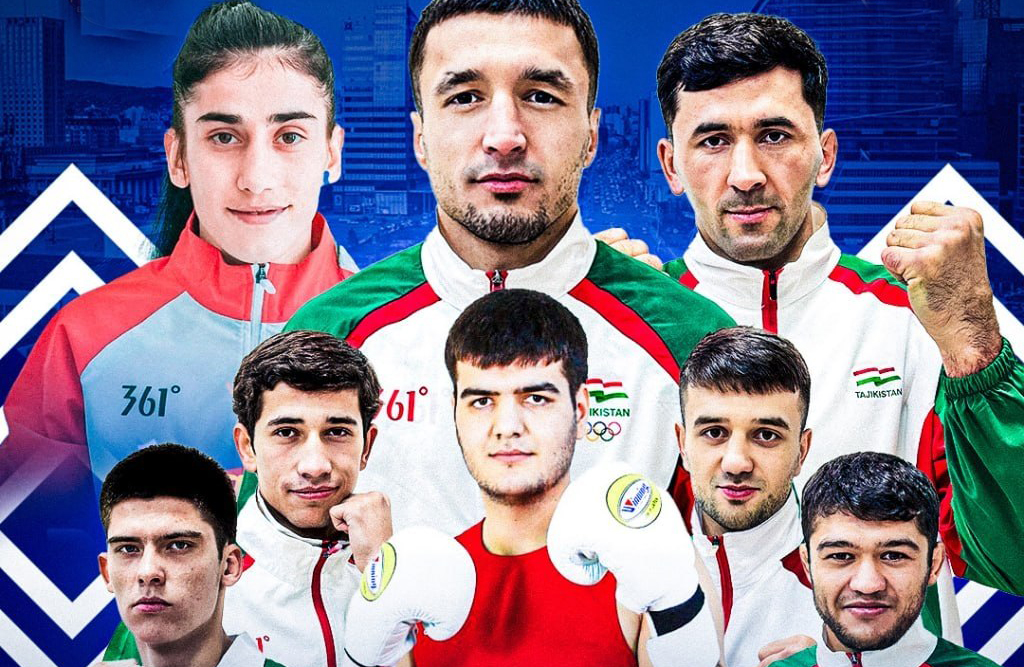
Tajikistan will be represented by a nine-member squad led by coaches Saidkhuja Mamourov and Khurshed Jurayev. The men’s team includes Anushervon Fozilov (55 kg), Akmal Ubaidov (60 kg), Ruslan Ghafourov (65.5 kg), Shamsher Saidov (70 kg), Nekrouz Salimov (80 kg), Parviz Karimov (90 kg), and Muhammad Abroriddinov (over 90 kg).
In the women’s competition, Tajikistan will be represented by Mijgona Samadova (57 kg) and Bibinishtamo Kholova (60 kg).
The tournament itself will run for nearly two weeks and will feature competitions in Olympic weight categories for both men and women under a single-elimination format. As is customary in amateur boxing, semifinalists will receive bronze medals, while finals will determine the champions in each division.
Bouts will follow the standard format of three three-minute rounds, judged using the 10-point scoring system in line with international standards.
Ahead of the tournament, an international training camp was held in Ulaanbaatar, allowing teams to conduct joint training sessions and sparring while adapting to local conditions.
Top Asian teams, including Kazakhstan, Uzbekistan, Japan, China, India, and South Korea, are expected to compete, ensuring a high level of competition.
Experts note that the championship will serve as an early benchmark in the new qualification system. While direct Olympic quotas may not be at stake, results will influence athlete rankings and future participation in qualification events.
For Tajikistan, the tournament holds particular importance. The national team has shown steady progress in recent years, with strong performances at major competitions, including the Asian Games.
The Ulaanbaatar event will be a key test under the new system, where competition is expected to intensify and standards become more demanding.
Participation itself is also strategically important, as national teams seek to establish their positions in the evolving global boxing structure.
For Tajik boxers, this is an opportunity to gain international exposure, build experience, and lay the groundwork for the Olympic cycle leading to 2028.