

In its last issue, under “Cooperationâ€? appendix, the Asia Plus newspaper reported on the experience of local governance at the jamoat level, that is, about the best practices and approaches applied on local development. This time, we will tell you about the experience of local development and the approach used in the communities of the Islamic Republic of Afghanistan, which were part of the target group under the implemented UNDP project «Tajikistan — Afghanistan Poverty Reduction Initiative,» financed by the Government of Japan.
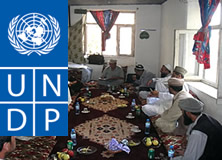
A key component of the project in Afghanistan was the work with local community to identify problems at the local level, and participatory planning, which was carried out by the French NGO ACTED (Agency for Technical Cooperation and Development).
As reported by Rosa Kurbanova, the Head of ACTED branch in Khatlon region, the objective of this component was to strengthen the capacity of local government structures at the community level and to strengthen the relationship between communities and government agencies at the Jamoat and local authorities.
In general, it should be noted that the project activities were carried out in two areas: provision of more opportunities and conditions for economic development, reduction of poverty and improvement of living conditions in the border settlements, and the second — improving social and community infrastructure and capacity of local communities, government authorities and civil society in the districts on both sides of the border. On the Afghan side, the project was carried out in Darkat and Yangi Qala districts of Takhar province.
For the villages of Afghanistan, like for the jamoats of Tajikistan, development plans involve the identification of priority issues and actions for addressing them, according to the needs of local communities, which, as a rule, leads to improved economic development. Thus, 15 development plans were developed while working in 10 villages in Yangi Qala and 5 villages of Darkat district. Throughout the work of TAPRI, all plans were developed using the integral «joint approach», which means that the plans were developed with the involvement of all sectors of society. Preparing village development plans was a significant achievement for the people living in the region who were the victims of an unstable situation, where local authorities were unable to provide public services.
ACTED set the goal to overcome these problems, and the first step in this process was the work with the rural development communities (RDC) and conducting the workshop «From humanitarian assistance to sustainable development», where the RDC learned the process of developing effective partnerships, as well as how to set the long-term development priorities. With the help of rural development plans, RDC also received full financial autonomy of their villages, which according to the National Solidarity Program, an initiative of the National Government, were aimed at reconstruction and development of almost 5000 villages in Afghanistan.
It should be noted that the project success and its evaluation depended on the participation of rural communities after its completion. For example, for the first time, the studies were conducted in the villages by the RDC to identify challenges and «gaps» in development. According to the survey results, the project specialists managed to create a complete profile of the village (which includes detailed demographic information), which allows to identify the resources and opportunities. The next step was streamlining these issues into the village development plans. It should be noted that with the help of specialists, RDC in Afghanistan learned to tactfully apply the principles used by the mahalla (neighborhood) committees in Tajikistan and it was one of the key factors of success in developing 10 Rural Development Plans in Yangi Qala, and in 5 villages of Darkat village.
Despite the above mentioned achievements, and the success in the use of best practices, a significant work needs to be accomplished. It is planned to further conduct activities to support local development processes and a greater involvement in this process of all society sectors, both in Afghanistan and Tajikistan.
PREPARED WITH ASSISTANCE OF UNDP TAJIKISTAN