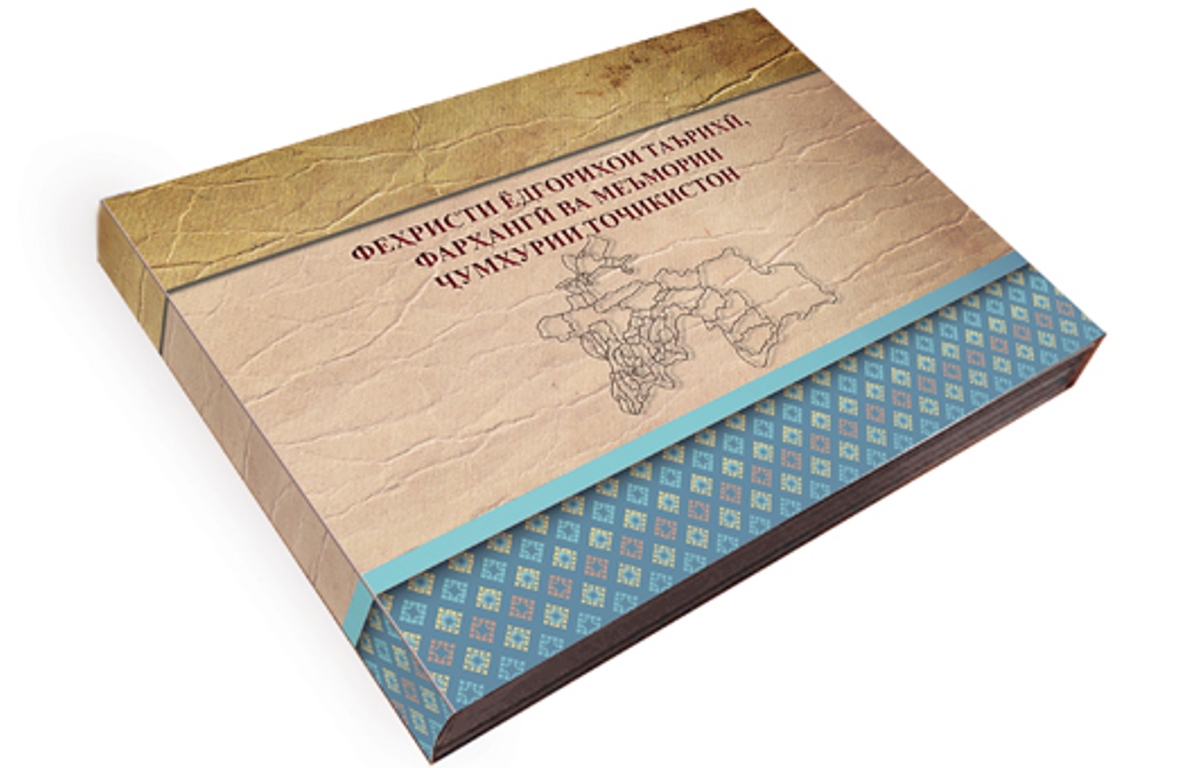
The Ministry of Culture of Tajikistan has updated the list of Tajik historical and cultural relics, adding more than 1,000 new sites to the list.
According to the ministry’s website, the list of Tajik historical and cultural relics now includes 3,047 sites but their number can be increased.
The first list of historical and cultural relics of Tajikistan was prepared in 1950 and it included 205 historical and cultural relics.
For the first time, the list was updated in 1971 and the number of the country’s historical and cultural relics was increased to 2,020.
The Ministry of Culture updated the list of Tajikistan’s historical and cultural relics last year, bringing the number of sites considered to be of historical and cultural significance to 3,047.
Recall, the Ministry of Culture noted in April 2016 that only four sites in Dushanbe are considered to be of historical and architectural significance. These sites reportedly include the building of the Opera and Ballet Theater, the building of the Parliament, the Ismoili Somoni Memorial Complex (1999), and the Ancient Settlement of Dushanbe (3rd Century BC).
Plans to demolish some of the most popular landmarks in Dushanbe have sparked outrage. In a desperate bid to halt the destruction, hundreds of city residents in October 2015 signed an online petition addressed to President Emomali Rahmon and Dushanbe Mayor Mahmadsaid Ubaidulloyev.
Reacting to a wave of Internet grumbling, Nourali Saidzoda, First Deputy Head of the Committee for Construction and Architecture under the Government of Tajikistan, told Asia-Plus that time that the buildings selected for demolition were of negligible value and needed replacing with modern hi-tech substitutes.
Thus, Tajikistan’s oldest, Mayakovsky Theater, was demolished last year. In its first incarnation, the building that went up in the late 1920s in a shabby village-cum-town then called Stalinabad served as the House of Peasants, a clubhouse for farmers. The construction was the first completed in Dushanbe as a “capital building” — that is to say designed with foundations for long-term use. It was in the House of Peasants that on October 19, 1929, Tajik statesman Nusratullo Makhsum declared the creation of the Tajik Soviet Socialist Republic.