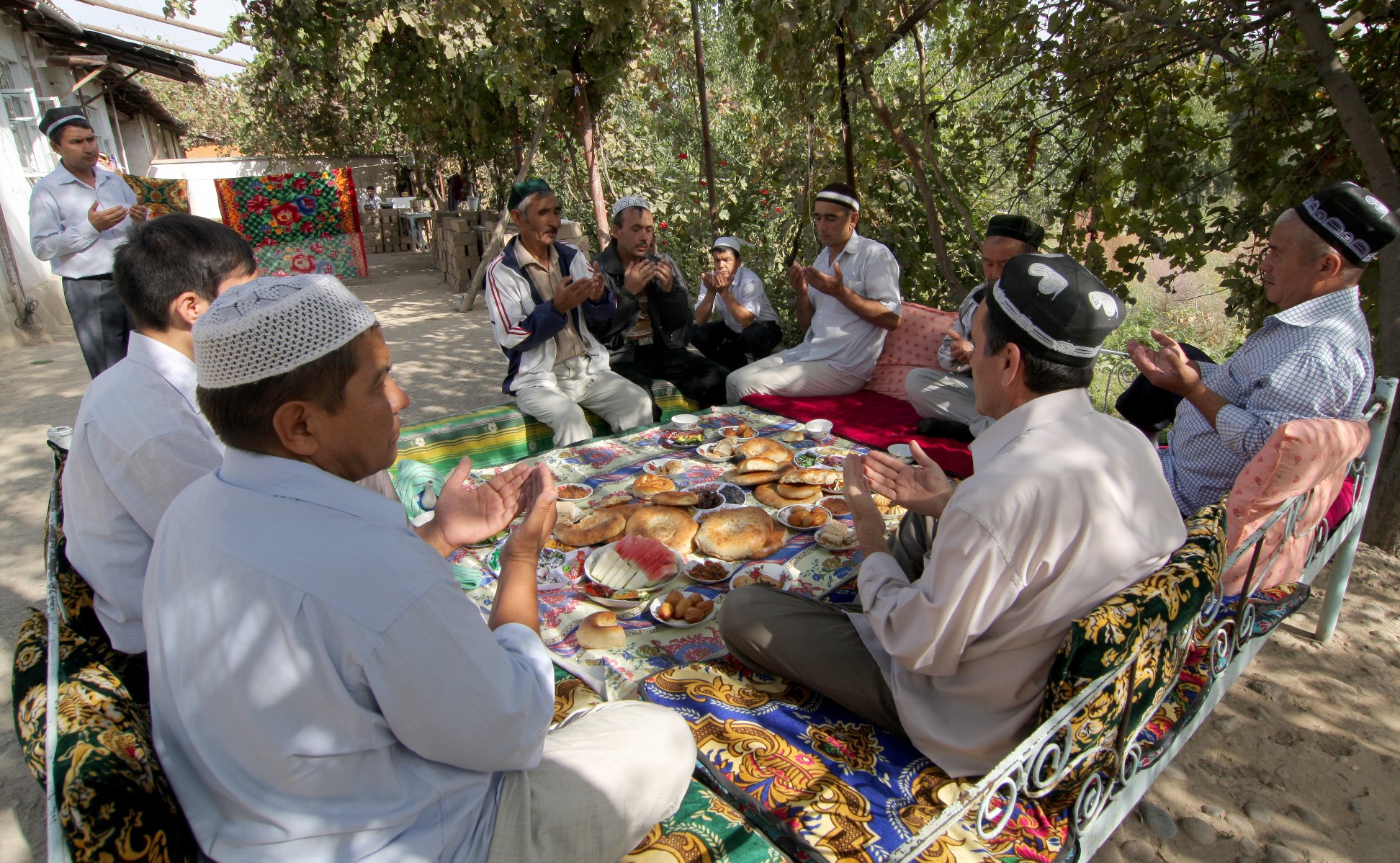
Ahead of Idi Ramazon or Eid ul-Fitr (Muslim holiday that marks the end of Ramadan, the Islamic holy month of fasting), residents of Tajikistan are concerned over the talk that the authorities intend to make restrictions on celebrations of Muslim holidays in the country.
Although the Committee on Religious Affairs (CRA) says that there are only recommendations that people should not be wasteful while laying the holiday table, the practice shows that recommendations frequently turn into firstly unofficial and then official bans.
The CRA also denies the talk that the authorities intend to ban children from going from house to house congratulating people on Eid ul-Fitr as unfounded.
Meanwhile, feelings are heated up by the fact that the issue of the necessity of regulating the Muslim holidays is raised by people participating in the “Free Microphone” program, and the number of people proposing regulation of the Muslim holidays is increasing.
The CRA says the main purpose of that program is to know people’s wishes and take them into account while making amendments to the country’s law on traditions and rituals, which regulates private celebrations, including religious celebrations.
“It is a kind of public discussions. Each person may come to a microphone installed in a public place and express his/her proposal on making amendments to the law on traditions and rituals,” Afshin Muqim, a spokesman for the CRA, said.
This year, Tajikistan will celebrate Idi Ramazon or Eid ul-Fitr on June 26.
Eid ul-Fitr is a Muslim holiday that marks the end of Ramadan, the Islamic holy month of fasting. Eid is an Arabic word meaning “festivity”, while Fitr means “to purify”; and so the holiday symbolizes the purification after completing the fasting month, which is after the end of the Islamic month of Ramadan, on the first day of Shawwal.
Eid ul-Fitr lasts for one day of celebrations and is sometimes also known as the “Smaller Eid": as compared to the Eid al-Adha that lasts three days following the Hajj and is casually referred to as the “Greater Eid.”
On this day, Muslims attend the special Eid prayer (salah). An obligatory charity is paid to the poor and the needy before performing the ‘Eid prayer by all those adult Muslims who are required to pay Zakat. Eid prayer is performed in congregation in open areas like fields, squares etc or at mosques.
After the prayers, people visit their relatives, friends and acquaintances. Gifts are frequently given; it is common for children to be given small sums of money by adult relatives or friends. It is also common for children to salam parents and adult relatives; they usually get sweeties or money from the adult relatives or friends.