The work on repairing the Dushanbe-Kulob-Darvoz-Khorog highway is nearing completion and it is expected to be reopened for traffic today, according to the Gorno Badakhshan Autonomous Region (GBAO) local government.
At end of last week, several heavy trucks and special machines were reportedly sent to the flooding site in GBAO’s Darvoz district from the site for construction of the Roghun hydroelectric power plant (HPP).
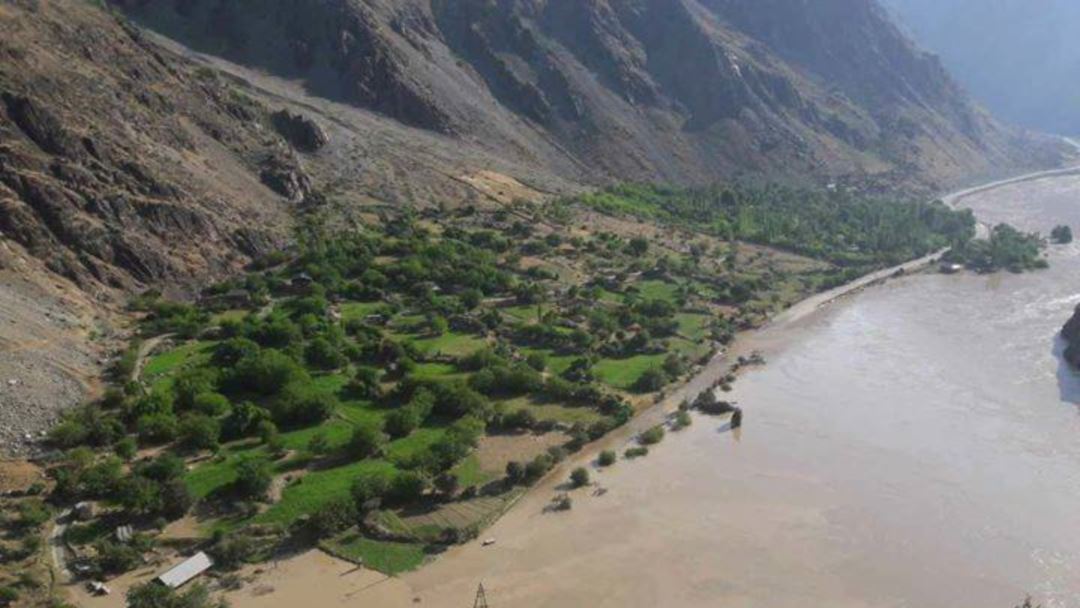
Recall, the mudflows that occurred on the Afghan bank of the Panj River on July 8 damaged dozens of houses on both sides of the Tajik-Afghan border and blocked the section of the Dushanbe-Khorog highway between the villages of Shirgovad and Yoged.
The mudflows carrying the mass of slurry with them reportedly blocked the river, forming a lake. The river burst the banks, flooding the Khostav village in GBAO’s Darvoz district.
Twenty-two houses were reportedly damaged by the flooding. No injured was reported. The flooding victims were temporarily housed in tents.
Russian servicemen on July 13 tried to destroy the mass of slurry that blocked the river using more than 100 kilograms of TNT, but they failed.
Colonel Yaroslav Roshchupkin, an aide to the commander of Russia's Central Military District, says the Central Military District command has received an appropriate appeal from Tajikistan’s authorities.
The mudflows left several people dead in Afghan Darvaz, according to the press center of Russia’s Military Central District.
Later on, Chinese specialists were reportedly engaged in rearing the Dushanbe-Kulob-Darvoz-Khorog highway.
The highway connecting Dushanbe and the GBAO administrative center, Khorog, through Kulob has been closed for traffic, but people can use the highway connecting Dushanbe and Khorog through the Sangvor (formerly Tavildara) district and the Khoburabot Pass.
The issue of resettlement of disaster-affected families to safer places is still under consideration, according to the GBAO administration.