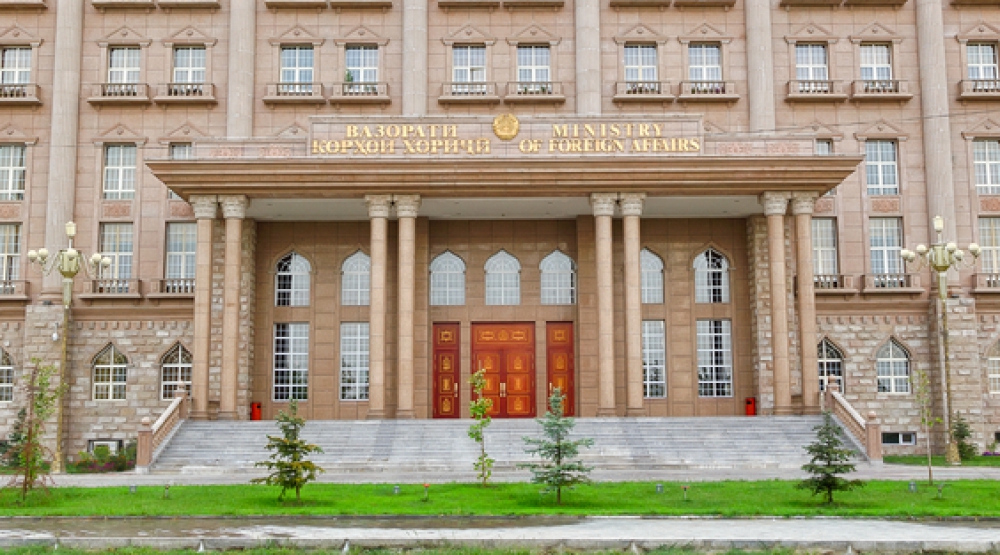
The Ministry of Foreign Affairs of the Republic of Tajikistan shares international community’s concern about a reported nuclear test by North Korea and states that provocative actions of Pyongyang pose serious threat to international and regional security, says a statement posted on the Tajik MFA’s website.
“Tajikistan supports efforts taken to settle the nuclear crisis on the Korean Peninsula through political and diplomatic means and calls on the Democratic People's Republic of Korea to strictly implement norms of international law and resolution of the UN Security Council,” the statement notes.
Recall, the Democratic People's Republic of Korea conducted its sixth nuclear test on September 3, 2017. The United States Geological Survey reported an earthquake of 6.3-magnitude not far from North Korea's Punggye-ri nuclear test site. South Korean authorities said the earthquake seemed to be artificial, consistent with a nuclear test. The USGS, as well as China's earthquake administration, reported that the initial event was followed by a second, smaller, earthquake at the site, several minutes later, which was characterized as a collapse of the cavity.
North Korea said that it detonated a hydrogen bomb that could be loaded onto an intercontinental ballistic missile (ICBM). In the announcement it was claimed that the warhead had a variable yield “the explosive power of which is adjustable from tens kiloton to hundreds kiloton … which can be detonated even at high altitudes for super-powerful EMP attack.” A later technical announcement called the device a “two-stage thermo-nuclear weapon” and stated experimental measurements were fully compatible with the design specification, and there had been no leakage of radioactive materials from the underground nuclear test.
The United Nations Security Council met in an open emergency meeting on September 4, 2017, at the request of the US, South Korea, Japan, France and the UK. South Korea, China, Japan, Russia, the United States, Canada, Philippines, Indonesia, Singapore and Malaysia voiced strong criticism of the nuclear test.