The Tajik Soviet Socialist Republic was founded 88 years ago, on December 5, 1929. Today we briefly review with what Tajikistan entered the Soviet Union and with what it quitted the Union.
Agriculture
Historically, Tajikistan was an agrarian country. Although industry had been developing during the Soviet era, agriculture had remained the primary sector of Tajikistan’s economy. By the end of the 1980s, the agricultural lands had occupied one-third of the republic’s territory. By 1986, there had been some 160 collective farms and sovkhozes (state-owned farms) operating in Tajikistan.
By 1986, a total area of irrigated lands in Tajikistan had reached 662,000 hectares and the agrarian sector accounted for some 65 percent of the republic’s gross domestic product (GDP).
Cotton was the main agricultural crop of Tajikistan. In 1913, cotton production in Tajikistan amounted to only 32,300 tons. In 1968, Tajikistan’s cotton production reached 640,000 tons, and in 1986, cotton production in Tajikistan reached nearly one million tons.
By the way, Tajikistan this yielded little more than 390,000 tons of raw cotton.
Industry
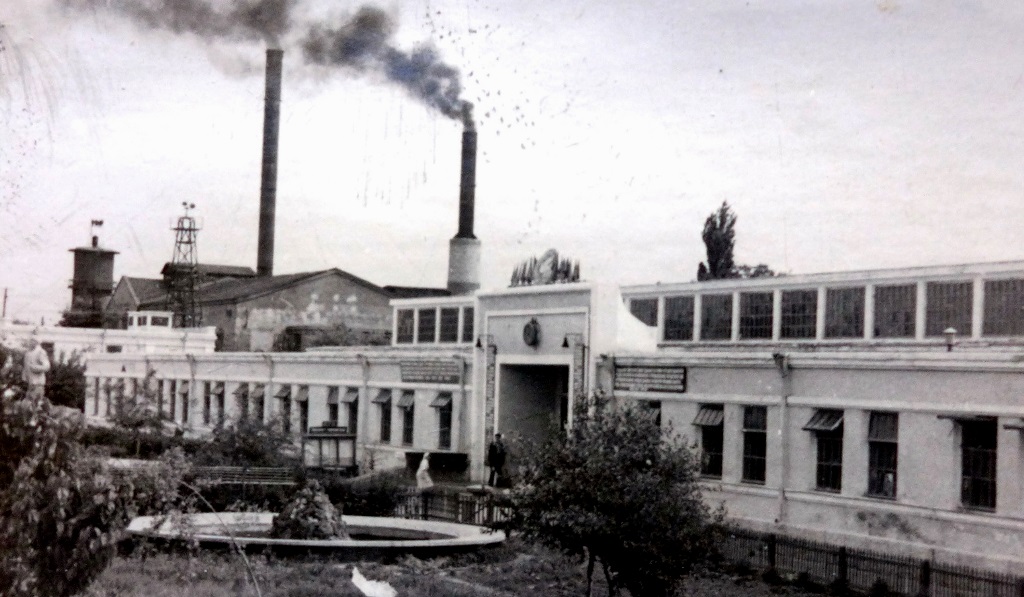
During the Soviet era, some 400 industrial enterprises had been built in Tajikistan. By the end of the 1980s, Tajikistan’s industry had nearly 100 sectors. Mining, textile production, and metal-based manufacturing had been the leading sectors of Tajikistan’s industry and their goods had been exported to other Soviet republics and 35 foreign countries.
Thus, the Dushanbe textile mill had produced more than 100 million meters of tissues per year. Fabrics of the Leninabad silk mill had been be sold out throughout the whole Soviet Union.
By the end of the 1980s, the volume of Tajikistan’s industrial production had increased 18 times compared to 1940 and 157 times compared to 1913.
The Tajik aluminum smelter was introduced into operation in 1975. In 1989, the Tajik aluminum smelter produced nearly 460,000of primary aluminum.
In 2016, the Tajik aluminum plant produced only some 130,000 tons of primary aluminum.
The share of the industrial sector in Tajikistan’s GDP decreased from 33 percent in 1987 to 15 percent in 2016.
Energy
Energy is of great importance for development of industry. During the Soviet era, dozens of hydroelectric power plants (HPPs) had been built in Tajikistan. The Nurek, Baipaza, Golovnaya and Qairoqqum HPPs are the largest hydropower plants in Tajikistan.
Construction of the Roghun hydroelectric power plant had also begun in Soviet era.
By the end of the 1980s, annual generation of electricity in Tajikistan had reached 17.5 billion kWh.
In 2016, Tajikistan produced 17.3 billion kWh of electricity, 200 million kWh fewer compared to the 1980s, while Tajikistan’s annual requirements in electricity have increased as the country’s population has grown by more than three million people over the past twenty-five years.
Transport
During the Soviet era, thousands kilometers of highways and railroad had been built in Tajikistan. A wide road building began in Tajikistan in the 1920s.
The Dushanbe-Termez railway was introduced into operation in 1929. The way connecting Khorog, the capital of the Gorno Badakhshan Autonomous Region (GBAO) and the Kyrgyz city of Osh was built in 1934 and the road connecting the Tajik capital, Dushanbe, with Khorog was built in 1940.
By the end of the 1980s, practically all built-up areas in the republic had been connected with each other by motor roads.
During the civil war of 1992-1997, many roads in the country had been partially damaged. To rehabilitate sections of the roads that had been built in the Soviet era, Tajikistan has been forced to attract international and foreign loans and grants for a total value of some 1 million U.S. dollars.




