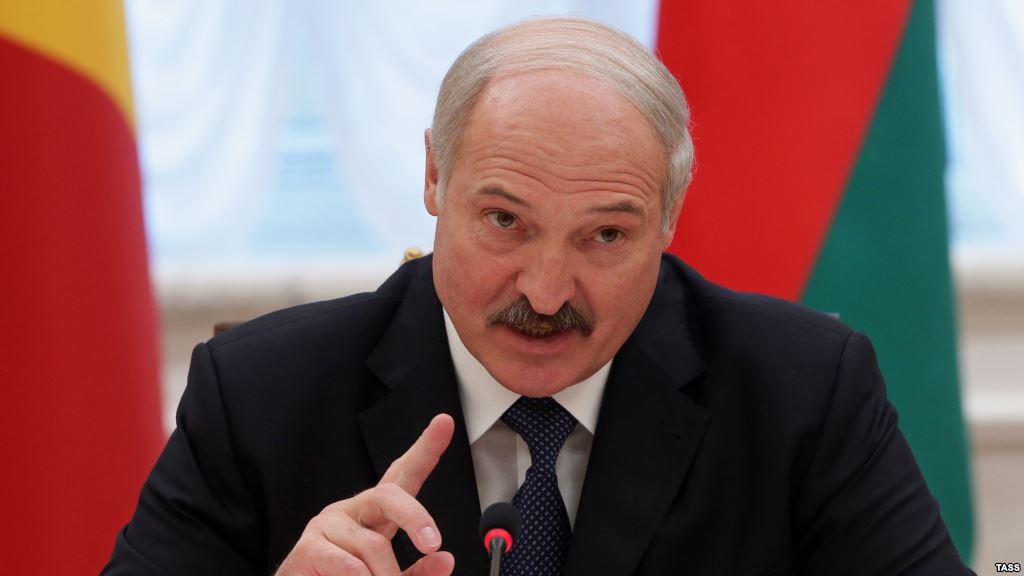
Belarusian President Alexander Lukashenko said on February 13 that the Collective Security Treaty Organization (CSTO) member nations ought to carry out a joint work on modernization of their armies, according to Belarusian news agency BelTA.
“We have managed to take a number of measures aimed at development of the armed forces of the CSTO member nations, expansion of military and technical cooperation between them and strengthening of their positions in the international arena,” Belarusian president was quoted as saying.
“Generally speaking, we have been serious underestimating the danger of the situation that has arisen. Russia is modernizing its armed forces for itself. We, together with other member nations, have trying to do something to modernize [our armed forces]. Each to its own,” Lukashenko said.
He further noted that Russia could play an important role in modernization of the armed forces of the CSTO member nations.
The regional security organization was initially formed in 1992 for a five-year period by the members of the CIS Collective Security Treaty (CST) — Armenia, Kazakhstan, Kyrgyzstan, Russia, Tajikistan, and Uzbekistan, which were joined by Azerbaijan, Georgia, and Belarus the following year. A 1994 treaty reaffirmed the desire of all participating states to abstain from the use or threat of force, and prevented signatories from joining any “other military alliances or other groups of states” directed against members states.
The CST was then extended for another five-year term in April 1999, and was signed by the presidents of Armenia, Belarus, Kazakhstan, Kyrgyzstan, Russia, and Tajikistan. In October 2002, the group was renamed as the CSTO. Uzbekistan that suspended its membership in 1999 returned to the CSTO again in 2006 after it came under international criticism for its brutal crackdown of antigovernment demonstrations in the eastern city of Andijon in May 2005. On June 28, 2012, Uzbekistan announced that it has suspended its membership of the CSTO, saying the organization ignores Uzbekistan and does not consider its views.
The CSTO is currently an observer organization at the United Nations General Assembly.