

Tajik authorities call on people to wait a bit until the newly established national transfer processing center gathers momentum.
Sharif Rahimzoda, Chairman of the Majlisi Namoyandagon (Tajikistan’s lower chamber of parliament) Committee on Economics and Finance, notes that the establishment of the national transfer processing center meets the country’s interests.
He remarked this at a press club of the economic journal Tavozun that took place in Dushanbe on December 19.
Rahimzoda calls to wait a bit until the newly established money transfer regime gathers momentum.
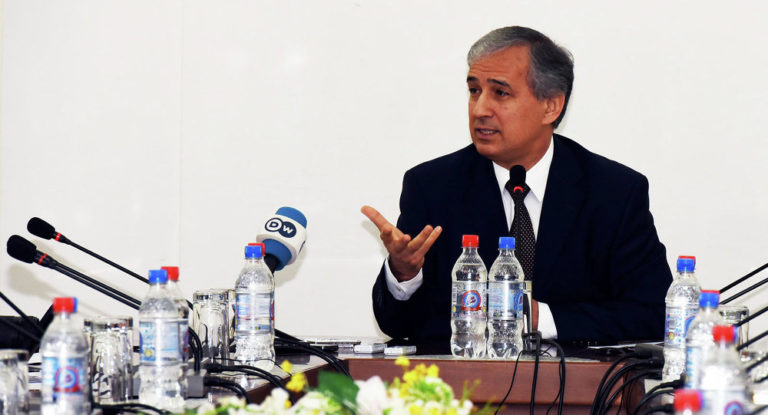
“Of course, certain difficulties arise in the early days. We have to wait a while and problems will be addressed,” Rahimzoda said.
He attributes existing problems to activities of the money transfer company Zolotaya Korona, which had accounted for around 80 percent of wire transfers before the establishment of the national transfer processing center in Tajikistan.
“Young people say they sent money through Zolotaya Korona but their relatives could not receive them. This wire company has its representative office in Tajikistan and they have to apply to this office for their money,” Tajik MP noted,
According to him, the National Bank of Tajikistan (NBT) has proposed Zolotaya Korona “to participate in market but not with the share that she had previously.”
The national transfer processing center was established on December 3 and Unistream and Contact money transfer companies have reportedly abided by the rules and been integrated into the center.
Tajik central bank says Western Union is also expected to be integrated into the transfer processing center in the near future.
Zolotaya Korona refused to join the center justifying its decision by saying that the new procedure is at odds with Russian legislation.
Meanwhile, appeals to the President, the Parliament and the Supreme Court with solicitation to get the previous money transfer system back have appeared in social media networks. The appeals, in particular, note that the new system “has led to a sharp deterioration in living conditions of hundreds of thousands of migrants, who are forced to work abroad due to lack of decent wages in the homeland.”



