

Recent cold weather in Tajikistan has caused a crisis in power supply and greatly increased the population’s problems. People are complaining about a lack of electricity, while officials claim that the cause was a sudden increase in demand for electricity from the population itself, which led to an accident on the country’s high-voltage power lines.
At about 11:10 a.m. on March 1, an accident occurred in the country’s power grid and left most of Tajikistan’s population without electricity, with the exception of the city of Bokhtar, the capital of Khatlon province, and the Gorno Badakhshan Autonomous Region (GBAO).
Recall, the GBAO is provided with electricity by local hydroelectric generators, which are operated by the Pamir Energy Company.
Households in Dushanbe reported power outages at around 11 a.m. local time. Many homes were also left without heating and hot water, both of which are supplied by means of a centralized system.
In addition to power outages, heating, drinking water, cell phone service and the Internet also failed.
CABAR.asia reports that Dushanbe residents said the lack of electricity during the cold season made their lives more difficult and costs more expensive.
After a long silence, Dushanbe’s Electricity Distribution Network said a few days after the accident that the cause of the power outage in the capital and most regions of Tajikistan was an accident on the country’s main high-voltage power lines.
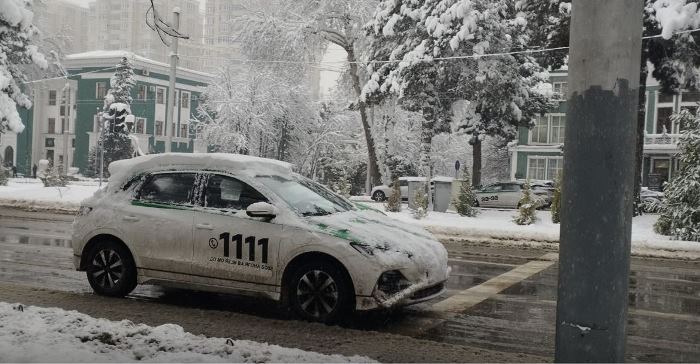
An official with Dushanbe’s Electricity Distribution Network, Parviz Qutbiddinov, explaining the situation, told the state-run Dushanbe TV channel that due to the sudden cold weather and heavy snowfall, electricity consumption in Dushanbe has increased many times. According to him, some electrical equipment was suddenly under heavy load and, due to the unprecedented increase in electricity use by the population, led to accidents throughout the country.
Meanwhile, experts have a different opinion on the causes of the accident. In an interview with CABAR.asia, energy expert Kamoliddin Sirojiddinov also speculated that the accident could have been caused by excessive use of electricity. But he disagrees that the load is related to the population.
Sirojiddinov reportedly believes that the accident was the fault of some large production organization, “but officials are not talking about it.”
The expert noted that demand for electricity increases in bad weather, and depending on the situation, other power plants or some additional units should be activated.
Abdullo Ashourov, a Tajik journalist who has been following the issue for years, considers the emergence of accidents and electricity restrictions in Tajikistan to be systemic problems.
“The lack of specialists, old high-voltage power lines left over from the Soviet era, construction of new high-rise buildings and corruption in the industry lead to such situations,” Ashourov told CABAR.asia in an interview.
In addition to the reasons the authorities put forward every year, such as weather and declining water levels in the Vakhsh River, Tajikistan’s electricity shortage is due to inefficient management, Ashourov noted.
“Electricity production is indeed increasing, but Barqi Tojik (Tajikistan’s power generation company) is more interested in exporting electricity abroad than in selling it to consumers inside the country,” he said.
The financial situation of Barqi Tojik and its subsidiaries is not good; they owe hundreds of millions of somonis to the budget and suppliers, and this debt is increasing every day.
“So they are motivated to sell as much electricity abroad as possible at a higher price,” Ashourov added.
This is not Tajikistan’s first case of large-scale accidents; similar incidents occurred in 2016 and in previous years.
Recall, nearly all of Tajikistan was hit by a blackout on October 28, 2016, following an unexpected outage at its largest power producer, the Nurek hydroelectric power plant.
The blackout affected the capital city Dushanbe and all other areas of the country except for the GBAO, which receives electricity from another supplier, Pamir Energy Company.
The power went off at about 18:30 local time and came back on three hours later.



