
In Tajikistan, high-quality saffron is now available for purchase, thanks to the domestic company AVAS Engineering, which is marketing this product under the Zafaron project.
The product was showcased at the "Tajikistan-2024" International Universal Exhibition and received positive reviews.
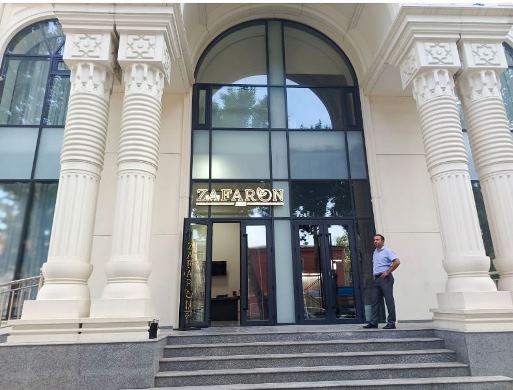
In Dushanbe, AVAS Zafaron has opened a specialized store at 141/1 Roudaki Avenue, where customers can buy their saffron. The saffron is packaged in elegant boxes of 1, 2, or 3 grams. It can be brewed as tea or used as a spice for various dishes and beverages.
Among the several varieties of saffron, "Nigin" is considered one of the best. This variety is cultivated by the Tajik company in the Bakhmal district of the Jizzakh region in Uzbekistan on the plantations of the Uzbek-Tajik joint venture BMB – AVAS Zafaron LLC.
AVAS Zafaron is also inviting interested parties to collaborate and is looking for distributors across different regions of Tajikistan. The cost of 1 gram of saffron starts at 130.00 somonis.
The introduction by AVAS Zafaron of high-quality saffron marks a significant step in promoting Tajikistan’s agricultural products. The company's efforts to expand its market and seek partnerships demonstrate its commitment to making Tajik saffron a recognized and esteemed product both domestically and internationally.
Recall, entrepreneurs from Tajikistan jointly with their Uzbek partners created saffron plantations already got the first harvest from saffron plantations in Tajikistan in 2021.
Founder and director-general of AVAS Engineering Company, Mr. Azim Hakimov, noted at the time that saffron bulbs were planted in Tajikistan on a trial basis. According to him, the experiment was successful, the saffron bulbs took root well.
“An agreement with Uzbek partners on establishing a joint saffron growing enterprise – BMB AVAS Zafaron — was concluded in July 2021,” Hakimov told Asia-Plus in an interview in December 2021. An estimated budget of the project is reportedly more than 3 million U.S. dollars.
“The bulbs were purchased in Italy,” said Hakimov. “We planted them in October and got the first harvest in early December. Each of flowers has 4-5 stigmas, two-three of them are red and two are yellow. The red ones are the most expensive.”
The main saffron plantation of 50 hectares is located in Uzbekistan’s Jizzakh region, while in Tajikistan, two experimental saffron plantations have been created in Panjakent (Sughd province) and Roudaki district (central Tajikistan).
The cultivation and harvesting of saffron, safflower petals and other medicinal herbs and spices in Tajikistan for exports to EU countries are considered amongst the most promising investment niches in the horticulture sector of Tajikistan.
There are no commercial saffron plantations in Tajikistan yet, but there is a keen interest in growing this plant. The dried stigmas of saffron are used as a spice, colorant, and raw material for the pharmaceutical industry. This product is also called “red gold” because it is the most expensive spice in the world. Wholesale prices for saffron range from US$1,800 to US$10,000 per kg, and even up to $40,000/kg in retail. The main saffron producers in the world are Iran, Spain, Afghanistan, and Pakistan.
Saffron plantations are established in 4-5 years. An average of four kilograms of valuable raw materials is produced from each hectare in the first year. By the second year, the yield of saffron reaches 7-8 kg and in subsequent years 15-16 kg/ha. To get one kilogram of spice, you need to grow, collect and process 150,000-200,000 flowers. The quality of the spice depends on the maturity of the flowers; higher grades of these products are obtained from the stigma of the newest saffron flowers.



