In early August, the Taliban-led government of Afghanistan announced plans to delimit borders with neighboring Central Asian countries, including Tajikistan, as part of a new strategy.
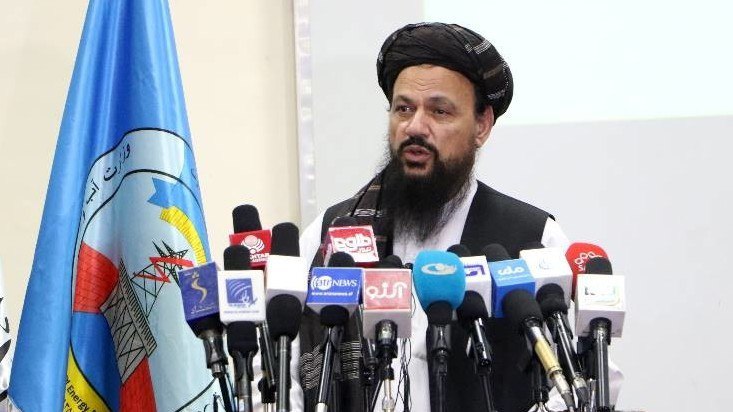
Mullah Abdul Latif Mansour, the Acting Minister of Energy and Water Resources of Afghanistan, stated that the need for border delimitation arose due to natural disasters, particularly floods, which have eroded some sections of the border. He emphasized that water management would not harm neighboring countries.
Farooq Azam, an advisor to the Afghan Ministry of Energy and Water Resources, stressed that the new demarcation would be based on historical borders but would utilize modern approaches and technologies. He also assured that Afghanistan does not intend to harm neighboring states.
As of now, there has been no official response from the governments of Tajikistan, Uzbekistan, or Turkmenistan, which share borders with Afghanistan along the Amu Darya River.
Tajikistan also recognizes the need for redemarcation
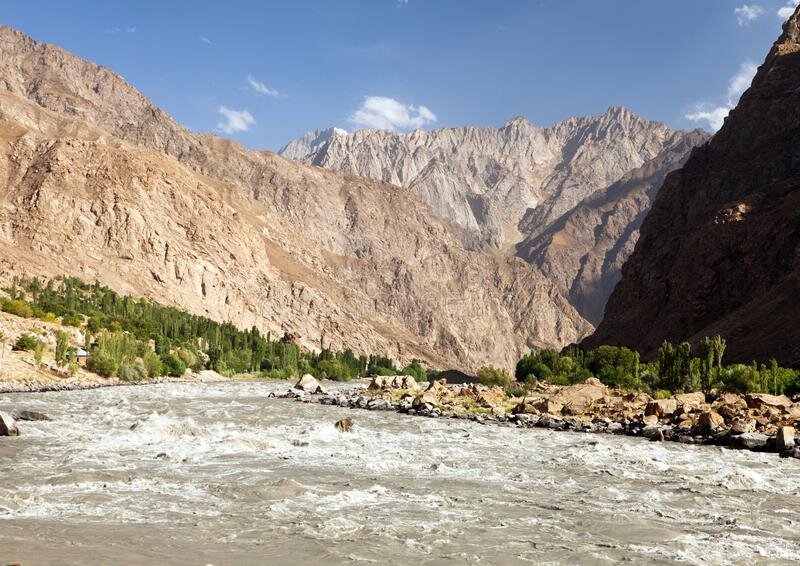
Two years ago, Orif Khojazoda, the head of Tajikistan’s State Committee for Land Management and Geodesy, spoke at a press conference about the status of Tajikistan’s borders with neighboring countries, including Afghanistan. He noted that while issues related to the delimitation (determining the boundary line) and demarcation (placing border markers) of the Tajik-Afghan border have been resolved, the river boundary requires redemarcation from time to time due to shifts in the Panj River’s course.
According to Tajikistan’s Foreign Ministry, border issues with Afghanistan are governed by agreements: between the USSR and Afghanistan from June 13, 1946, and June 16, 1981; between Tajikistan and Afghanistan on state borders from December 22, 1993; agreements on border crossings from April 27, 2005, and amendments made on October 21, 2013.
International practice dictates that borderlines along rivers and streams shift in accordance with natural changes in the waterways. However, any territorial changes due to natural phenomena do not alter the original boundary unless a special agreement is made between the parties.
In 2016, Tajikistan’s Foreign Ministry reported that due to geographical and technical factors (such as changes in the Panj River’s course and the need to update border markers), redemarcation had become necessary. A joint Tajik-Afghan redemarcation commission was previously working on this issue, but it ceased operations after the Taliban came to power.
The Taliban's primary goal is international recognition, not the border
Tajik expert on Afghanistan and Iran, Qosim Bekmuhammad, shared his views with Asia-Plus. He explained that the issue of defining and marking the state border between Tajikistan and Afghanistan was resolved during the Soviet era and concluded with the signing of the 1993 Agreement between the two countries, leaving no ambiguities. Of the 1,374.2 kilometers of the Tajik-Afghan border, 1,184.4 kilometers are water boundaries, with only 189.8 kilometers being land borders.
Bekmuhammad noted that the water boundary mainly runs along the Amu Darya River, but natural events such as floods can erode its banks or alter its flow, creating islands and necessitating redemarcation. Typically, such matters are addressed diplomatically between experts from both countries. The Taliban's recent emphasis on a "new strategy" (the specifics of which remain unclear) for border definition with Tajikistan, Uzbekistan, and Turkmenistan, which have also been affected by floods, likely holds political significance.
"Negotiations with the three mentioned countries at a single table, whether in Kabul or their capitals, would be a significant political achievement for the Taliban, who remain internationally isolated," said the expert. "For the current Kabul administration, the political implications are more important than the border issue, which is why they are pursuing this topic both domestically and internationally."
Bekmuhammad also highlighted that Afghanistan’s primary border disputes are with Pakistan, not Central Asian countries. Border issues between Afghanistan and its neighbors in the region are generally tied to natural events. These natural phenomena, however, do not justify broader claims, such as future territorial expansion by the Taliban. Modern technological advancements allow for precise boundary identification under any conditions, leaving no room for territorial disputes based on border lines," he concluded.



