A new wheat variety, named "Tobistona," was created as a result of years of breeding work. The research was conducted at the Institute of Botany, Physiology, and Genetics of Plants of the National Academy of Sciences of Tajikistan.
As Dr. Qurbonali Partoyev, an agricultural scientist, explains, scientists used the local variety "Surkhaki Mahali," which has been grown in mountain regions at an altitude of 1500–2000 meters since ancient times. This variety is well adapted to harsh climatic conditions, which became the basis for creating a new, more resilient form.
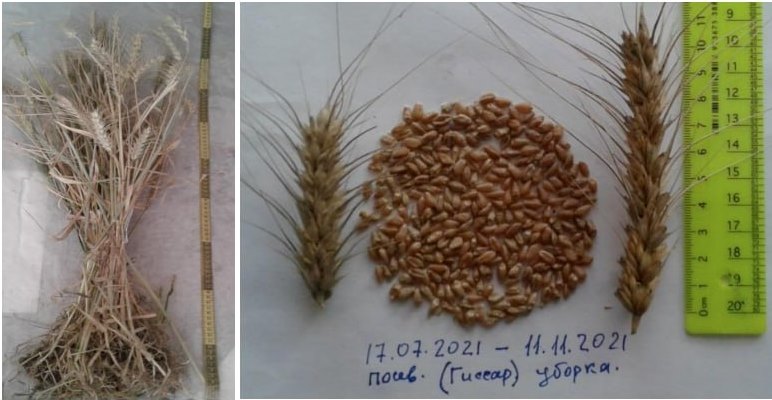
According to Partoyev, the wheat "Tobistona" is not only early-maturing but also highly productive.
“We managed to achieve that in one growing season on irrigated lands in the Hisor Valley, two harvests can be obtained – the first harvest with a productivity of about 5 tons per hectare and the second harvest with a productivity of about 4 tons per hectare,” the scientist explains.
This was made possible thanks to the genetic features of the variety, which provide resistance to drought, diseases, and pests, making it ideal for changing climatic conditions.
Co-author of the innovation, Bakhtovar Sattorov, a scientist at the Ayni Pedagogical University, notes that sowing was done both in the autumn (in October and November) and in the summer (in July).
The seeds were sown in rows with a rate of 200 kg/ha, and fertilization was carried out with ammonium nitrate in early spring. Regular irrigation was carried out on irrigated lands: 4-5 times for autumn sowing and 7-8 times for summer sowing.
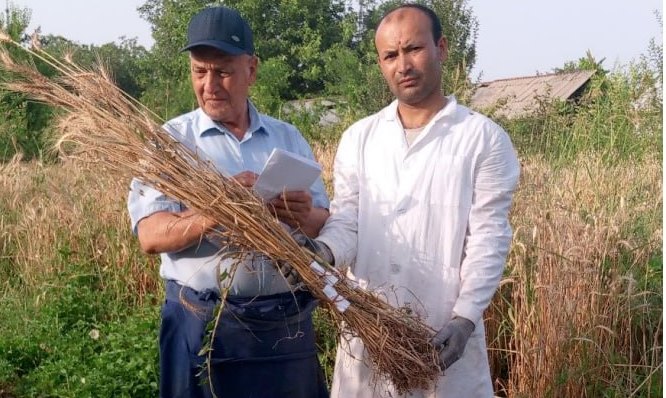
The new wheat variety showed better results when sowed in the autumn.
Today, the new wheat variety "Tobistona" is undergoing state certification. As Partoyev mentions, the approval process will take some time.
Currently, the seed reserves are limited to laboratory conditions, but scientists are confident that in the future, seeds of this variety will become available to farmers across the country.




