

The Government of Tajikistan has announced an ambitious plan to process 100% of its domestically grown cotton into manufactured goods in the country and boost textile exports from the current US$300 million to US$3 billion. The strategy, unveiled during the opening of the first International Textile Forum in Dushanbe, aims to transform the country into a fully integrated textile hub and a major global supplier.
From raw cotton to finished products
Speaking at the forum, Prime Minister Qohir Rasoulzoda emphasized that currently only about 30% of cotton grown in Tajikistan is processed into manufactured goods within the country, while the remainder is exported for manufacturing outside the country. The government’s new policy seeks to change that entirely by establishing domestic production chains that convert raw cotton into finished textile goods.
“This is an ambitious but achievable goal. Our raw material is local, and we are not dependent on imports in this sector. That gives us a strong opportunity for import substitution and expanding exports,” said Rasoulzoda.
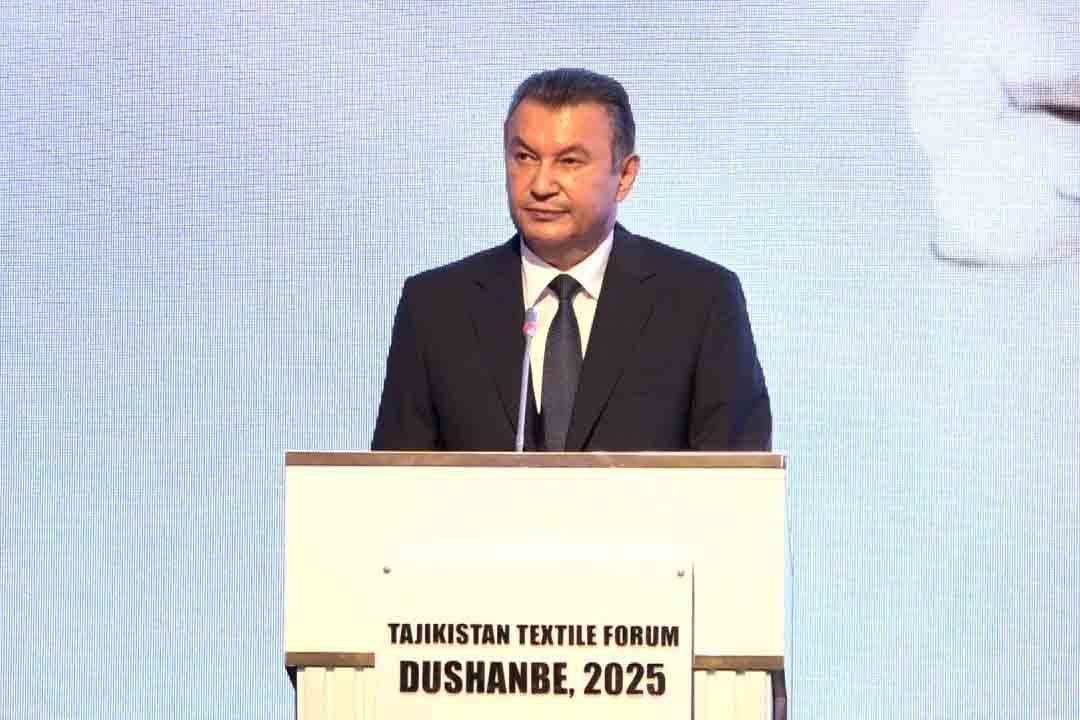
According to the Prime Minister, Tajik textiles are already being exported to over 15 countries, and the potential for market expansion remains significant. The shift to full-cycle production is expected to generate thousands of jobs and contribute to sustainable economic growth.
Textile industry at the heart of industrial strategy
The Minister of Industry and New Technologies Sherali Kabir highlighted that the initiative aligns with Tajikistan’s Fourth National Development Strategy, which targets rapid industrialization and a doubling of industrial output over the next five years.
“Today, the textile sector is becoming a center of innovation. There’s growing interest from machinery manufacturers, investors, and development partners,” Kabir noted.
He added that while around 30% of cotton is currently processed locally, Tajikistan has the capacity to dramatically scale this figure by creating closed-loop production clusters and attracting investment. With the right infrastructure and policy support, increasing textile export revenues tenfold — to US$3 billion — is a realistic target.
Investment climate and employment goals
As part of this strategic push, the government is offering a suite of incentives for foreign investors, including tax and customs benefits, access to industrial zones, support for small and medium enterprises, and workforce training. A national Textile Industry Development Strategy adopted two years ago aims to create over 600,000 jobs and achieve full domestic cotton processing.
International textile forum held in Dushanbe
Organized by the Ministry of Industry and New Technologies with government support, the three-day International Textile Forum took place in Dushanbe from July 8 to 10. The event has reportedly drawn delegations from more than 50 countries. Attendees include government officials, diplomats, international organizations, business associations, and financial institutions.

The program features plenary sessions and discussions on global trends, an exhibition of textile equipment and light industry products, as well as B2B and G2B networking sessions
Exhibitors include leading companies in textile machinery, agricultural processing, laboratory testing, and cotton ginning, alongside development partners.
The forum’s overarching goal is to present Tajikistan as a promising textile manufacturing hub, highlight its export capacity, attract investment, and deepen international partnerships in one of the country’s most critical economic sectors.



