Russian cosmonaut Oleg Platonov has captured breathtaking images of the Pamir mountain system in Tajikistan from aboard the International Space Station (ISS). The photos were shared on his personal account and the official Roscosmos Telegram channel.
“These unique images show the majestic Pamir Mountains. A complex network of snow-covered ridges and valleys looks as if nature has embroidered a giant tapestry on the Earth’s surface,” Platonov commented.
The photos reveal an endless weave of ridges and gorges, shaped over millions of years into a striking natural pattern. Snowy peaks glisten with a cold light, highlighting the harsh yet mesmerizing beauty of the region, while dark shadows in the valleys add a sense of depth and remoteness.
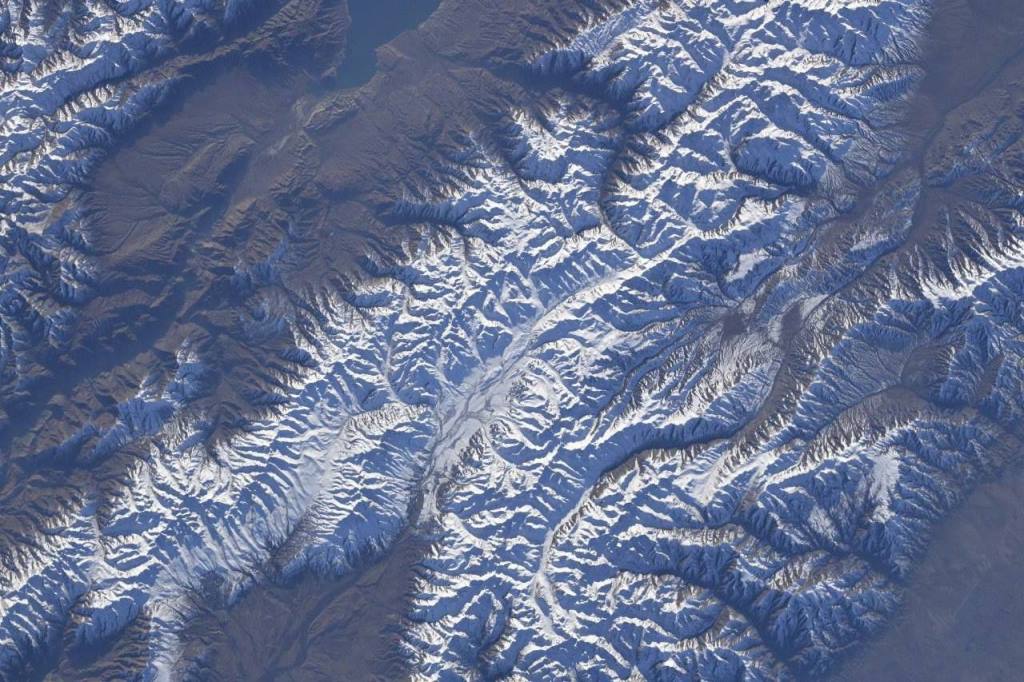
Often referred to as the “Roof of the World,” the Pamir Mountains are a high-altitude range in Central Asia, spanning Tajikistan (Gorno-Badakhshan Autonomous Region, or GBAO), China, Afghanistan, and Pakistan. Elevations range from 2,800 to 7,649 meters.
Tajikistan is home to several of the range’s tallest peaks, including Ismoil Somoni Peak (7,495 m), Lenin Peak (7,134 m), and Korzhenevskaya Peak (7,105 m).
The highest point of the entire Pamir system is Kongur Tagh (meaning 'Brown Mountain' in Turkic languages) — 7,649 m, and also the highest mountain wholly within the Xinjiang Uyghur Autonomous Region, China.
The Pamirs’ dramatic landscapes continue to attract climbers, adventurers, and researchers from around the world.