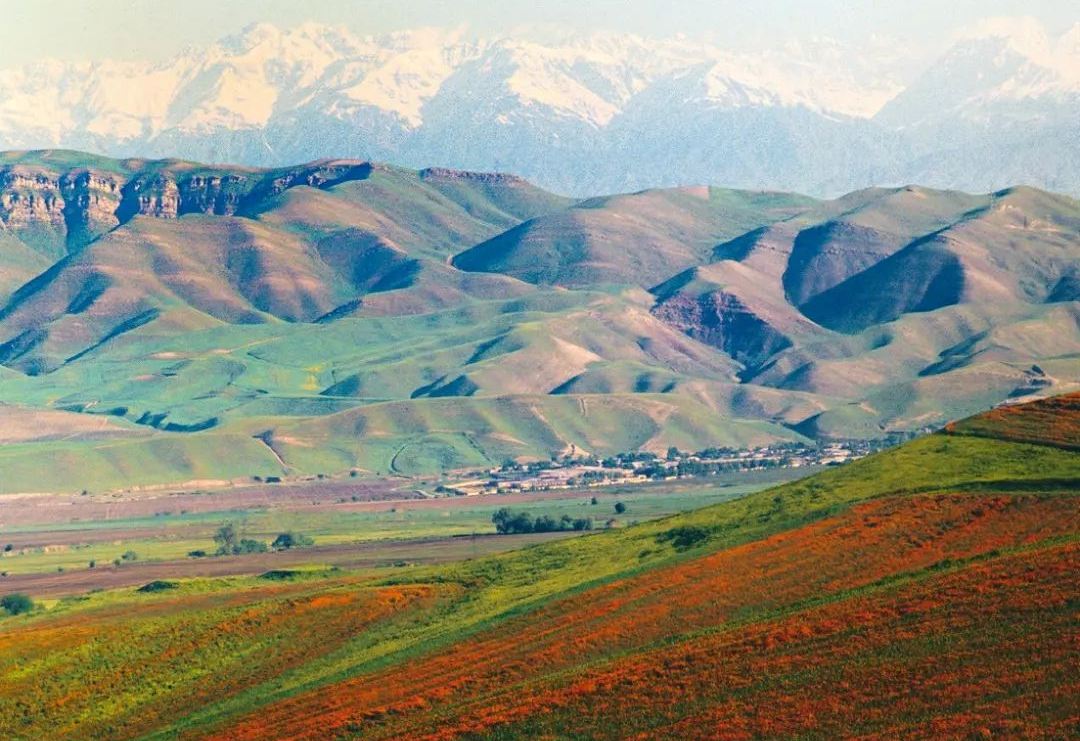
Khatlon province is Tajikistan’s most densely populated region, where mountain ranges gradually give way to broad, fertile valleys. Unlike the country’s high-altitude areas, it has a well-developed highway network, allowing travelers to design a convenient circular route without retracing their steps back to Dushanbe.
Here are the region’s most remarkable destinations — from medieval fortresses to sacred springs.
Nurek: a giant dam and turquoise waters
Just 70 kilometers from Dushanbe lies Nurek, home to the monumental Nurek Hydropower Plant. Its 300-meter earth-fill dam was once the tallest in the world and remains one of the most impressive engineering structures in Central Asia.
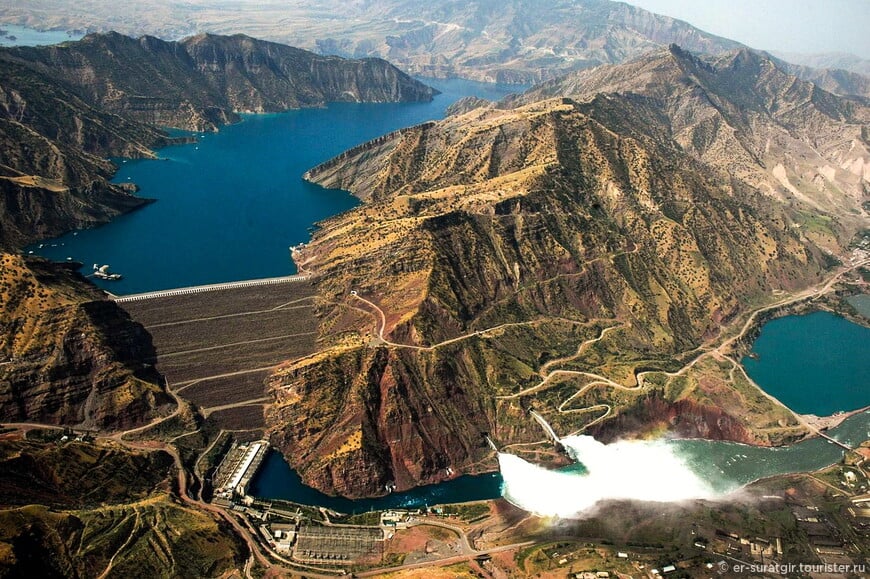
From observation points, visitors can admire the turquoise waters of the Nurek Reservoir.
The “Puli Sangin” recreation area offers hotels, swimming pools, and riverside activities.
Hulbuk: capital of medieval Khuttal
Continuing south through Danghara, travelers reach Vose District. In the village of Mehrobod lies the archaeological complex of Hulbuk — one of the most significant testimonies to the region’s former grandeur. From the 9th to the 12th centuries, this site served as the capital of the flourishing province of Khuttal. Today, that legacy is reflected in the large-scale reconstruction of the medieval fortress and the ruler’s palace.
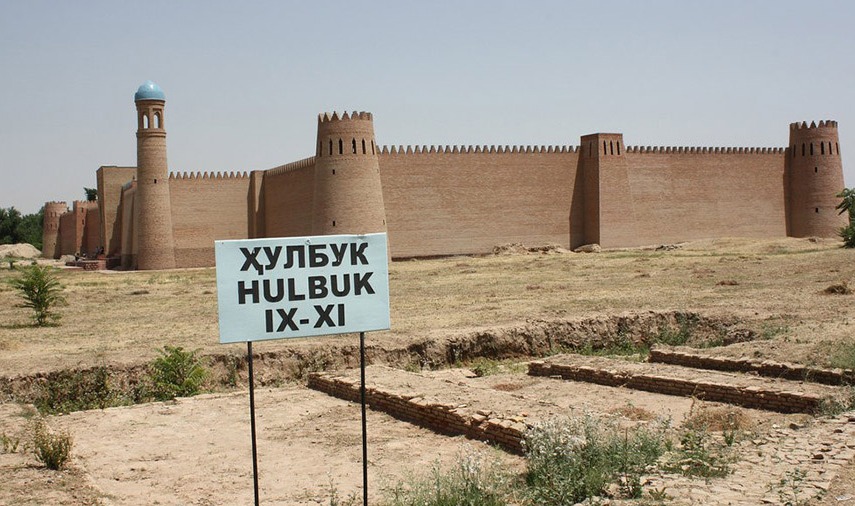
Beneath the massive baked-brick walls lie the cultural layers of the ancient city, featuring advanced infrastructure for its time, including water supply systems and even underfloor heating. A visit to the citadel is best combined with a stop at the local museum-reserve, where the finest discoveries are displayed — from intricately carved ganj (decorative plaster) to fragments of ancient ceramics and wall paintings.
Hulbuk is an ideal place to experience the spirit of the early Middle Ages and to appreciate the scale of a civilization that flourished in these arid valleys more than a thousand years ago.
Kulob: 2,700 years of history
Just a 30-minute drive from Hulbuk lies Kulob — one of Tajikistan’s oldest cities, which officially celebrated its 2,700th anniversary. The city’s main landmark is the memorial complex of Mir Sayyid Ali Hamadoni.
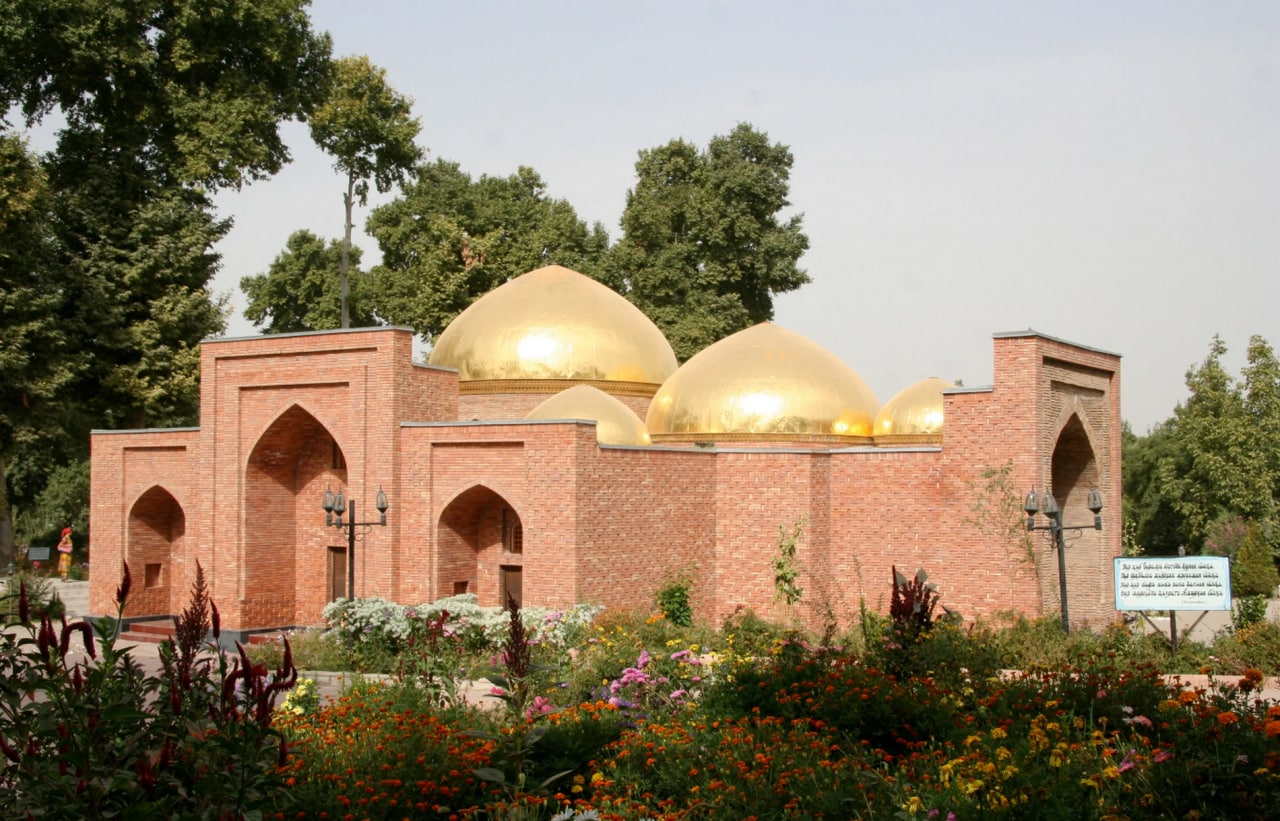
This prominent 14th-century philosopher and poet is revered far beyond the country’s borders, and his portrait is familiar to anyone who has held a 10-somoni banknote. The mausoleum’s restrained architecture and shaded courtyard create an atmosphere of profound tranquility.
Kulob is also notable for its medieval madrasahs. More broadly, Khatlon is a land of pilgrimage routes: it is home to the revered shrines of Sultan Uvaisi Qarani and Hazrati Sultan (Khovaling), the mausoleum of Zainalobiddin (Dousty district), and the famous Khoja Mashad complex (Shahritous district).
Khoja-Mumin salt mountain
Just 25 kilometers from Kulob rises a natural landmark that seems like a set from a fantasy film. Khoja-Mumin is a colossal mountain composed almost entirely of pure salt — deposits that astonished Marco Polo in the 13th century. The great traveler wrote that the salt here would “suffice for the whole world until the end of time.”
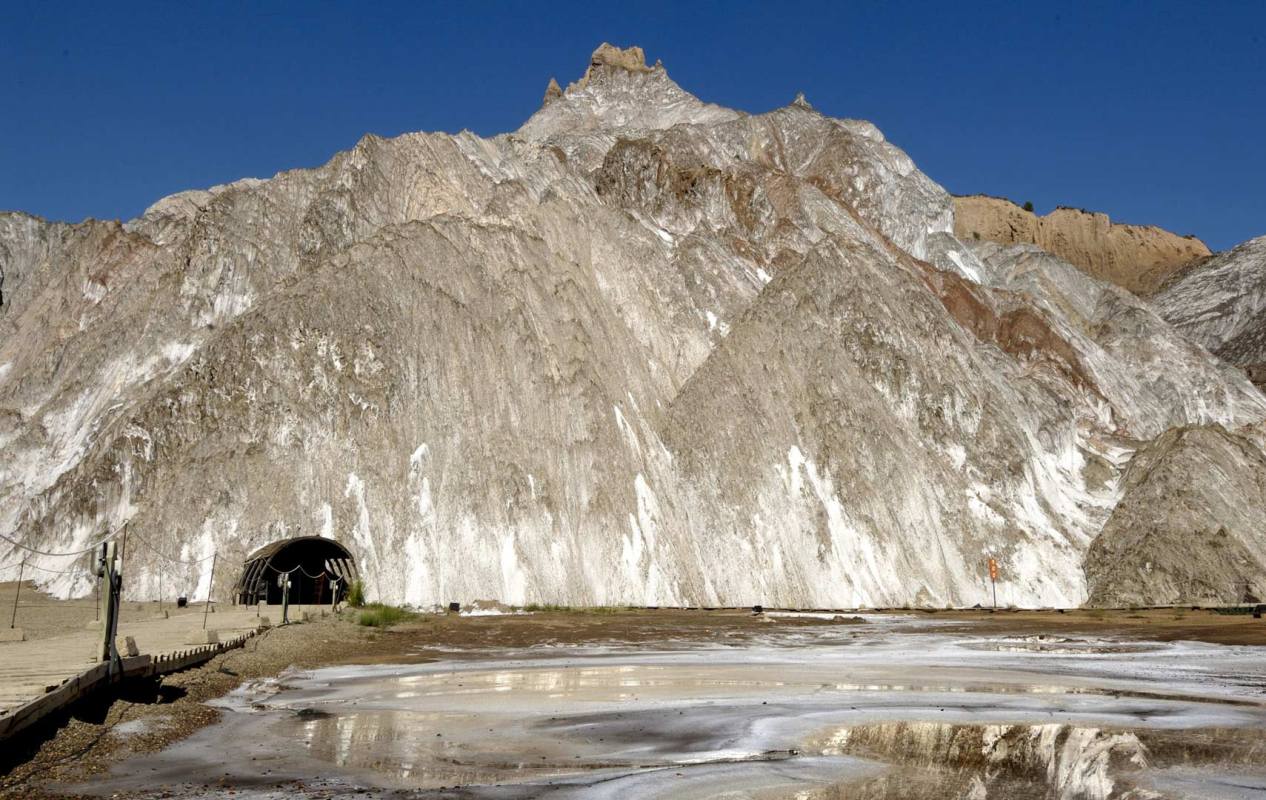
The mountain’s slopes shimmer in shades of pink and white under the sun and are carved with unusual caves and towering salt formations. Remarkably, fresh springs emerge at the summit of this salt giant, sustaining grasses and trees and making the mountain a unique ecological phenomenon.
Sari-Khosor and the fortress of Baljuvon
Further along the route lies the Sari-Khosor Natural Park in Baljuvon district — one of the most picturesque corners of Tajikistan, where nature has preserved its pristine wild beauty.
The main attraction here is the waterfall of the same name. Streams of water plunge from a height of more than 50 meters, crashing against the rocks and filling the air with a fine mist.
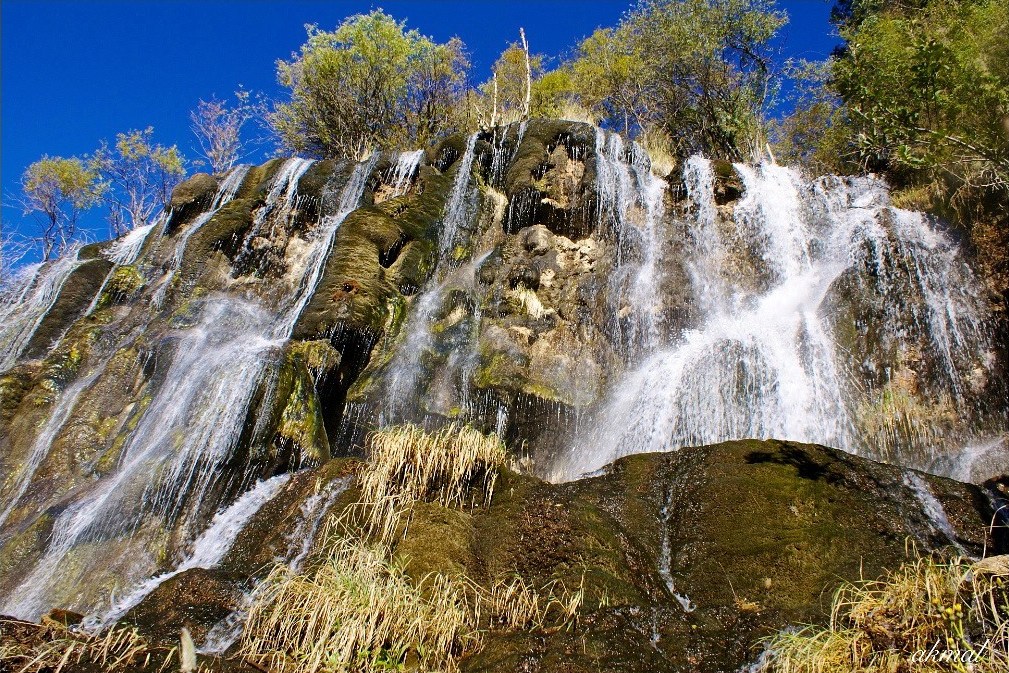
Baljuvon district is also notable for its history. The surviving fragments of the 18th-century Miri Baljuvon Fortress, once the residence of a local bek (ruler), recall the time when this area served as an important strategic outpost on the southern borders of the Bukhara Emirate.
Although time has taken its toll on many of the fortifications, the remaining walls and foundations allow visitors to imagine how this stronghold once looked. It is a destination for those who enjoy thoughtful exploration and wish to see Khatlon not only as an agricultural plain, but also as a strategic mountain crossroads.
Childukhtaron: a legend frozen in stone
In Muminobod district lies one of Khatlon’s most striking natural wonders — the Childukhtaron Valley (Forty Maidens).
Rock formations resembling female silhouettes preserve a legend of loyalty and courage: according to local lore, forty young women turned to stone to avoid falling into the hands of their enemies.
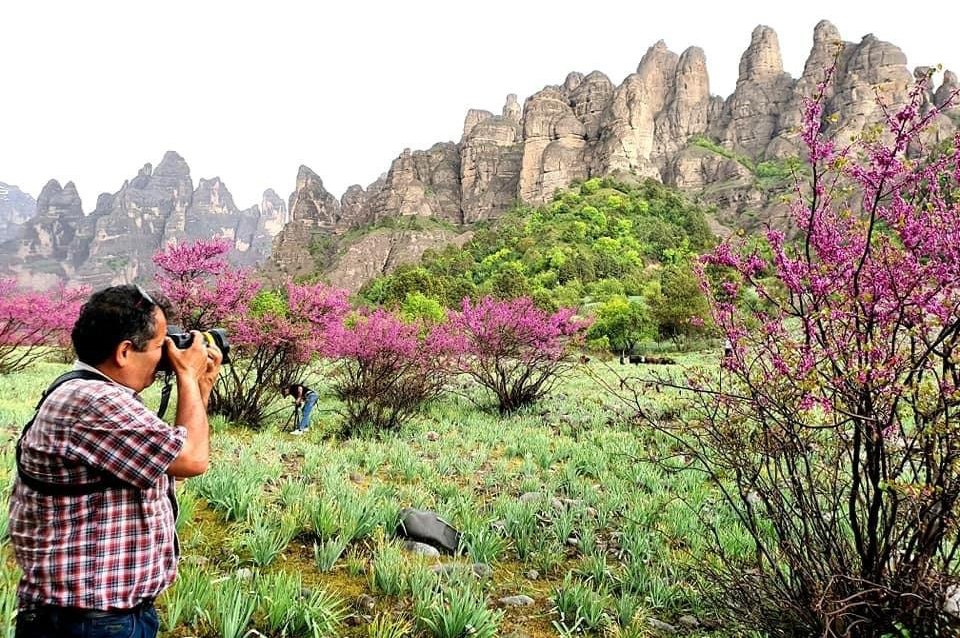
Childukhtaron attracts visitors not only with its mystique, but also with breathtaking landscapes and rare flora. The site can be reached independently by off-road vehicle or as part of organized tours, which often include tastings of traditional cuisine in the open air.
Travel agencies (for example, Go Travel Tajikistan) offer ready-made programs that typically include air-conditioned transport, guide services, and a true gastronomic experience featuring the local dish oshi burida, homemade chapoti flatbread, fresh dugob (a yogurt-based drink), and seasonal fruits.
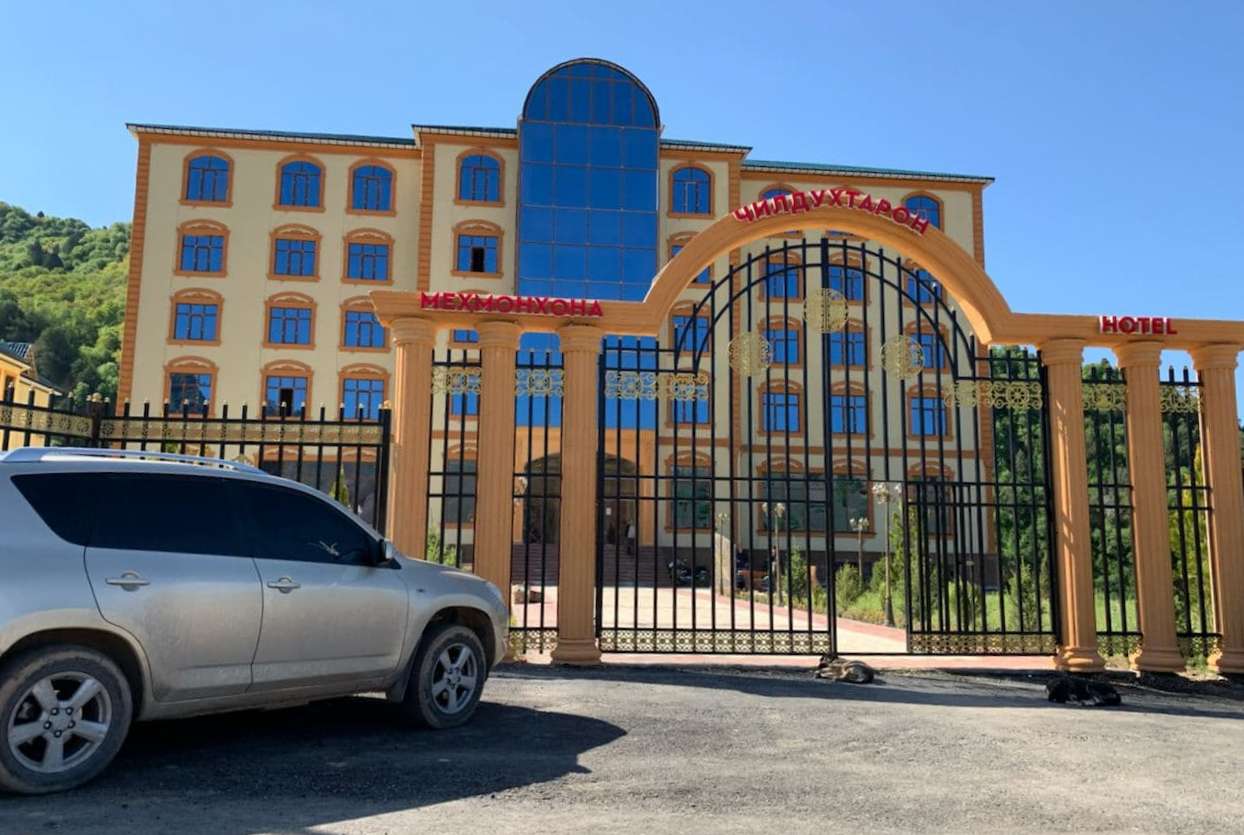
For those wishing to greet the sunrise here, an affordable guesthouse operates nearby. The valley is also an ideal camping destination — so bringing a tent and sleeping bag is highly recommended.
Important: If you are planning a picnic at the foot of the “Forty Maidens,” be sure to bring trash bags with you. The beauty of this place is fragile, and it is essential to leave it as clean as you found it.
Dashti-Jum Nature Reserve
Located in Shamsiddin-Shohin district, the Dashti-Jum Nature Reserve is a destination for those ready to trade their car for hiking boots. The reserve preserves the pristine landscape of the southern mountains, where silence is broken only by the whistle of the wind and the rush of mountain rivers.
Amid steep slopes and deep gorges lies one of the world’s last refuges of the markhor (the spiral-horned wild goat). Spotting this majestic animal with its corkscrew-shaped horns in its natural habitat is a rare stroke of luck for photographers and wildlife enthusiasts. In Dashti-Jum, photo safaris can be arranged for visitors interested in observing wildlife.
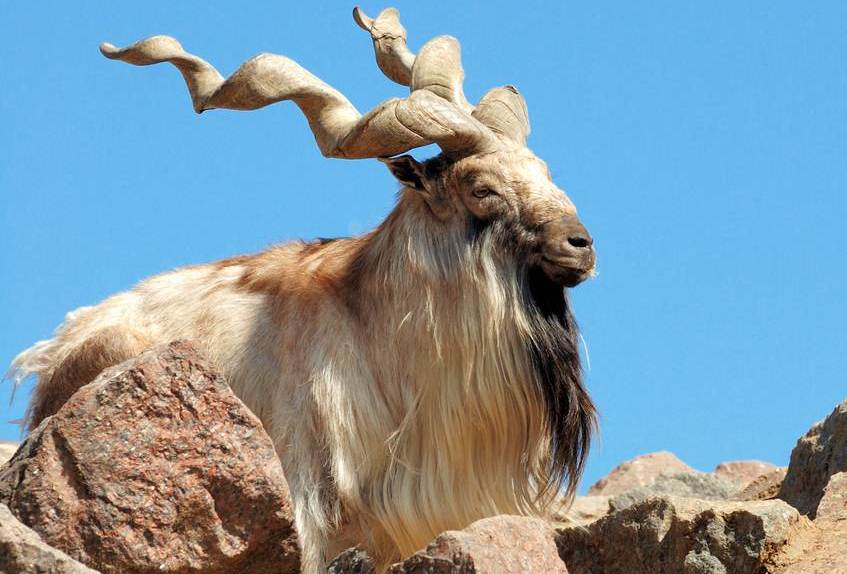
Important: A visit to the Dashti-Jum Reserve requires prior coordination with the reserve’s administration and an authorized guide.
Takht-i Sangin: the Temple of the Oxus at the confluence of great rivers
In the far south of Khatlon province, in Qubodiyon district, lies the archaeological site of Takht-i Sangin (“Stone Throne”) — one of the most important monuments of antiquity in the region. The site stands as a living witness to the era of Alexander the Great and the Greco-Bactrian Kingdom. It is located at a unique geographical point where the Vakhsh and Panj rivers merge to form the Amu Darya, just half a kilometer from the border with Afghanistan.
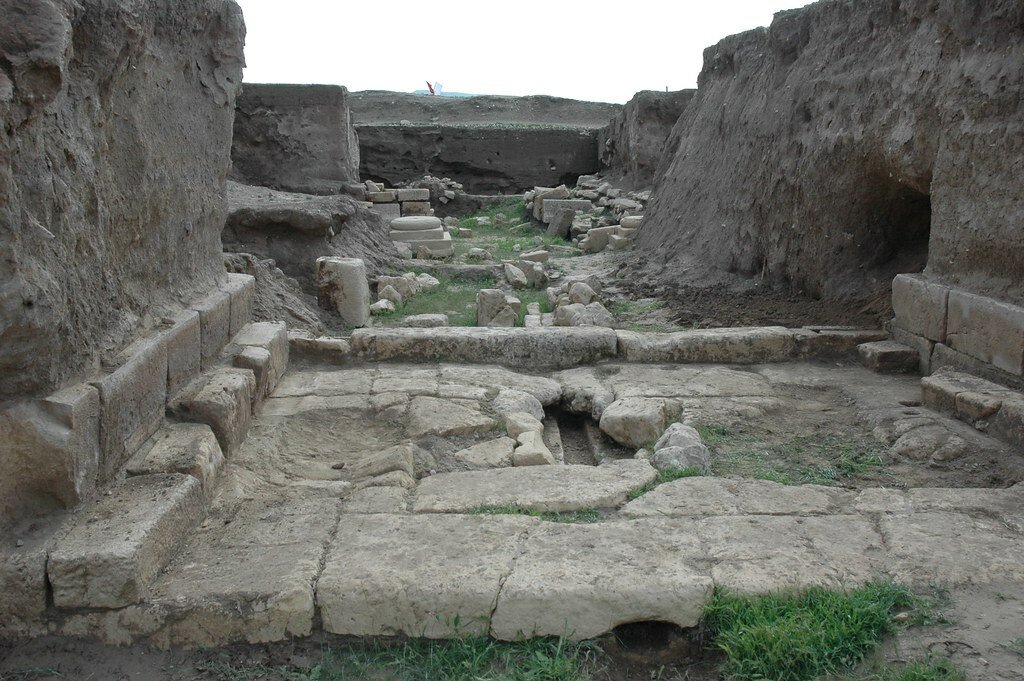
Dating back to the 4th century BCE, the settlement is renowned for the Temple of the Oxus and the legendary “Oxus Treasure,” many of whose artifacts are now housed in the British Museum. Although the treasures themselves have left these walls, the atmosphere of the site and the scale of the open-air excavations leave a powerful impression on every visitor.
“Beshai Palangon”: the planet’s last tugay forests
Situated between the Vakhsh and Panj rivers, the Beshai Palangon (Tiger Ravine) Nature Reserve is a place that completely reshapes one’s perception of Tajikistan’s natural landscape. Here survive some of the last untouched tugay forests (a form of riparian forest or woodland associated with fluvial and floodplain areas in arid climates) on the planet — true “jungles” of Central Asia.
The reserve received its name in the 1930s, when the Turanian tiger still roamed the area. Its tracks were last recorded in the mid-1950s. Although the tiger has disappeared, the ecosystem of the “besha” (ravine) remains globally unique. Today, the main inhabitants are Bukhara deer, whose population here remains stable. Among the dense vegetation, visitors may also encounter striped hyenas, jackals, jungle cats, and rare pheasants.
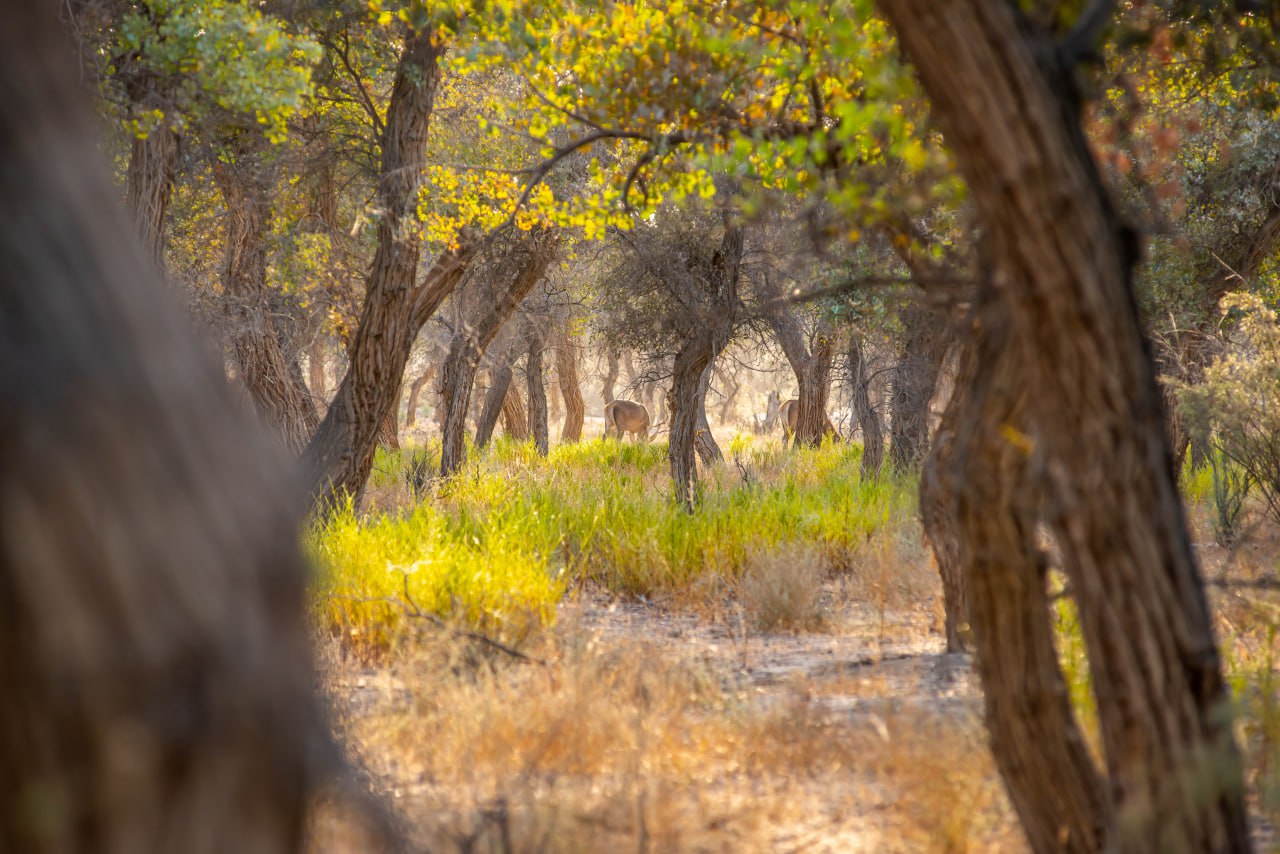
Important: Like Dashti-Jum, Beshai Palangon is a strictly protected nature reserve, and visits must be coordinated in advance with its administration. The best time to visit is in spring or autumn, when the heat subsides and wildlife becomes more active.
Chiluchorchashma: Forty-Four Springs in the Desert
About 230 kilometers from Dushanbe, in Khatlon’s Shahritus District, lies the natural phenomenon of Chiluchorchashma (“Forty-Four Springs”). Imagine driving through the sun-scorched Beshkent Valley and suddenly discovering, amid the sands, a place where 44 crystal-clear springs burst from the ground.
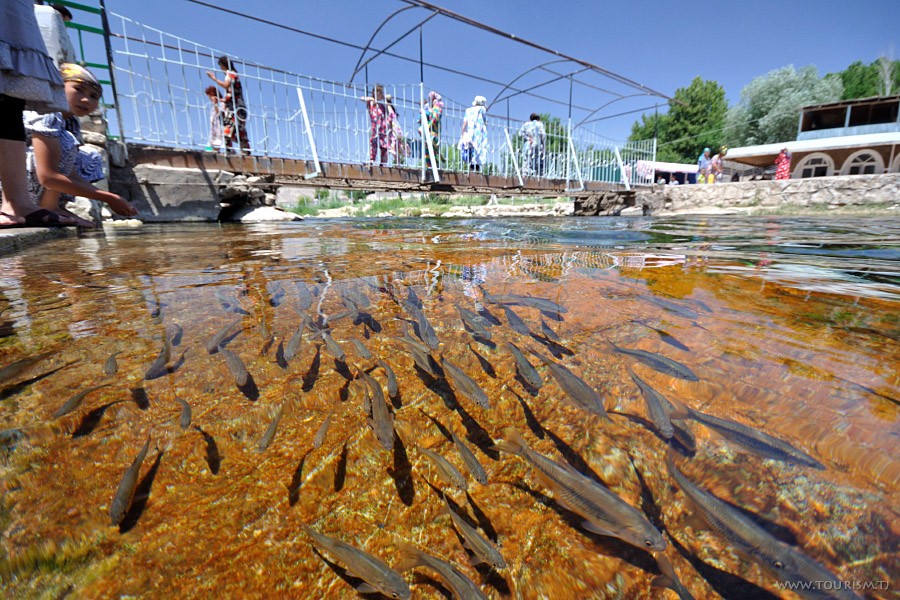
The waters merge into transparent streams, forming a channel up to 15 meters wide, where marinka genus and trout fish glide slowly — fishing them is strictly prohibited. It is believed that each spring has its own healing properties, helping with various ailments.
The site is closely associated with Islamic legends about Caliph Ali and his companion Bobo Qambar, whose mausoleum is located nearby. Today, Chiluchorchashma is a landscaped recreation area where visitors can wash off the dust of the road in the healing waters and enjoy a meal in the shade of trees while watching the flowing water and fish.
Ajina-Teppa: a Buddhist legacy
On the way back to Dushanbe, in the direction of the city of Bokhtar, it is worth visiting the 6th–8th century Buddhist monastery of Ajina-Teppa (“Hill of the Demons”). This archaeological site of global significance is where the famous 12-meter statue of the “Buddha in Nirvana” was discovered in 1966. Although the original sculpture is now housed in the National Museum of Antiquities in Dushanbe, walking along the outlines of the ancient sanctuary walls and monastic cells allows visitors to connect with the era of the Great Silk Road.
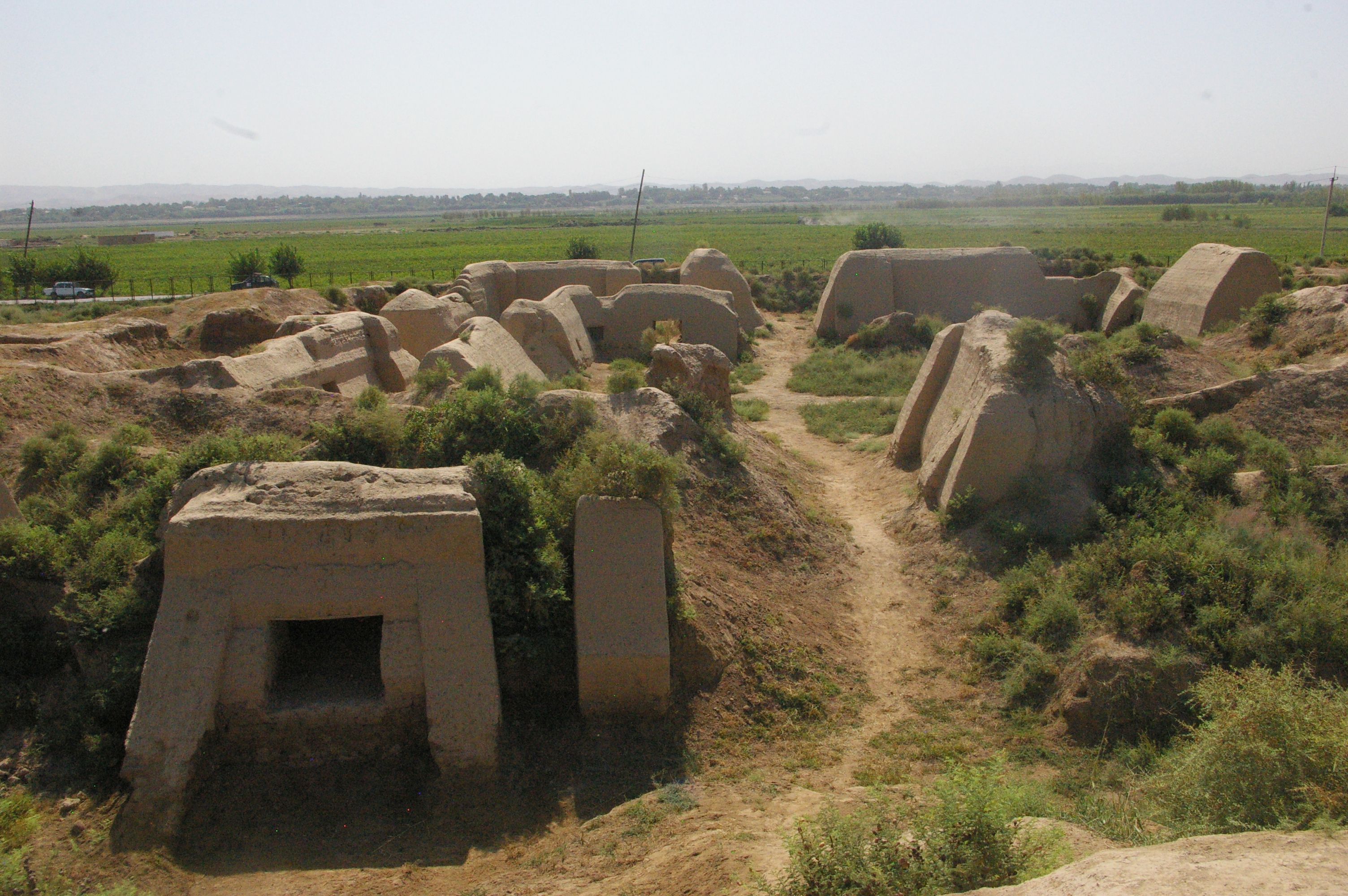
After exploring the monastery, travelers can stop in Bokhtar itself — a modern and dynamic city with wide avenues and cosy parks. From here, returning to the capital is easy: a high-quality highway leads directly north from Bokhtar. Just a couple of hours on the road — and you are back in Dushanbe.
Beyond ancient ruins and nature parks, Khatlon also offers excellent wellness opportunities. The sanatoriums “Toskala” and “Sino” in Vose District, as well as “Obi Shifo” in Temurmalik District, are well known for their healing mineral waters.
For those seeking a comfortable nature retreat, the tourist village of Munk near the district center of Khovaling is an excellent option. Visitors can choose accommodation to suit any preference — from traditional clay houses to a modern capsule hotel. Active recreation includes buggy and quad-bike rides through scenic surroundings. Contact phone: +992 877111555.
If you wish to explore the mysteries of the cosmos, head to Danghara district. It is home to the international Sanglokh Astronomical Observatory, recognized as one of the world’s best locations for observing celestial bodies.
Professional travel companies can help organize your journey across the region:
· “Central Asia Expedition” (“Ekspeditsiyai Osiyoi Markazī”), tel. +992 937533838, 555887171
· “Morkhur,” tel. +992 988345955
· “Navranga,” tel. +992 988009109
· “M. Bukhori,” tel. +992 988009109
· “Safari Dashti-Jum” — tours in the Dashti-Jum reserve, tel. +992 905222229
Khatlon is a region of contrasts. Silent nature reserves stand alongside sun-scorched steppes, ruins of ancient civilizations neighbor modern hydropower plants. Its distinctive landscapes and the sincere hospitality of its people make any journey here unforgettable. Whatever route you choose, Khatlon will undoubtedly find a way to surprise you.