In the 21st century, space exploration has expanded beyond just a few superpowers. According to the United Nations Office for Outer Space Affairs, while only around 60 countries had their own space missions in 2010, by 2023–2024, this number had exceeded 90.
Rocket launches have reportedly become cheaper, technologies more compact, and access to orbital data more widespread. Satellite information is now crucial for agriculture, water management, telecommunications, and cartography. As a result, the development of the space industry is increasingly seen not just as a matter of status and prestige, but as a tool for technological independence and control over critical infrastructure.
Uzbekistan has been developing its space sector since 2019, and today the focus is on specific projects and deadlines. But is the country ready to ensure their successful implementation? This question is examined by Fergana.
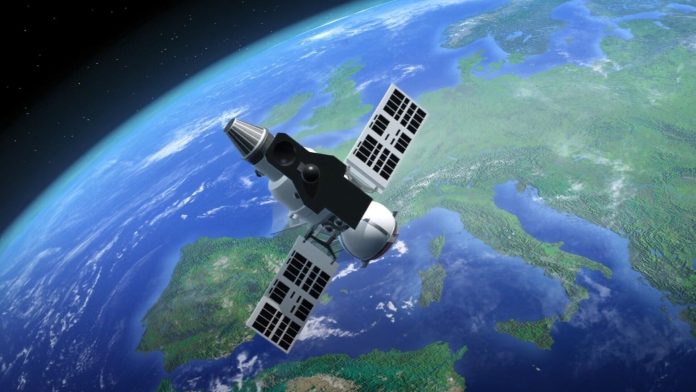
On February 16, 2026, a statement appeared on the President of Uzbekistan’s website detailing plans to launch the country’s first national scientific satellite, Mirzo Ulughbek, into orbit in 2028. The 6U CubeSat, a compact satellite, is expected to be used for both scientific and applied tasks. The announcement also mentioned preparations for the first Uzbek cosmonaut, with a planned flight lasting 10 to 14 days.
"This will not just be a symbolic step, but a manifestation of our country’s scientific potential, the ambitions of our youth, and national pride," commented President Shavkat Mirziyoyev.
Unlike previous years when space ambitions were described only in vague terms, recent announcements have been more specific—such as the satellite’s format, the planned launch year, and the duration of the manned mission. However, the official text does not mention the budget, sources of funding, or project partners, leaving key questions unanswered.
Earlier projections estimated that the development and launch of the first national satellite could cost between $50 million and $100 million. The situation is complicated further by the fact that rocket launches are booked years in advance, and Uzbekistan currently lacks its own launch operator.
The era of Janibekov
Discussions of space exploration in Uzbekistan often begin with the mention of Vladimir Janibekov, a native of the Bostanlyk district. Janibekov completed five spaceflights, spent a total of 145 days, 15 hours, and 56 minutes in space, and made two spacewalks. This is one of the most impressive cumulative records among his peers.
In Tashkent, a bust of Janibekov stands, and his name is regularly mentioned in official speeches. However, for many years, this admiration did not translate into significant action, despite Uzbekistan’s potential to develop its own space industry.
During the Soviet era, the Uzbek Soviet Socialist Republic housed numerous enterprises involved in aerospace technology. For example, the Tashkent Aviation Production Association (TAPOICH) produced specialized Il-76 MDK aircraft for astronaut training in zero-gravity conditions from 1977 to 1987, training over 100 specialists for space flights.
Meanwhile, the Tashkent Design Bureau of Machine Engineering developed instruments for lunar and Venus exploration. In 1969, it designed a soil-sampling device for the Luna 24 mission, which successfully drilled over two meters deep on the Moon and brought back lunar soil samples—one of the rare instances when an Uzbek-made device contributed to an interplanetary mission.
After the collapse of the Soviet Union, most of these high-tech facilities were closed or restructured. By the mid-2000s, TAPOICH ceased producing aviation and space equipment, and the design bureau was also shut down. By 2019, when the Uzbekcosmos agency was founded, Uzbekistan had little remaining infrastructure for assembling, testing, or preparing satellites or other space apparatuses.
"Over the last 25 years, Uzbekistan has lost all of its aerospace achievements," lamented Ibrohim Abdurahmonov, the Minister for Innovative Development at the time.
A new beginning
Since the establishment of Uzbekcosmos in 2019, the country has been taking gradual steps toward building its space sector. A national space development program was created, which aims to train specialists, create infrastructure for satellite assembly, and use remote sensing data for economic, environmental, and urban planning tasks. However, tangible results were slow to materialize. It wasn't until 2024 that Uzbekcosmos began assembling and testing its first CubeSat satellite and started regular satellite monitoring of the country’s territory.
Due to the lack of its own research satellites, the agency has been utilizing foreign space platforms and commercial remote sensing services for imagery. The data is used to monitor illegal mining, unapproved construction, and other land use violations, with the processed information passed on to relevant state bodies, including ministries of ecology, agriculture, water resources, and the Prosecutor-General’s Office.
In 2024, Uzbekistan entered into negotiations with SpaceX and the British company Surrey Satellite Technology regarding satellite launches and technical support for its space program.
The global context: what can Uzbekistan learn?
In the last decade, many developing countries have launched their own national space programs. Some have focused on spending money, others on leveraging knowledge, and some have combined both approaches.
For example, Algeria represents a militarized approach to space, focusing on satellite technologies for national security and defense, relying heavily on China for launch services and technology. In contrast, Vietnam has built a long-term strategy, investing in national engineering expertise and infrastructure. Malaysia, after years of politically motivated space missions, has shifted focus to developing its own scientific talent.
The Philippines offers an interesting case, too. Like Uzbekistan, it started from scratch but has managed to build a solid space policy, with its own agency and successful satellite projects, such as the Diwata series.
The United Arab Emirates, with its substantial financial resources, jumped several stages, advancing directly to interplanetary missions like the Hope probe to Mars, which has significantly contributed to global research on the Martian atmosphere.
What’s next for Uzbekistan?
Drawing from these experiences, we can identify four models of space development:
· State Operators (Algeria): Focus on purchasing ready-made satellites and using them for defense and resource monitoring.
· State Integrators (Vietnam): Focus on technology transfer and building national satellite assembly and testing centers.
· Academic Hubs (Malaysia): Stimulate university-led satellite projects and engineer training on a low budget.
· Strategic Innovators (UAE): Focus on a bold, breakthrough goal (e.g., Mars) and build a strong, globally competitive brand.
The Philippines falls between the second and third models, and Uzbekistan appears to be following a similar path to that of Vietnam and the Philippines. The country benefits from its Soviet-era technological heritage and a growing base of trained engineers. However, one key challenge remains: maintaining momentum and overcoming potential political shifts that could derail progress.
The first satellite launch in 2028 seems promising, but much depends on the consistency and discipline with which the country executes its space strategy. While there are significant hurdles ahead, Uzbekistan’s gradual approach, reliance on international partnerships, and existing talent pool provide a solid foundation for success in the years to come.