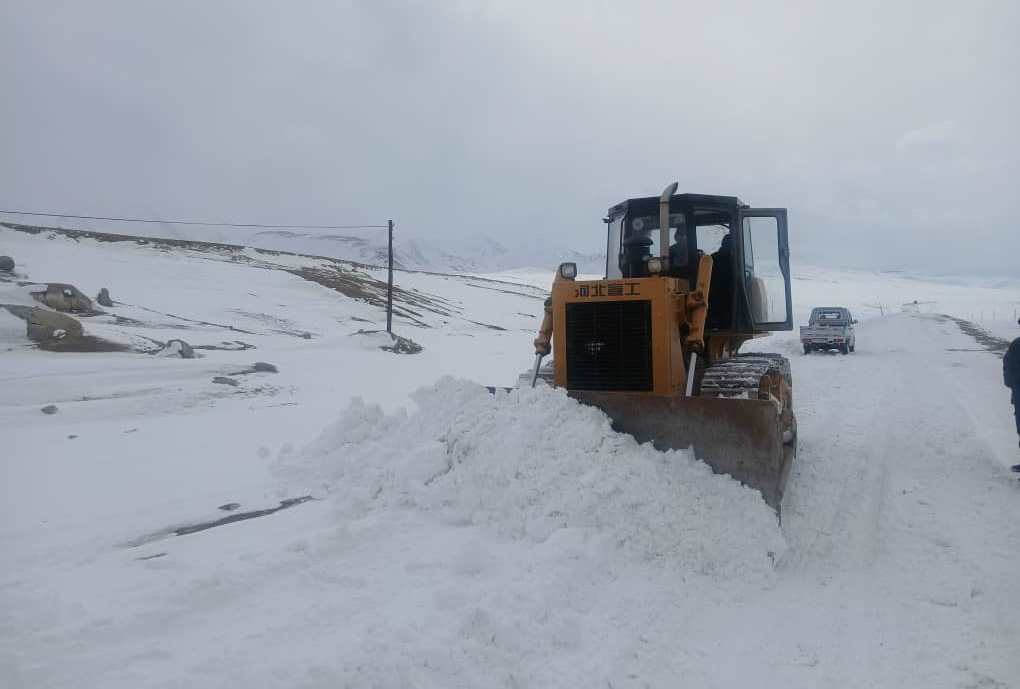
The Ministry of Transport of Tajikistan has urged all road enterprises to be on high alert and drivers to exercise caution due to the challenging weather conditions in the country.
According to a statement referencing the Hydrometeorology Center (Hydromet), Tajikistan is expected to experience new precipitation, including snowfall in mountainous areas, by the end of March. It is forecasted that snow cover in some regions could reach up to 30 cm, and river water levels are also expected to rise. This could lead to the risk of landslides, mudflows, and avalanches along international highways.
The Ministry of Transport notes that, following recent heavy rainfall, mudflows and avalanches have already occurred in the Gorno-Badakhshan Autonomous Region (GBAO) and the Rasht Valley. These natural disasters have affected several critical roadways in the country.
Avalanches and mudflows have been recorded in GBAO, particularly on the 661st kilometer of the Dushanbe-Khorog-Kulma highway in the Shugnan district and the 33rd kilometer of the Rushan-Bartang road. These incidents caused temporary disruptions to traffic. Mudflows have also been reported in the villages of Alichur and Mamadzoir in the Murgab district, as well as in the villages of Khostav and Saghirdasht in the Darvoz district.
Additionally, heavy rainfall has led to avalanches and mudflows in the Rasht Valley, especially in the districts of Nourabad, Sangvor, and Lakhsh. Between February and March, more than 30 avalanches of various sizes were recorded on the international highway Vahdat-Rasht-Lakhsh-Kyrgyz border and the Labidjar-Sangvor-Qalaikhumb road.
The Ministry of Transport emphasizes that the severe weather has caused damage to road surfaces and infrastructure. In some areas, traffic was temporarily halted. However, road maintenance services have quickly responded to the aftermath. Roads have been cleared of snow, stones, and debris, and damaged sections are being repaired. Currently, traffic has been fully restored on all affected routes.