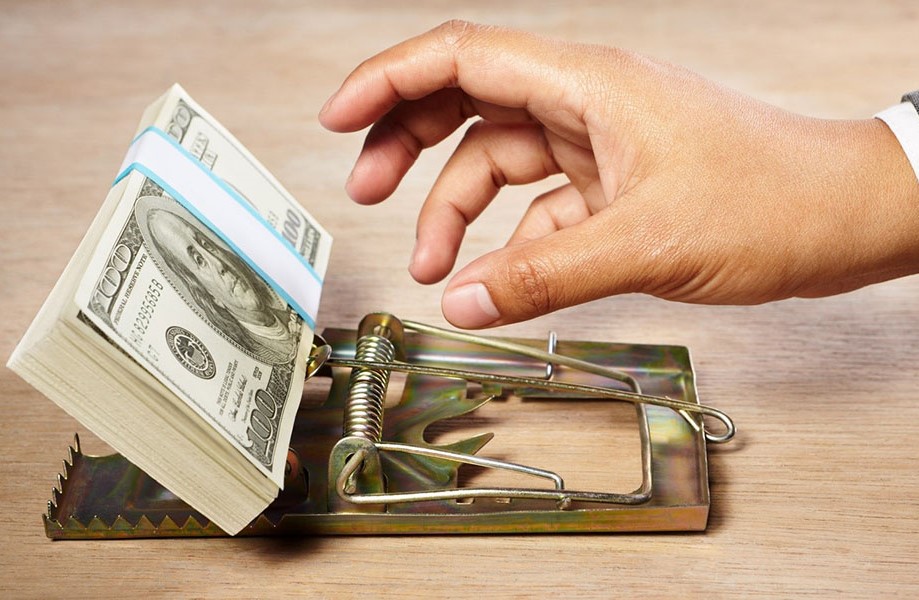
Many people in Tajikistan take out loans without fully understanding their terms and long-term consequences. High interest rates, rising expenses, and limited financial literacy often turn loans—meant to improve living standards—into a source of debt pressure and a risk of losing property. Experts warn that borrowing should be approached carefully and only after thorough financial planning.
A story that could happen to anyone
When Dushanbe is still asleep, 34-year-old Akbar is already behind the wheel. His workday begins before sunrise and often ends well after midnight.
A year ago, he took out a bank loan to buy an electric car, hoping to earn a living as a taxi driver. At the time, the decision seemed reasonable: electric vehicles were becoming popular, electricity was relatively cheap, and many people said taxi drivers could earn good money.
“I thought it was simple: buy a car and start earning,” he says.
However, reality turned out to be different. Akbar admits he did not fully understand how interest rates, fees, and repayment schedules worked when he signed the loan agreement.
Now he works almost every day just to cover basic expenses and support his family.
“I thought working seven or eight hours a day would be enough. But there are many other expenses—vehicle maintenance, company commissions—and electricity costs and taxi service fees have almost doubled over the past year,” he says.
His story is far from unique. Many people take out loans without fully assessing their financial capacity, turning what was supposed to improve their lives into a source of constant financial and psychological stress.
A common situation
Financial analyst Shahboz Rahimbekov, who has years of experience in the country’s banking sector, says such situations are common in Tajikistan.
According to him, many borrowers try to obtain loans quickly without fully evaluating their long-term financial burden.
Most loans in the country are consumer loans, often used to cover everyday expenses rather than to invest in business development. These may include family celebrations, home renovations, or purchases of cars and electronics.
According to the National Bank of Tajikistan, consumer loans accounted for 40.1% of all loans issued in 2025, up 3.9 percentage points from the previous year.
Some borrowers also take multiple loans at once or use new loans to repay previous ones, increasing their debt burden.
Another challenge is high interest rates. In 2025, the average weighted interest rate on loans was 22.6% in national currency and 11.7% in foreign currency.
Financial literacy also remains limited. A study by M-Vector found that the country’s financial literacy index rose from 41% in 2020 to 51% in 2024, meaning many borrowers still struggle to fully understand loan agreements.
Risks for the banking system
According to Rahimbekov, large volumes of non-performing loans can pose risks not only for borrowers but also for the entire banking system.
One of the key causes of Tajikistan’s banking crisis in 2016 was a high share of bad loans, which reached 47.6% of the total loan portfolio.
At the time, rumors about possible bank failures triggered panic among depositors. Banks were unable to quickly return deposits because much of the money had already been issued as loans.
As a result, licenses of several banks—including Agroinvestbank, Tajiksodirotbank, Tajprombank, and Fononbank—were revoked and liquidation procedures began.
Improvements in Recent Years
The National Bank of Tajikistan says that over the past nine years the share of non-performing loans has fallen almost 15-fold, from 47.6% in 2016 to 3.2% by the end of 2025.
The total loan portfolio reached 26.1 billion somoni, up 22.2% compared with 2024.
How to take a loan without regret
Experts recommend approaching borrowing cautiously.
Key recommendations include:
1. Take a loan only when necessary. If possible, avoid borrowing.
2. Carefully review the loan agreement. Calculate the total repayment amount.
3. Assess your income realistically. Loans must be repaid regularly.
4. Read the contract carefully. Small clauses can have serious consequences.
5. Avoid multiple loans. This increases financial pressure.
6. Be cautious with credit cards. They can lead to accumulating debt.
7. Avoid microloans or borrowing from individuals, where interest rates can be extremely high.
What to do if you cannot repay
If repayment becomes difficult, experts advise borrowers not to ignore the situation.
Possible solutions include:
· Contact the bank to discuss loan restructuring.
· Apply for payment holidays if your income has dropped significantly.
· Consider bankruptcy procedures if debts become unmanageable.
Conclusion
Loans can be a useful financial tool, but only when used responsibly. Before borrowing, it is essential to ensure stable income and fully understand the terms of the agreement.
Financial experts emphasize that loan repayments are fixed obligations. Unlike other expenses, they cannot easily be postponed or reduced. Careful planning can help borrowers avoid falling into a debt trap.