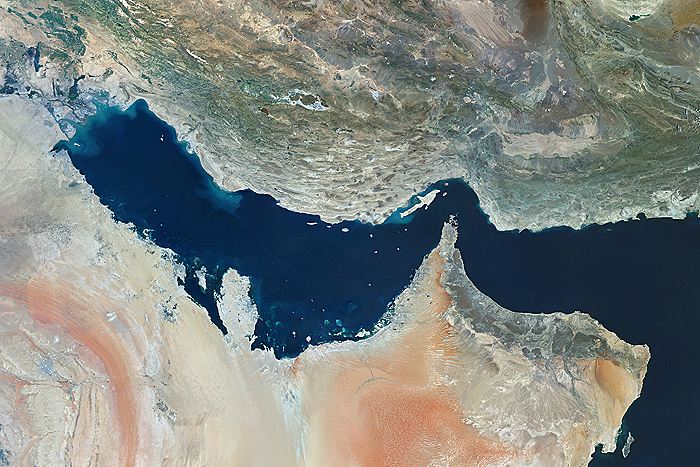
Several US allies have declined President Donald Trump’s call to deploy warships to escort tankers through the Strait of Hormuz, Reuters reported.
Countries that did not support the initiative include the United Kingdom, France, Germany, South Korea, Japan, and Australia.
UK Prime Minister Keir Starmer rejected the proposal to create an international naval coalition to protect commercial shipping in the strait, according to The Telegraph. UK Energy Secretary Ed Miliband said London is “actively considering” various options to ensure safe navigation, without providing further details. British authorities are also considering the use of drones to detect sea mines, the report said.
France, Germany, and South Korea have likewise refrained from committing naval forces, citing concerns that any conflict in the region could become prolonged.
German Defense Minister Boris Pistorius said Berlin would not participate in a military mission in the Strait of Hormuz at Washington’s request.
“This is not our war. We did not start it. We support a diplomatic solution and a swift end to the conflict, but increasing the military presence in the region is unlikely to contribute to that,” he said.
German Foreign Minister Johann Wadephul had earlier also stated that Germany would not take part in a multinational operation to protect shipping.
Australia has also indicated it will not send ships, Reuters reported. Japan initially declined as well, though Prime Minister Sanae Takaichi said Tokyo is still assessing possible actions.
Earlier, Trump said his administration had asked seven countries to assist in securing navigation through the Strait of Hormuz. China was among those approached, but Beijing has not yet announced its position.
The Strait of Hormuz is one of the world’s most critical maritime trade routes, with roughly one-fifth of global oil and gas supplies passing through it.
US and Iran reportedly establish direct contact
According to Axios, US Special Envoy Steve Witkoff and Iranian Foreign Minister Abbas Araghchi have resumed direct contacts in recent days.
Sources say Araghchi sent text messages to Witkoff discussing a possible end to the war involving the United States, Israel, and Iran.
However, Drop Site News previously reported that Witkoff initiated the outreach, which was allegedly ignored by the Iranian side. A US official told Axios that it was Araghchi who attempted to establish contact, stressing that the United States is “not negotiating” with Iran.
The content of the exchanges remains unclear. Nevertheless, media reports describe it as the first known direct contact between the two sides since the conflict began more than two weeks ago.
On March 16, President Trump said Iranian representatives had reached out to the United States, though it remains unclear whether they have the authority to negotiate any agreements.
“We don’t know who they are,” he told reporters, adding that he does not rule out talks with Iran, as “sometimes good things come out of them.”