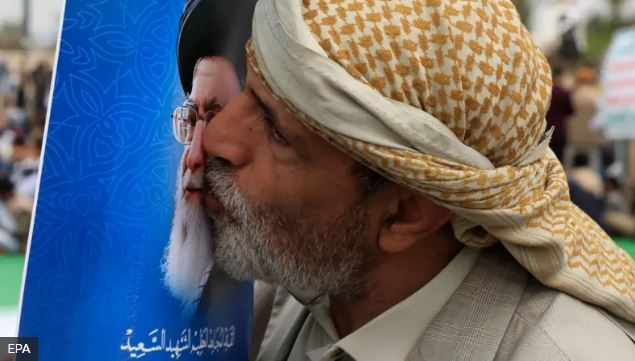
Escalating tensions in the Middle East are approaching a critical threshold, increasing the risk of a large-scale global energy crisis. Yemen’s Houthi movement, allied with Iran, has for the first time actively entered the conflict a month after the confrontation involving Iran, the United States, and Israel began.
According to the BBC’s Russian Service, the group’s attacks have so far been largely demonstrative and directed at Israel. However, the Houthis are seen as capable of targeting Saudi oil infrastructure, including pipelines and Red Sea export terminals.
After Iran effectively blocked the Strait of Hormuz — a route for roughly 25% of global oil and 20% of gas supplies — Saudi Arabia redirected part of its exports through a pipeline to the Red Sea port of Yanbu al-Bahr, originally built during the Iran-Iraq war.
These measures have helped contain price increases to some extent. Before the conflict, Saudi Arabia exported around 6 million barrels of oil per day via the Strait of Hormuz; currently, about 5 million barrels are being transported through the alternative route.
Much of this oil is shipped to Asia via the Bab el-Mandeb Strait, a chokepoint previously targeted by the Houthis, a Shiite group controlling large parts of Yemen with Iranian backing.
Analysts warn that if Saudi Arabia loses this alternative export route, global supply shortages could trigger another surge in oil prices, which have already risen from $70 to $115 per barrel over the past month.
Over the weekend, the Houthis launched their first overt attacks, firing missiles at Israel in the morning and threatening further strikes, followed by another attack later that day. A spokesperson described the happened as the group’s “first military operation” and said attacks would continue “until aggression ends on all fronts of resistance.”
Observers say the Houthis’ involvement effectively opens a new front in the Red Sea region and heightens risks to global shipping amid the effective closure of the Strait of Hormuz.
According to Joe Floto, head of the BBC’s Middle East bureau, the group’s active involvement was expected given its close ties to Tehran, which provides military, financial, and political support.
Yemen expert Mike Knight told the BBC that the Houthis are highly resilient and ideologically driven, suggesting they could remain a key force even if other Iranian allies weaken.
Amid rising tensions, the U.S. amphibious assault ship USS Tripoli, carrying thousands of Marines, has arrived in the region. U.S. President Donald Trump has previously stated that he does not plan to launch a ground operation in Iran.
Nevertheless, analysts increasingly view the Houthis as a significant lever of Iranian influence, capable of threatening strategic oil routes and impacting the global energy market.