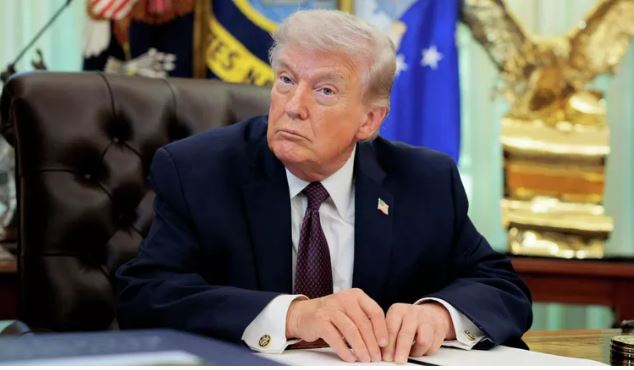
U.S. President Donald Trump delivered a televised address to the nation, stating that the war with Iran is nearing completion, but he did not specify exact timelines for the end of the conflict. At the same time, he warned that new powerful strikes against Tehran could occur in the coming weeks, BBC reports.
According to Trump, American military forces have almost completed the tasks set before them.
“We are going to finish the job and we will do it very quickly. We are very close to our goal,” he stated during his 19-minute speech.
The President reiterated that the U.S. has destroyed Iran’s naval and air forces and significantly weakened its ballistic missile and nuclear weapon programs. He mentioned that strikes could continue for another two to three weeks.
The American leader also addressed the situation surrounding the Hormuz Strait, which, according to him, has been effectively blocked by Tehran for about a month.
Trump stated that the strait is primarily needed by other countries and that after the conflict ends, shipping will naturally resume there.
He also warned that the U.S. is ready to “deliver an extremely strong blow” to Iran.
The conflict between the United States, Israel, and Iran began on February 28. In the early days of the war, the Supreme Leader of Iran and several high-ranking officials of the Iranian leadership were killed as a result of strikes.
Later, Washington sent additional forces to the region, and officials in the American administration did not rule out the possibility of a ground operation.
According to U.S. Central Command, over 12,300 strikes have been carried out against Iranian targets during the month of hostilities.
Trump has repeatedly stated that the war could end within two to three weeks. In an interview with Reuters, he said that the U.S. could soon halt operations but is ready to return to “targeted strikes” if necessary.
At the same time, he for the first time allowed the possibility of stopping attacks even without an agreement with Tehran. Earlier, the U.S. president had also mentioned that he might address the issue of the U.S. exiting NATO in his speech, but ultimately did not discuss this topic.
On Wednesday, Trump claimed that Iran had allegedly approached the U.S. with a request for a ceasefire. According to him, Washington would consider this issue only if the Hormuz Strait is opened. However, this information was rejected by Iran. Iranian Foreign Ministry spokesman Esmail Baghaei called Trump’s statements “false and unfounded.”
According to Axios, discussions about a possible ceasefire in exchange for the reopening of the strait did indeed take place, but sources from the publication could not assess the likelihood of such an agreement. On Tuesday, China and Pakistan also presented a peace initiative aimed at resolving the situation.
Journalists speculated that Trump might have been referring to comments made by Iranian President Masoud Pezeshkian, who during a phone call with European Council President Antonio Costa expressed Tehran’s readiness to end the war if the U.S. halts its attacks and provides guarantees that hostilities will not resume.
Former senior advisor to U.S. Secretary of State Antony Blinken, Melissa Tufanian, told the BBC that after Trump’s speech, the American audience probably “became even more confused” about the war with Iran.
Trump’s remarks suggesting that the U.S. could “send Iran back to the Stone Age” drew particular criticism. Arizona Democrat Yassamin Ansari called such statements unacceptable, emphasizing that it concerns a country with a population of about 90 million people.
After Trump’s speech, U.S. Secretary of Defense Pete Hegset also commented on his words on social media X, writing: “Back to the Stone Age.”