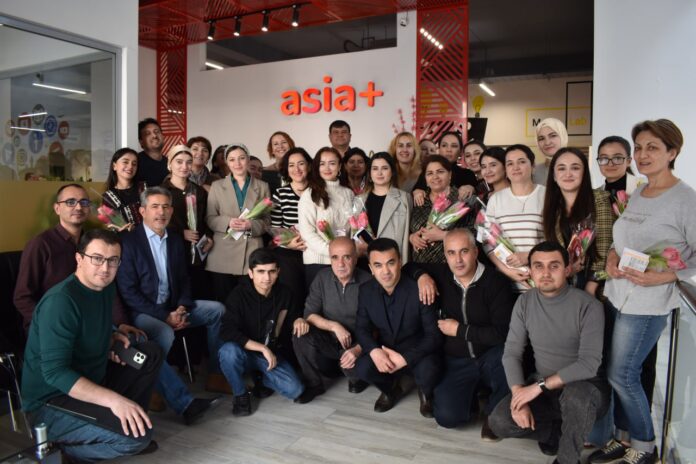
In the media industry of Tajikistan, there has been an informal concept for 30 years — “Asian.” This term is used to refer to both former and current employees of the media group “Asia-Plus.” Typically, these are specialists who are valued in the market and are distinguished by a unique professional culture and style of work. Many such “Asians,” having established themselves, left the media group to open their own media outlets and businesses, headed departments in multinational companies, or appeared on broadcasts of global radio stations.
The “Asians” who remained in place performed their feats: they wrote about things that could not be spoken of and honestly admitted to the audience when they could not do so.
Of course, not all employees of “Asia-Plus” became “Asians,” but for those who can call themselves that, their experience in this structure has become part of their identity. Perhaps, the most significant part.
Who are the “Asians” and why is “Asia-Plus” one of the most important institutions in contemporary Tajikistan? This is explained by journalist, media expert, former senior correspondent of “AP,” and “Asian” Lilia Gaysina.
“There was only one journalist among us”
Thirty years ago, when a civil war was still ongoing in Tajikistan and people were leaving the country because they saw no future here, a company began operating in a small office of what was then the “Avtotranstechnika” building (now a branch of Moscow State University), which would soon become a major springboard in the lives of hundreds of young people.
When the “Asia-Plus” bulletin began to be published, many of those who would later make up the backbone of the media group were wandering around the republic in search of themselves, their calling, and often simply a piece of bread. Almost none of them were journalists. For example, historian Marat Mamadshoev came to “Asia-Plus” because he realized that his specialty was of little interest to anyone.
“I just saw an announcement that they were looking for authors and came for an interview. I was invited, and I wrote a piece about Sarez. At that time, “Asia-Plus” was a team of young people who were passionate about creating modern media but did not know how to do it. Among us, there was only one journalist — Umid (Babakhanov, the founder of the media group. — Ed.), everyone else had a very vague idea of what journalism was and acted randomly,” he recalls.
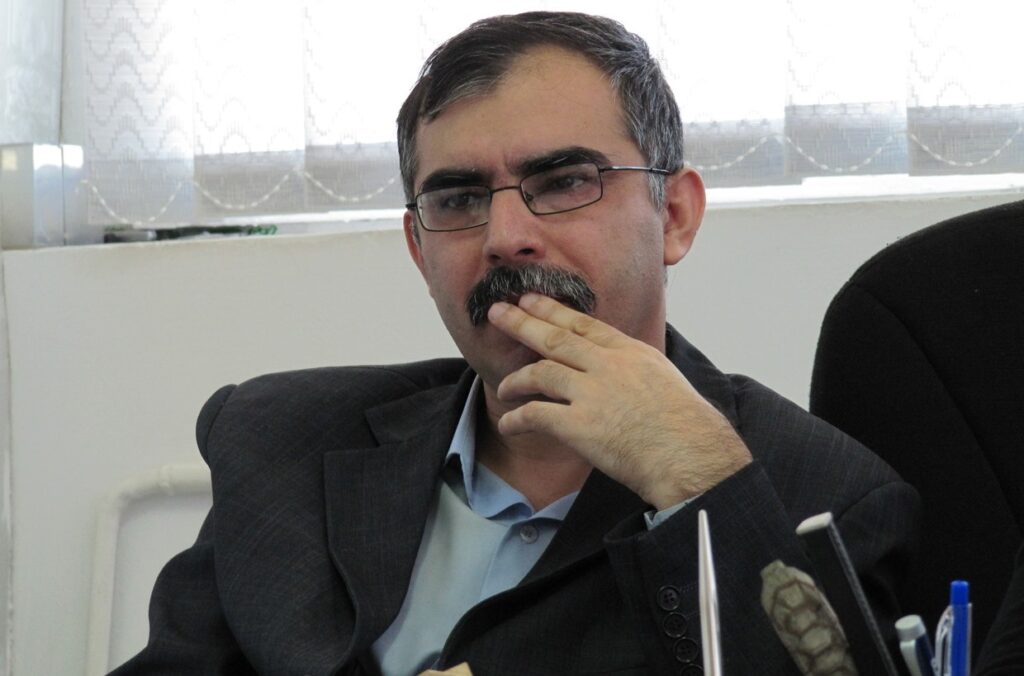
The average age of the team that was about to change the world was 20–25 years. Sometimes the authors were even younger. The oldest was Umid Babakhanov himself (34 years), but he was the one who believed in his venture the most.
“Umid was never satisfied with the result — he always wanted more. Later, when “Asia-Plus” became a large and popular media outlet, this saved him. Usually, successful people become inert, but Umid always needed something else, and he did not stop,” says Marat.
The desire to achieve more drove the entire team to come up with new projects. They were constantly appearing and continue to appear among the “Asians.” The first information bulletin was released on April 2, 1996, the website launched in 1999, the newspaper came out in 2000, radio started in 2002, the music award “Surudi Sol” was established in 2003, a glossy magazine in 2008, and another music award, Tarona, in 2021. And between them were dozens of newspaper supplements, an advertising agency, a journalism school, and many other ideas. Some of these turned out to be unsuccessful and closed after a couple of months, while others overshadowed the previous ones and became the locomotives of the entire group.
The “Asia-Plus” newspaper became one of the brightest yet most challenging projects.
“The excitement was incredible, every day was adrenaline”
For many years, the newspaper’s editorial team and the information agency worked in different offices. The newspaper staff sat in the Newspaper and Magazine Complex, which is now called “Sharki Ozod,” but at that time everyone knew it simply as GZhK. The information staff continued to work with the editor-in-chief in the “Avtotranstechnika” building. It wasn’t that the colleagues disliked each other, but each side was absolutely certain that their team was the best in the media group. However, the newspaper developed a reputation for being the tougher team — not least because Olga Tutubalina worked there.
“Before ‘Asia-Plus,’ I worked at GZhK — but at a different newspaper on another floor. My introduction to ‘AP’ happened unexpectedly: that day they were giving away bicycles in the GZhK lobby — there was some kind of contest for readers. I was surprised by two things. First, these were completely young guys creating a media outlet that everyone was already talking about. Second, they were very positive and charged with their energy. This was completely different from other editorial offices, where texts were still typed on typewriters, the editor only received department heads in his long office, and journalism as a process was hardly discussed,” says Olga.

She came to the editorial office as a secretary but then asked to join the editorial team and quickly became a media star.
“I approached the editor — at that time it was Zafar Abdullaev, who, by the way, was only 24 years old. The first editor of the newspaper and its main inspirer. He easily agreed: write. He didn’t provide me with any topics or explanations — just ‘write.’ I chose the topic myself and still remember both the doctor I interviewed and even the headline. I wrote it. At the editor’s request, I rewrote it. Then the text was published. And, of course, it was happiness,” shares Olga.
She recalls that for many years, the editorial office was characterized by a special atmosphere of complete freedom of action. The editor-in-chief — Umid Babakhanov — appeared at the newspaper only once a week, on Wednesdays, for a few hours before the issue was released, to review it before publication. Even when he criticized the materials, the staff had the opportunity to defend their position — sometimes quite firmly.
“It was an incredibly cool feeling. Imagine: you are a non-professional, you are 20–25 years old, and around you are the same — and at the same time, you are making one of the best newspapers in the country! The excitement was incredible: every day was adrenaline, arguments, ideas, plans for the future. Even during lunch (which was always together) or in the smoking area, we talked only about work and could drop an unfinished cigarette if an idea came to mind about how to start or finish an article. Such a period probably happens in any media — a time of creative upsurge, high ambitions, a sense of permissiveness (in a good sense), and complete happiness from what you do — and you succeed,” she describes.
“I was absolutely devoted to my work”
However, success did not come immediately. Journalist Parvina Hamidova, who worked at the newspaper both as a senior correspondent and editor, recalls reading it even before she came to the editorial office — although in the early years the format of the publication was quite vague.
“When I graduated from university with a degree in finance and credit, I suddenly saw an advertisement in the newspaper. I read it, I liked it — even though it was not entirely clear what it was about, it still caught my attention. For some reason, I decided to respond to this advertisement. I sent my materials for a competition on how to properly take exams. They called me, asked if I had written it myself, and invited me to work. I started working on the youth section. We searched for the format for a long time, tried and made mistakes. We would stay in the editorial office until night. I was absolutely devoted to my work,” recalls Hamidova.

Despite the fact that she has long been out of journalism and even out of Tajikistan, Parvina cannot imagine her life without “Asia-Plus.” There has always been an atmosphere of freedom and support here: employees became not just colleagues, but friends. Among the “Asians,” there are many people who have maintained these connections for decades.
“Now, of course, journalism is much more complicated everywhere. I do not envy young journalists with such a choice of profession,” she clarifies.
In the 2000s, no one in the editorial office had such thoughts. All the cataclysms with freedom of speech occurred much later, and “Asia-Plus” managed to become a truly important publication that the authorities listened to and that ordinary people relied on. By that time, the civil war had already ended, the country was in ruins, but journalists proudly spoke of freedom of speech as one of the main achievements of independent Tajikistan.
And no one could dispute that. For example, in 2008, in the annual press freedom ranking compiled by the organization “Reporters Without Borders,” Tajikistan ranked 106th out of 173 countries — these were leading positions in Central Asia. Among the countries of the former USSR, it only lagged behind Estonia (4th place), Latvia (7th), Lithuania (16th), and Ukraine (87th).
“These were the coolest colleagues”
Until the 2010s, all Tajik journalism lived in conditions of relative freedom. Journalists of independent Tajikistan built their profession essentially from scratch and enjoyed the results. In addition to projects of the media group itself, new television companies, radio stations appeared in the country, and media learned to earn money. Working in the editorial office — especially in “Asia-Plus” — was considered a great success, and people held on to it.
For example, journalist Amrita Kargizova memorized all the phone numbers of official speakers from the editorial directory. At that time, there were no mobile phones, and contacts of sources could be needed at any moment, and the editor of the information agency, Lidia Isamova, simply advised journalists to memorize them.
“And I memorized them,” says Amrita. “You could wake me up in the middle of the night and ask for the number of, for example, the deputy minister of justice, and I would answer without hesitation.”
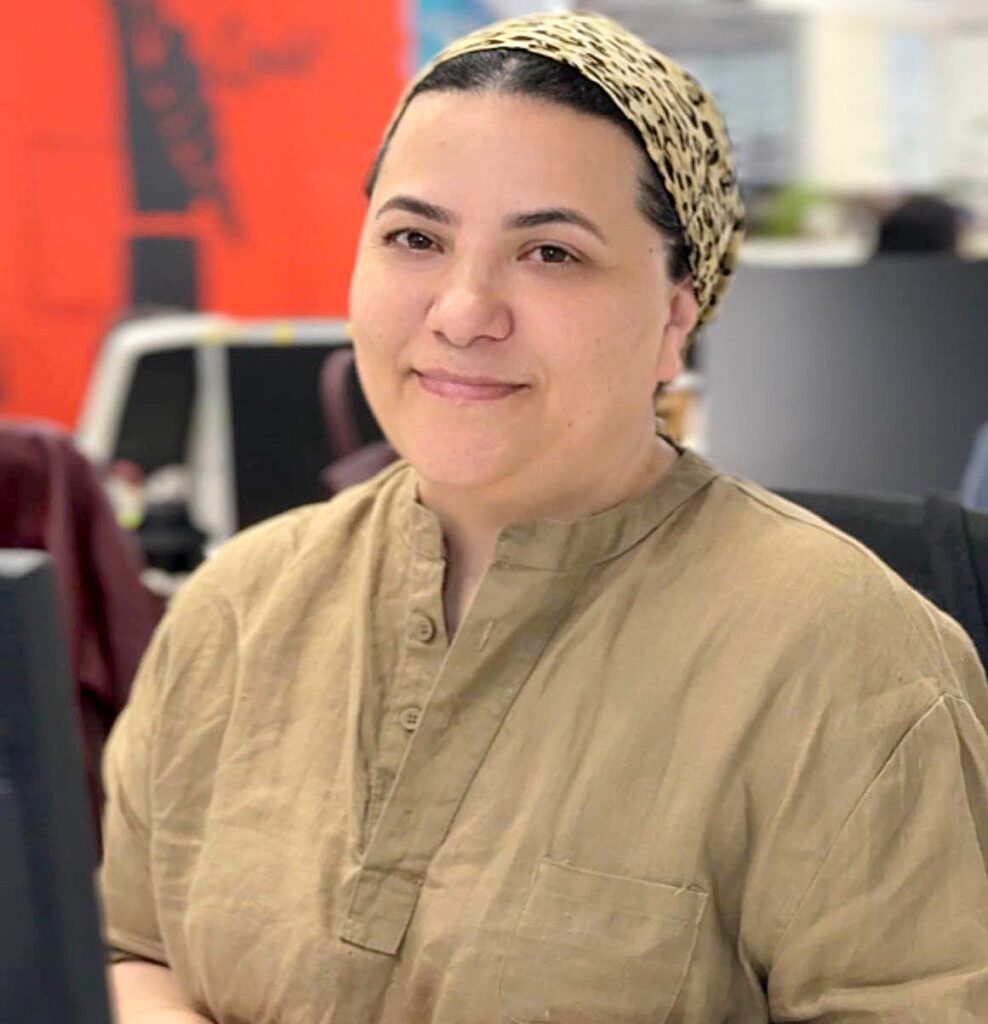
Amrita also came to the editorial office through an advertisement. By that time, she already had a whole collection of newspaper issues at home, which she had read cover to cover. When she saw that “Asia-Plus” was looking for journalists, she immediately went to the specified address.
“I came to the office with this announcement — and suddenly I had the feeling that this was my place. But along with that, there was a strong nervousness: I felt that I wouldn’t manage. I was a good student, did an internship, but here I suddenly got scared. It seemed that everyone around was so cool, knew everything and could do everything, and I could not. This feeling lingered for a while,” Amrita admits.
It was then that she learned that “Asia-Plus” was not just a newspaper, but also an information agency. It was the information staff who provided the newspaper staff with news fuel, and Amrita decided to join this team. As with many other “Asians,” she had to stay in the editorial office until late at night. Her parents did not understand how one could work until midnight and not earn much money for it. However, staying late in the office was not only due to work but also because of the frequent parties that the media group was always known for.
“AP was another world, completely unlike the reality around. There, you could express yourself, even shout. It was an island of freedom where we created. I was on cloud nine from the happiness of belonging to this world. And the main thing — it has remained the same. The same open people who care about what is happening,” explains Amrita.
There have always been many idealists among the “Asians.” Since 1996, they have been chronicling the country, and in today’s information world, this is a super important task. Independent online media is the cover of any country, but it cannot be glossy — only real. Quality journalism is constructive criticism, analysis, and working with open data. And if all of this exists, it is a sign that everything is good inside.
“Everyone wanted to do everything: eyes were shining, hands were working, legs were running”
Another successful project of the media group — without a doubt — is the radio. It appeared in 2002 and quickly became a super popular place that many young Dushanbe residents dreamed of joining. They were attracted by the hosts, the format, and the overall vibe of the new radio station.
This is where Zebo Tajibaeva began her career, who now has her own media.
“The trendiest radio station at that time looked like this: one computer for two people, worn carpet, a smoky foyer — and at the same time, an incredible atmosphere of lively, young people who wanted to change the world around them and actually did,” recalls Zebo.
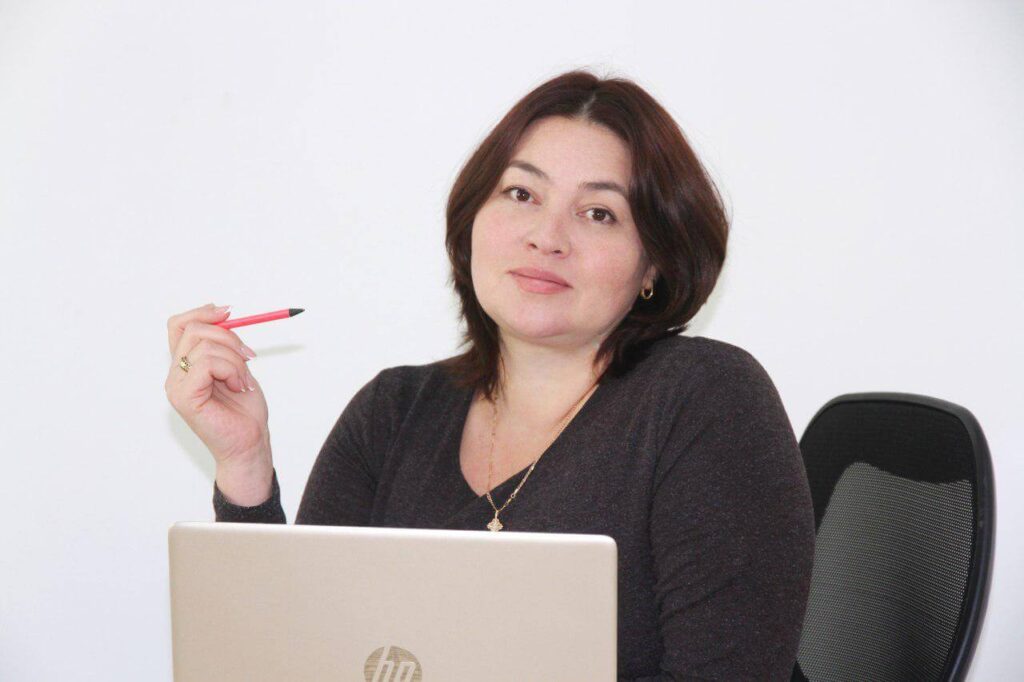
She shares that for a long time, working on air was a great stress for her — the fear of the microphone seemed insurmountable. But over time, she managed to open up.
“Of course, they used me as the most inexperienced: I obtained most of the news, so to speak, ‘on foot’ — running around, recording. And once I was offered to write news for the information agency as well. It turned out that I was even better at writing them than reading them on air. I didn’t stop reading the news, but I started taking on everything.
They gave us the opportunity to try ourselves in different formats: if you want an author program on the radio — please, if you want to write an article for the newspaper — please. The main thing was that everyone wanted to do everything: eyes were shining, hands were working, legs were running. Unfortunately, such an atmosphere no longer exists anywhere else. We didn’t just work — we lived journalism,” she says.
At the same time, the atmosphere in the editorial office was not solely related to the youth of the team. All “Asians” fondly remember their colleague Bakhram Manonov, who was significantly older than the rest.
“He was always ready to help and was the most productive. He never sat in the office — he gathered all the news himself and then quickly transcribed the recordings. Anyone who worked at AP could count on his help. It seemed to me that he never got tired. But unfortunately, he did get tired — his death was the most unexpected and significant loss for all of us,” Zebo shares.
“I left my child with a neighbor and ran to ‘Asia-Plus’
The executive director of the media group — Manizha Akhmedova — also built her career on the radio. In 2002, she was busy with household chores — sweeping the yard. She couldn’t find a dustpan and took an old, already read “Asia-Plus” newspaper.
“I flattened it — and suddenly saw an announcement: recruitment for the first FM radio station in Dushanbe is underway, and… today is the last day! I didn’t think long. I immediately started calling. Back then, there were no mobile phones, and getting through from a landline was quite a challenge. But I got through. They told me that if I could arrive within an hour — the commission would wait for me. I just took off. I left my three-year-old child with a neighbor and ran. I arrived, spoke… and stayed there for many years. More than two decades,” she recalls.
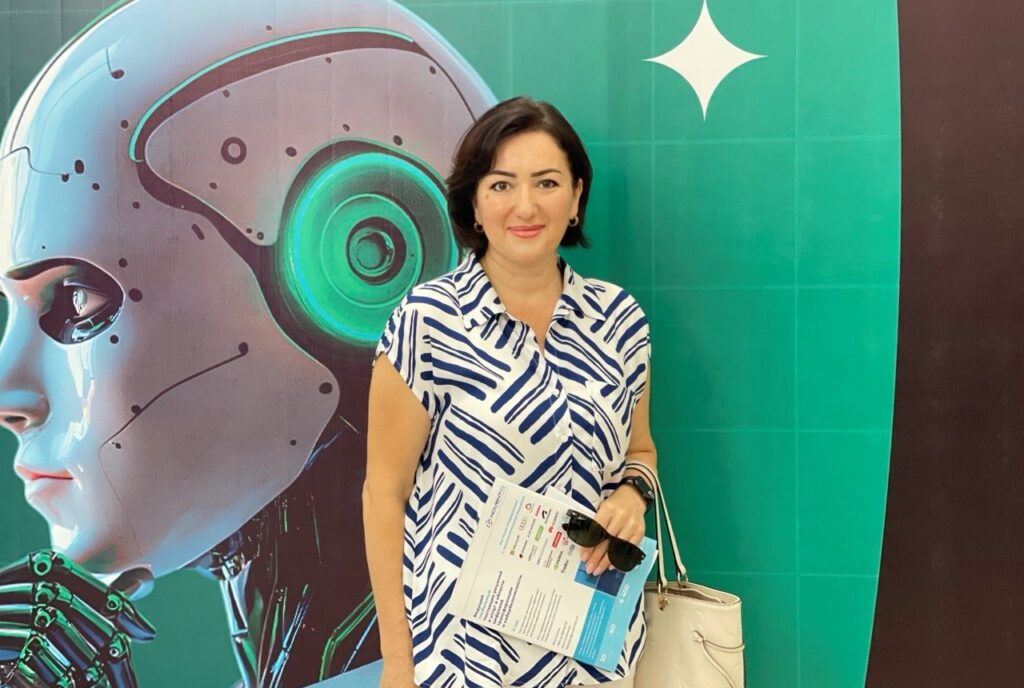
Like all “Asians,” Manizha shares that from the very first days, she felt that radio was her place.
“It was true happiness — to work in such a young, lively, mischievous, and incredibly energetic team. Every day, new ideas were born, and we immediately took on their implementation. The atmosphere was amazing — light, open, without unnecessary barriers. We all communicated as equals, supported each other. The management understood that creative people cannot be confined to strict frameworks. We were trusted — and this trust was something we wanted to justify. Therefore, we could work late into the night, stay for days — not because ‘it was necessary,’ but because we wanted to. Because we were passionate about our work. Because it was a shared endeavor, one big idea in which we all believed,” she recounts.
In 2018, Manizha was offered to head the radio. Within the media group, any employee with abilities and talents could claim high positions. However, a big position also meant big responsibility.
“I was afraid I wouldn’t manage, that I would let down the people who trusted me. I understood how serious it was. But I had a team. My team. People who became like family to me. Professionals in whom I never doubted for a second,” Manizha shares.
Four years later, in 2022, Manizha had to take on an even greater responsibility: she became the executive director of the entire media group.
“Since then, I think not only about the development of the radio but also about the future of the entire company. It is a different scale, different tasks, a different level of decisions. But the most valuable thing I have is the people. Our team. Friendly, strong, understanding. A team where everyone is a professional in their field, where there is support, respect, and a true sense of camaraderie,” she says.
“If you go through Tutubalina’s school, nothing will scare you anymore”
When it was decided to place a branch of Moscow State University in the building where the information agency “Asia-Plus” was located on one of the floors, the “Asians” had to move.
They moved to the GZhK building, into a new office that they renovated themselves. There were old showers for employees of the printing shop at this location. The information staff and administration moved into this office, while the newspaper remained on its second floor in the same building, and the radio was located on the 13th. Thus, the entire media group found itself under one roof.
However, in 2020, the entire “Asia-Plus” team suddenly had to unite. About 50 people worked in two editorial offices. The recording studio and “on-air” were equipped right in the corridor, and employees of the advertising department were seated next to journalists. It was difficult for two employees to pass between the furniture that had been brought into the office. But no one quit. The team worked in such conditions for more than a year.
In 2022, the editorial office moved to a new office in the city center, which can today be called one of the most comfortable in Dushanbe. It was here that new youth began to come, of whom there were already few left in “AP.”
“When I graduated from journalism school and returned from Rostov, I was not sure that I would connect my life with journalism. Everything around made me doubt: does that journalism I dreamed of even exist? But still, I decided to give it a try. “Asia-Plus” was then the only large media outlet I knew and was interested in, although I had no idea how everything was arranged there. However, I had heard the phrase: if you go through Tutubalina’s school, nothing will scare you anymore,” shares journalist Milana Yena.
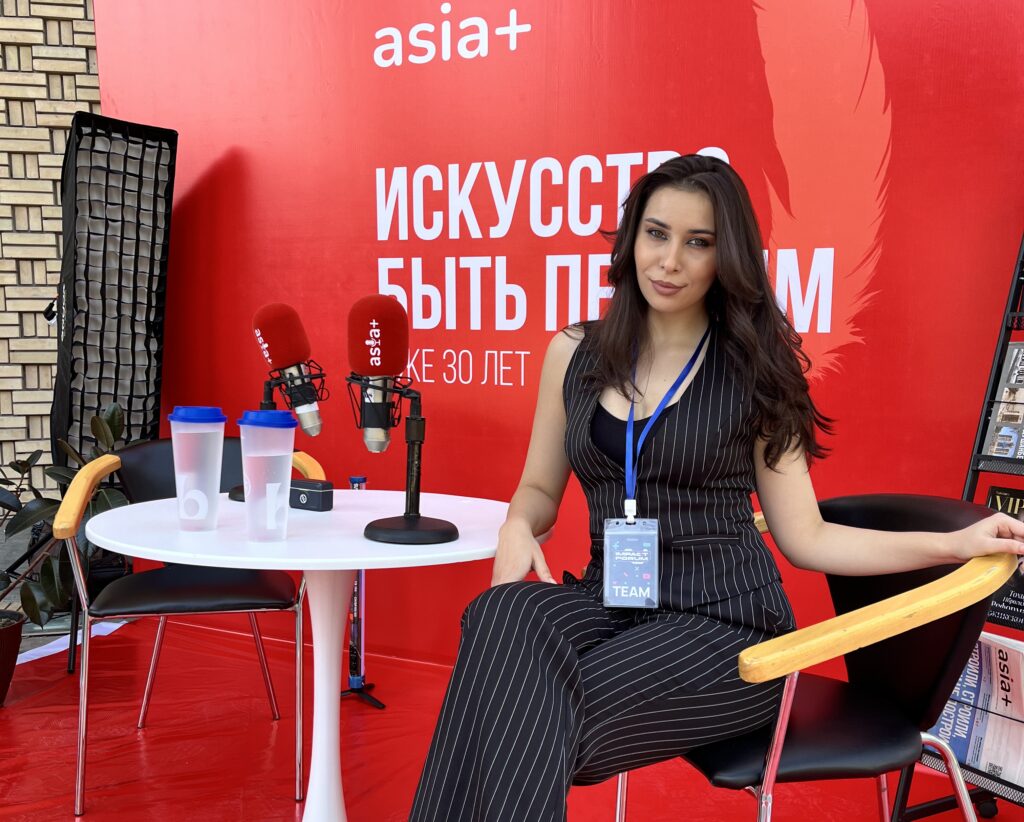
She came to the new office, around were new times, but she still felt that same atmosphere.
“My first day. I walk in — and literally from the threshold, I feel this rhythm: someone is running with a camera, hurrying to the shoot, others are typing texts without looking up. At some point, I caught myself thinking: this is real life. Initially, I imagined that there would be tired, overloaded journalists, but I saw a cheerful team that I wanted to join,” she recalls.
At first, Milana was interviewed by Amonullo Khayrulloyev, who then led the SMM service, and then by Olga.
“Here, I certainly felt like I was taking the most difficult exam. But did I get scared? No. On the contrary. At that moment, I finally realized: I came to the right place and to the right people. To professionals from whom I could learn. And maybe one day become like them — if I really wanted to. Honestly, when people ask me what I like most about AP, I always say the same thing: the people,” Milana says.
She admits that from the very first days, she felt like an “Asian” — largely due to the fact that the editorial office still supports, helps, and reacts calmly to mistakes.
“You come into the team — and you are immediately accepted as one of your own. Perhaps this is the peculiarity of the editorial office. For me, it has long ceased to be just a job; it feels like you are part of a big family,” she shares.
“We have the best relationships with the audience”
Of course, over these 30 years, “Asia-Plus” has gone through a lot: financial and political crises, pressure from outside, lawsuits. At some point, “Asia-Plus,” like all editorial offices in the world, faced an existential crisis — with the advent of social networks, everyone became media, and journalists lost their previous monopoly and advertising revenue, which went to other platforms. The editorial office plunged into new formats.
“Now we have about two million followers on social media. We managed to create an atmosphere of trust: people share their stories with us, come to us with their problems — in comments, in private messages, even personally to the editorial office. Many topics arise precisely from these appeals. I am very proud of this. Especially that people are not afraid to come to us. In a situation where many are afraid to talk about their problems, they come to us — without fear. And this is the most valuable thing for me,” says Mehrangiz Sultonzoda, head of the media group’s SMM service.
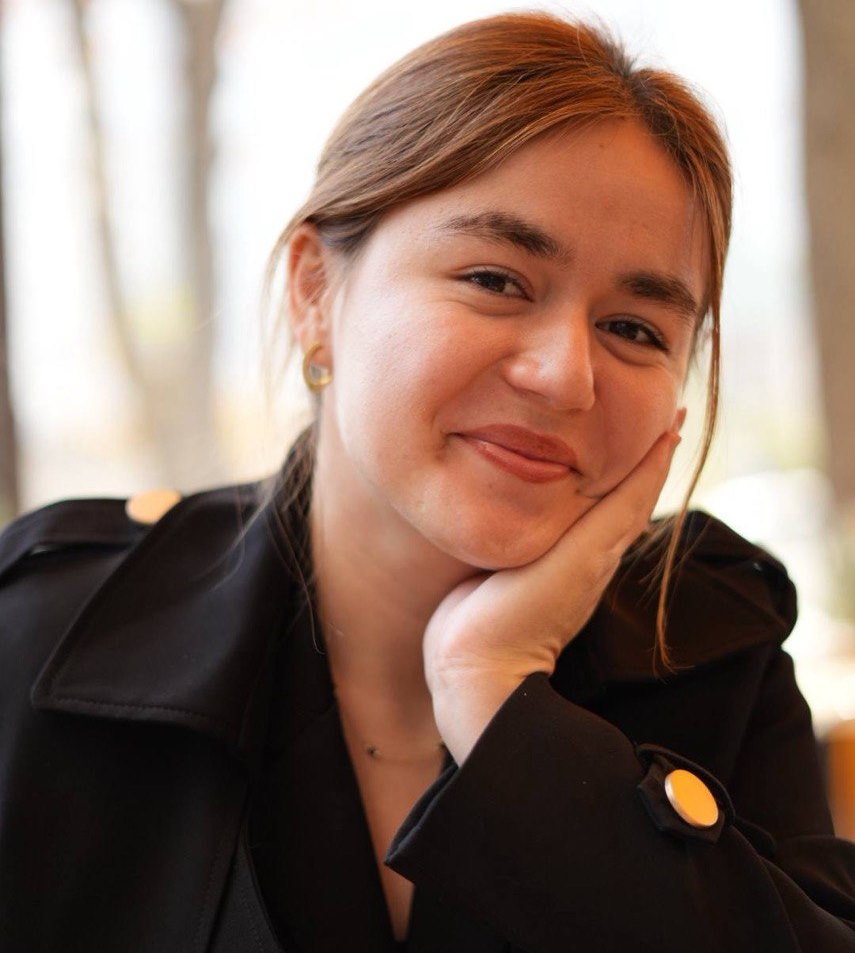
Mehrangiz is also a representative of the new generation of “Asians”: she joined the editorial office three years ago, still a student, but already with experience working at other publications.
“I rewrote my first report for AP three or four times. I already had experience with publications, but here everything turned out to be different. I was taught, guided, pointed out mistakes — and they did it very kindly. The strongest impression is the attitude of colleagues. I heard a lot about professional jealousy, but there was none here. On the contrary: more experienced colleagues could simply share their data that they had collected themselves — just because I took on this topic. From the very beginning, I felt like an ‘Asian.’ Perhaps this is what kept me in the profession,” she says.
Umid Babakhanov himself explains what “Asian” means in his understanding:
“If a person shares our values, is passionate about the work, cares about the team, he is our person, an ‘Asian.’ At the same time, he can be completely green and have no experience. That’s not scary — experience comes with time. If, however, a person has no principles, if he only loves himself and comes to work only for the salary, he is an ordinary employee who will likely not stay with us for long.”
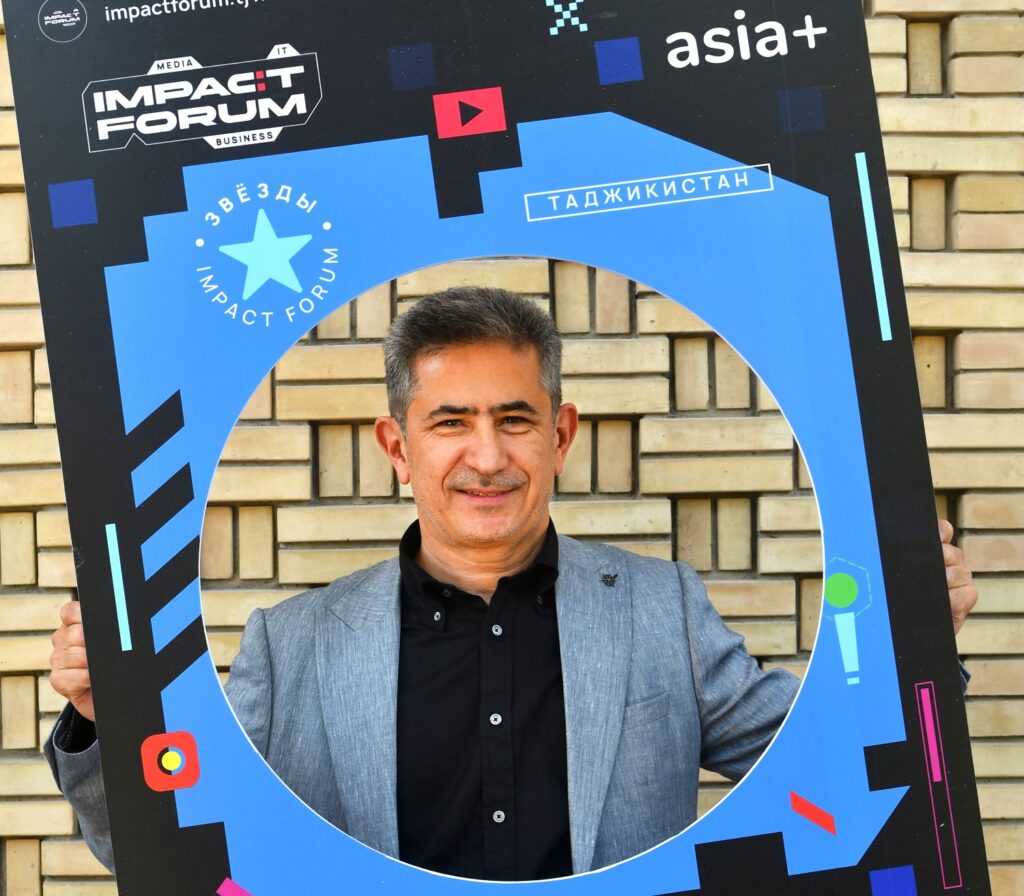
Umid Mansurovich knows about his characteristic of “being constantly dissatisfied,” but continues to try to use it for good:
“Every victory, every new height, of course, delights and inspires all employees — including me. But I often repeat to young colleagues one simple thought: as soon as we give ourselves a rating of ‘five’ and are completely satisfied with our work, we stop developing. And that is dangerous. Therefore, already the day after any success, it is important to sit down and think: how can we improve what we have done, how to take another step forward? I am sure that this approach has allowed the media group to remain a leader for all these 30 years.
Today, considering the speed of changes in technology and business, this principle is becoming even more important. I really hope that the new generation of “Asians,” who are succeeding us, will continue to remain, in a good sense, dissatisfied with themselves and will take a step forward every day. Otherwise, any organism ages and dies.”