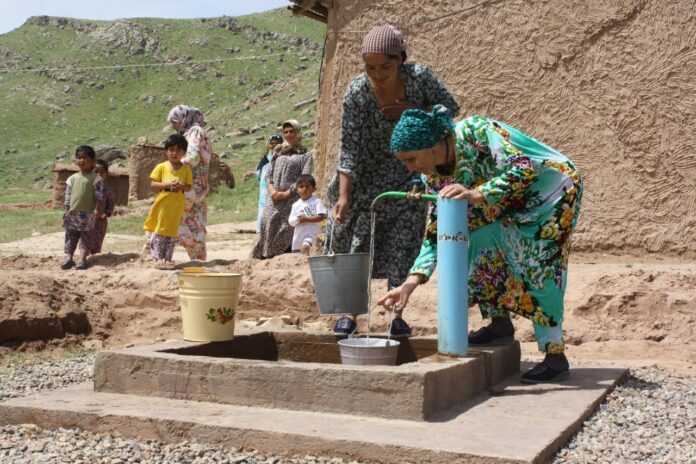
Tajikistan is one of the main sources of water in Central Asia. However, it has the lowest share of water reuse in the region. Why does a country with vast water resources almost not recycle water, and what hinders the development of reuse systems?
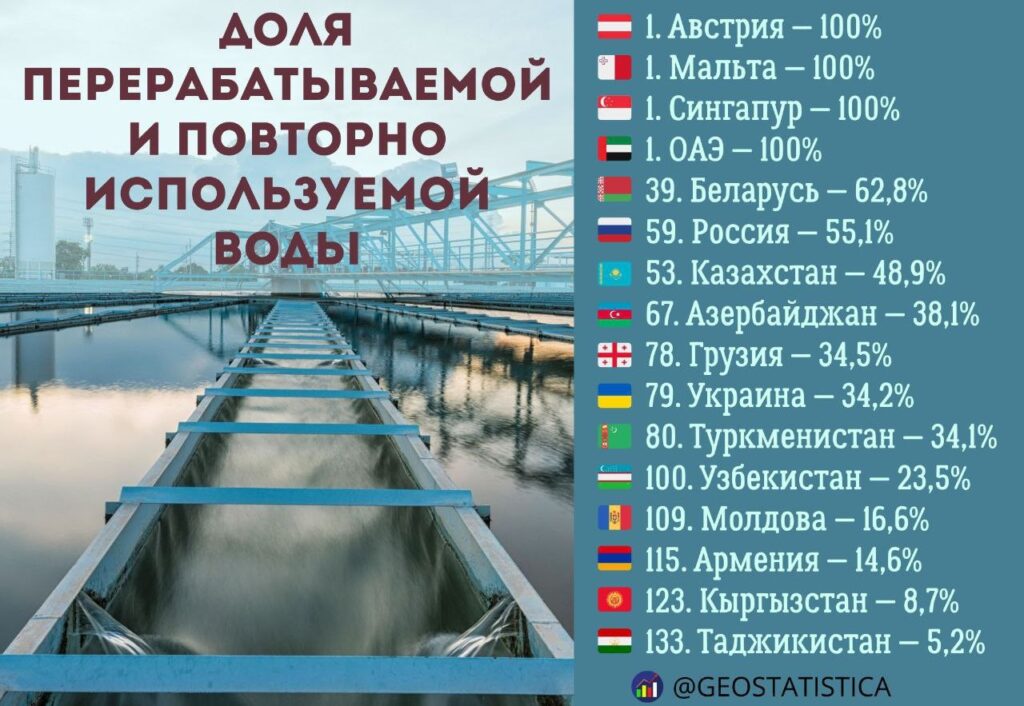
According to the Environmental Performance Index data for 2024, Tajikistan ranks among the last in the world in terms of the share of recycled and reused water — about 5.2%. However, the Ministry of Energy and Water Resources of Tajikistan claims that 8% of all return waters are reused for irrigation.
In both cases, this is the lowest indicator among Central Asian countries.
Tajikistan forms a significant part of the runoff of the largest rivers in the region. According to the country’s Ministry of Energy, over 80% of the Amu Darya’s runoff — one of the main water arteries of Central Asia — is formed within the republic. A large number of mountain rivers, glaciers, and lakes make the country one of the most water-rich states in the region.
This factor largely explains the low share of water reuse. In countries where natural water resources seem almost inexhaustible, historically less attention has been paid to reuse technologies and closed-loop water use. Unlike states with limited water supplies, such as Singapore or the countries of the Persian Gulf, Tajikistan has not faced an urgent need to implement costly water treatment and reuse systems for a long time.
Limited Infrastructure of Treatment Facilities
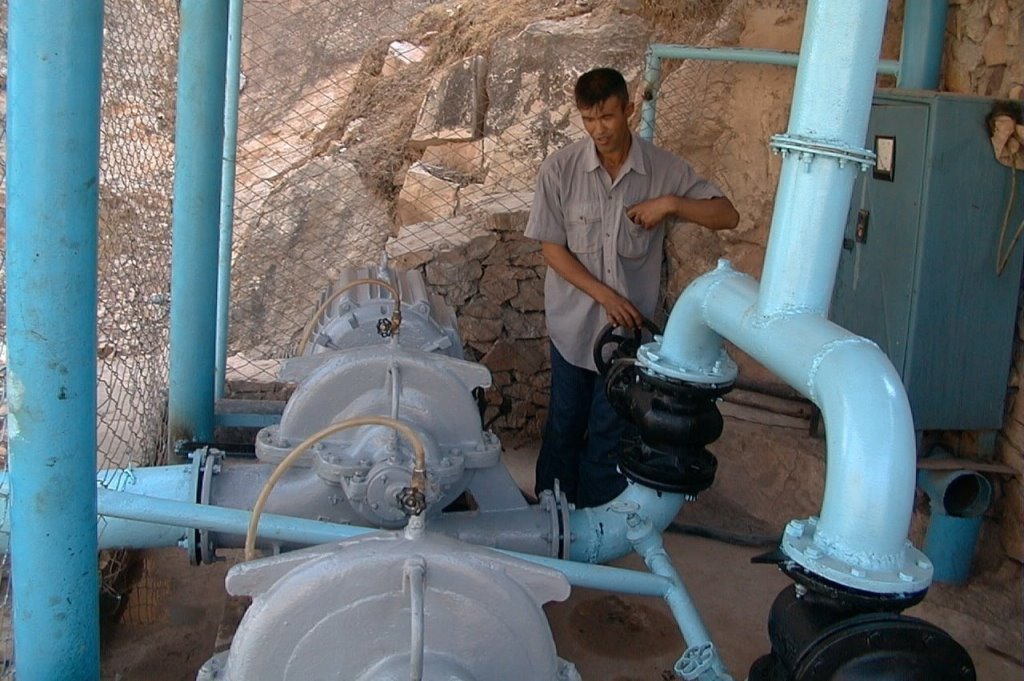
One of the main reasons for the low level of water recycling remains the underdeveloped infrastructure for wastewater treatment. A significant portion of existing treatment facilities was built during the Soviet era and is in need of modernization today. Many systems do not operate at full capacity or do not provide the necessary level of treatment for water reuse.
In a number of cities, treatment facilities are either outdated or require serious reconstruction. This limits the possibility of using treated wastewater in industry, municipal services, and agriculture.
Structure of Water Consumption
Another reason is the structure of water consumption. According to the National Water Strategy, agriculture remains the main water consumer in Tajikistan, primarily irrigated agriculture. Various estimates suggest that irrigation accounts for up to 85–90% of total water consumption.
In such conditions, water is more often used directly from rivers and canals rather than passing through urban drainage and treatment systems. This means that a significant portion of water does not enter the recycling and reuse system but returns to natural water bodies or is lost in irrigation networks.
Financial and Technological Constraints
The development of water reuse systems requires significant investments. Modern water treatment technologies, water quality monitoring systems, and infrastructure for distributing treated water for technical needs or agriculture are necessary.
For Tajikistan’s economy, such projects often turn out to be costly. The priorities of the state budget are traditionally focused on energy, infrastructure, and social services. As a result, projects for the modernization of treatment facilities are implemented slowly and often depend on international financial aid and donor programs.
Institutional and Regulatory Factors
An additional barrier is the underdeveloped regulatory framework for the reuse of treated wastewater. In many countries actively implementing water reuse, there are clear water quality standards for various applications — industry, agriculture, and urban greening.
In Tajikistan, such mechanisms are still in the development stage. The lack of clear standards and economic incentives reduces the interest of enterprises and municipalities in implementing water reuse systems.
Potential for Change
Despite the low current indicators, the potential for growth in Tajikistan remains significant. In recent years, projects for the implementation of decentralized wastewater treatment systems and the use of treated water for agriculture and urban services have been discussed.
The development of such technologies could become an important element of the country’s adaptation to climate change and the gradual reduction of glaciers that feed the main rivers of the region.