
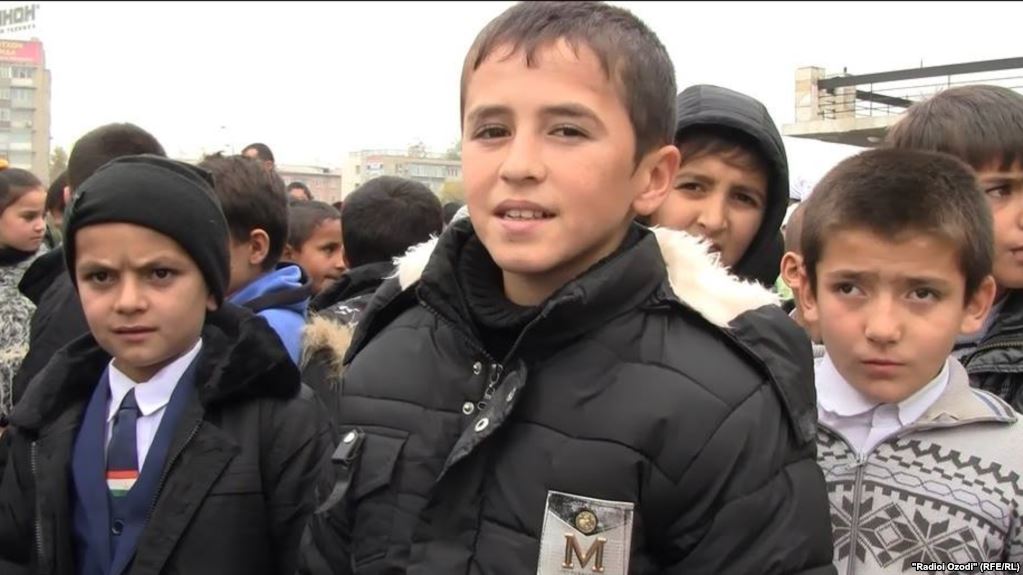
Alarmed by reports that Central Asians working abroad are being brainwashed and recruited into extremist groups like the Islamic State, authorities in northern Tajikistan are calling on kids to help keep tabs on dad, according to Radio Liberty’s Tajik Service.
Schoolchildren as young as 11 in the northern district of Isfara have been instructed by teachers and local authorities to make frequent phone calls to their fathers working in Russia as seasonal laborers. The idea is to get updates on their everyday routines and whereabouts, share the details with school administrations, and hopefully prevent Tajik nationals from joining with Islamic militants.
A school administration in Isfara openly admits that teachers are asking students to gather information about their fathers, an effort that is vaguely reminiscent of Stalin-era attempts to get children to inform on their parents in the Soviet Union.
Sobirboy Tuychiyev, a deputy school director in the village of Chorkuh, says schoolchildren are also being asked to plead with their fathers not to join extremist groups.
When a migrant worker returns home from Russia, Tuychiyev says, the children are asked to let authorities know.
A law-enforcement official in Dushanbe told RFE/RL on condition of anonymity that the measure is a part of authorities’ broader project to combat terrorism threats in the country's most “vulnerable” areas.
Once dubbed the Islamic Triangle of Tajikistan, Isfara — especially its Chorkuh area — is locally known as one of the most religiously conservative pockets of Tajikistan's otherwise relatively liberal north.
Dozens of Isfara residents have been arrested in the past decade for alleged links to extremist groups, such as the banned Islamic Movement of Uzbekistan, which in 2015 pledged allegiance to the extremist Islamic State group.
The area came under scrutiny in 2014, when authorities said that at least 20 people from the district had gone to Syria and Iraq to join IS extremists.
Desperate to prevent more people from joining with Islamic militants, the local government has since organized meetings with villagers at teahouses, mosques, and schools. Imams have been asked to explain to young men attending mosque sermons that the conflict in the Middle East is not the holy war they might think it is.
Saadi Yusufi, a Dushanbe-based expert on social affairs, suggests the new effort to bring children into the effort to prevent radicalization could work.
"It might have psychological effects especially for men who are mulling over joining extremist groups but are still undecided," says Yusufi. "In such a situation, when children plead with their fathers not to go astray, it can sway the fathers' decision and make them think twice."
In the southern Khatlon province, meanwhile, women are being told by local authorities to be vigilant for any signs of radicalization among men in their families, both at home and away.
Just days after the deadly subway attack in St. Petersburg on April 3 — an act blamed on natives of Central Asia and deemed to be terrorism by Russian authorities, although no group has claimed responsibility — Khatlon authorities and women's groups began meetings with rural women to discuss the threat posed by recruiters.
The gatherings are being held across the province, where authorities explain to women how to help prevent their husbands, sons, and brothers from falling under the influence of extremist groups.
