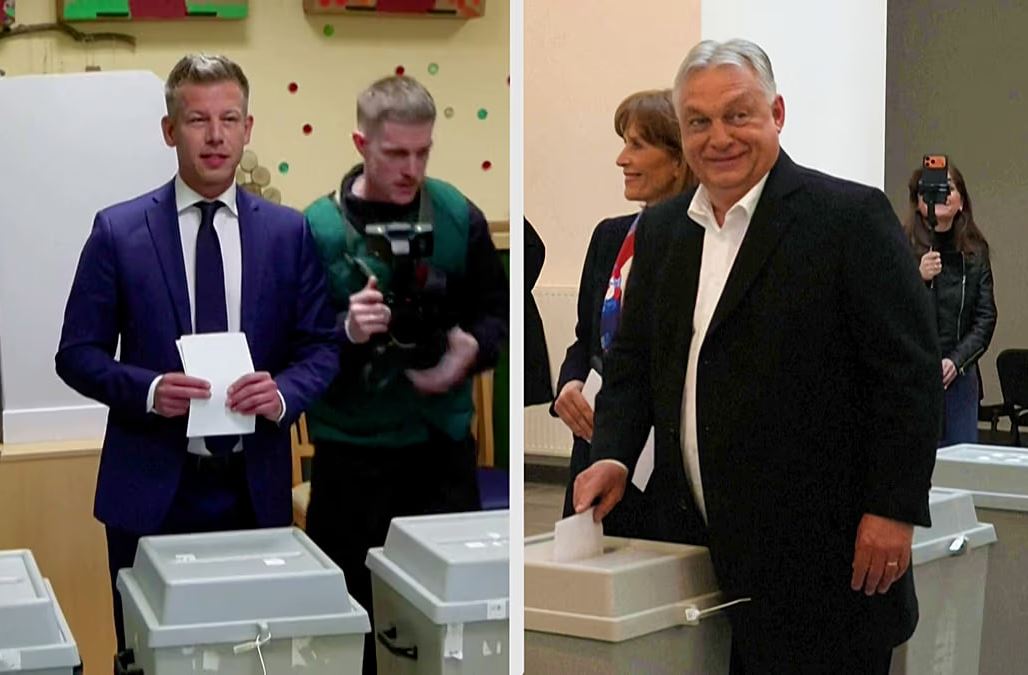
Hungarian Prime Minister Viktor Orban conceded defeat in the parliamentary elections on April 12 and stated that his team will continue to serve the country, even while in opposition. He announced this to his supporters that same evening in Budapest, reports DW.
According to Orban, his supporters need to focus on strengthening their own political community.
According to the electoral commission’s data after processing 84.91% of the ballots, the victory is held by opposition politician Peter Magyar and his center-right party “Tisa”. They may secure 138 out of 199 seats in parliament — more than two-thirds. Voter turnout was a record 79%.
Magyar reported that Orban personally called him to congratulate on the victory, which he wrote about on social network X.
European Commission President Ursula von der Leyen welcomed the victory of the opposition party “Tisa”.
“Hungary has chosen Europe. Europe has always chosen Hungary,” she wrote on X.
According to her, “the country is returning to its European path,” and “tonight the heart of Europe beats stronger in Hungary”.
German Chancellor Friedrich Merz joined in the congratulations, stating: “I look forward to cooperation for a strong, secure, and, above all, united Europe.” German Foreign Minister Johann Wadeful noted that Hungarians have chosen change and expressed hope that the country will “once again seize its vast opportunities in Europe”.
French President Emmanuel Macron reported that he has already spoken with Magyar and called for joint work on a “more sovereign Europe”.
Italian Prime Minister Giorgia Meloni congratulated Magyar and wished him success, also thanking Viktor Orban for his cooperation, adding: “I know that even in opposition he will continue to serve his country”.
UK Prime Minister Keir Starmer described the events as a “historic moment” — “not only for Hungary, but also for European democracy,” emphasizing readiness for joint work for security and prosperity.
The confrontation between Orban and Magyar was key in these elections. Orban, who is 62, had led the country since 2010. Meanwhile, 45-year-old Magyar became the first opposition candidate in a long time with real chances of victory.
Among the reasons for dissatisfaction with the current government are issues with infrastructure, healthcare, and education, as well as accusations of corruption. Magyar, in turn, promises to fight corruption, implement systemic reforms, and present a new constitution. Additionally, he advocates for distancing Hungary from Russia and strengthening the country’s role as a reliable NATO partner.