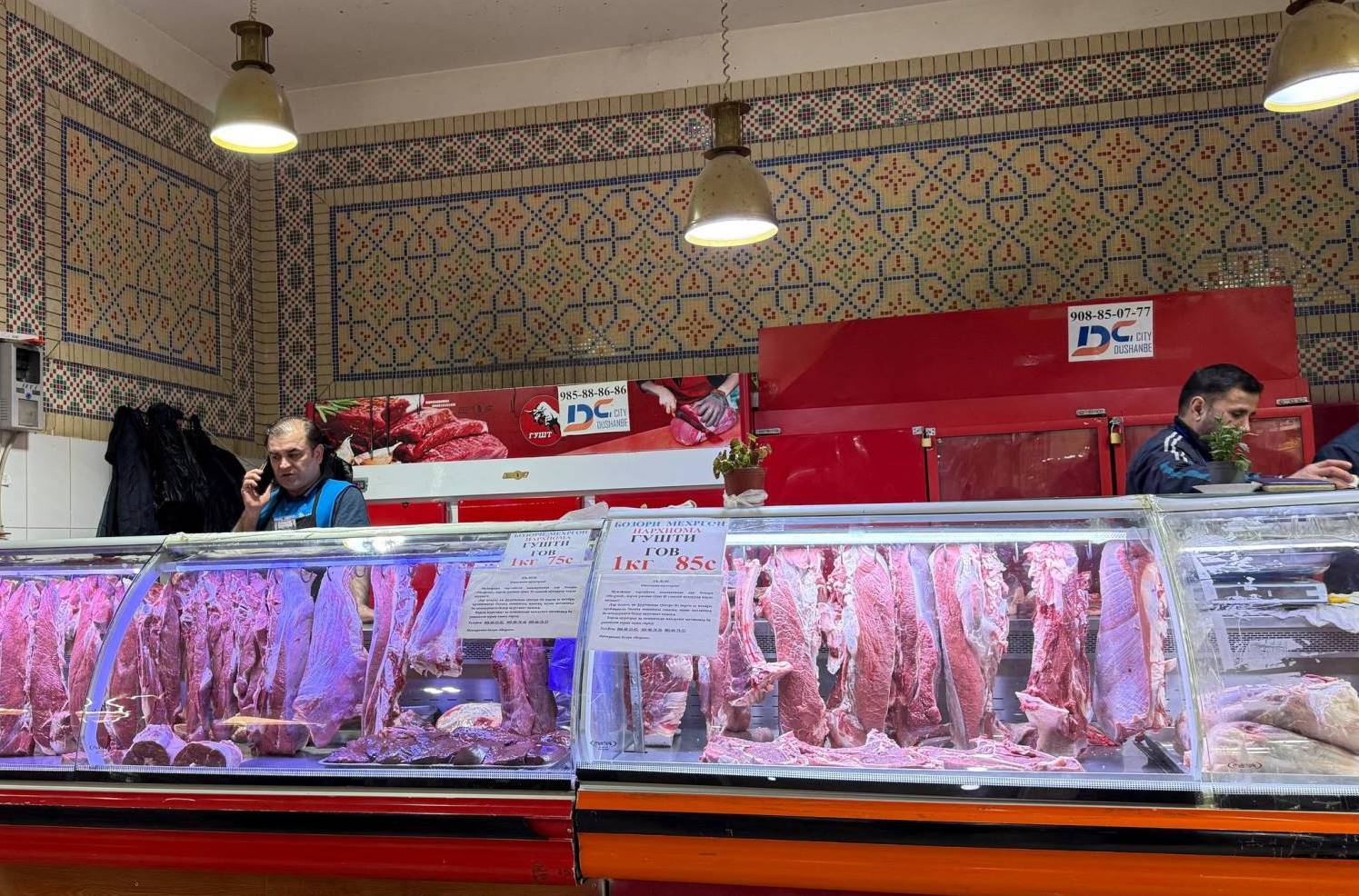
In Tajikistan, beef remains one of the most expensive in Central Asia: averaging $10-11 per kilogram – more expensive than in Kyrgyzstan, Kazakhstan, and Turkmenistan, and on par with Uzbekistan.
In March, global meat prices continued to rise. According to FAO data, they increased by about 1% compared to February and by 8% compared to last year.
The rise in prices worldwide is primarily linked to the increase in pork prices, especially in Europe, as well as the reduction in meat production in Brazil. Meanwhile, lamb and poultry prices have slightly decreased.
Experts warn that due to reduced production in the USA and Brazil and high demand in Europe, beef prices may rise even further.
In Central Asian countries, beef prices remain relatively low compared to global figures.
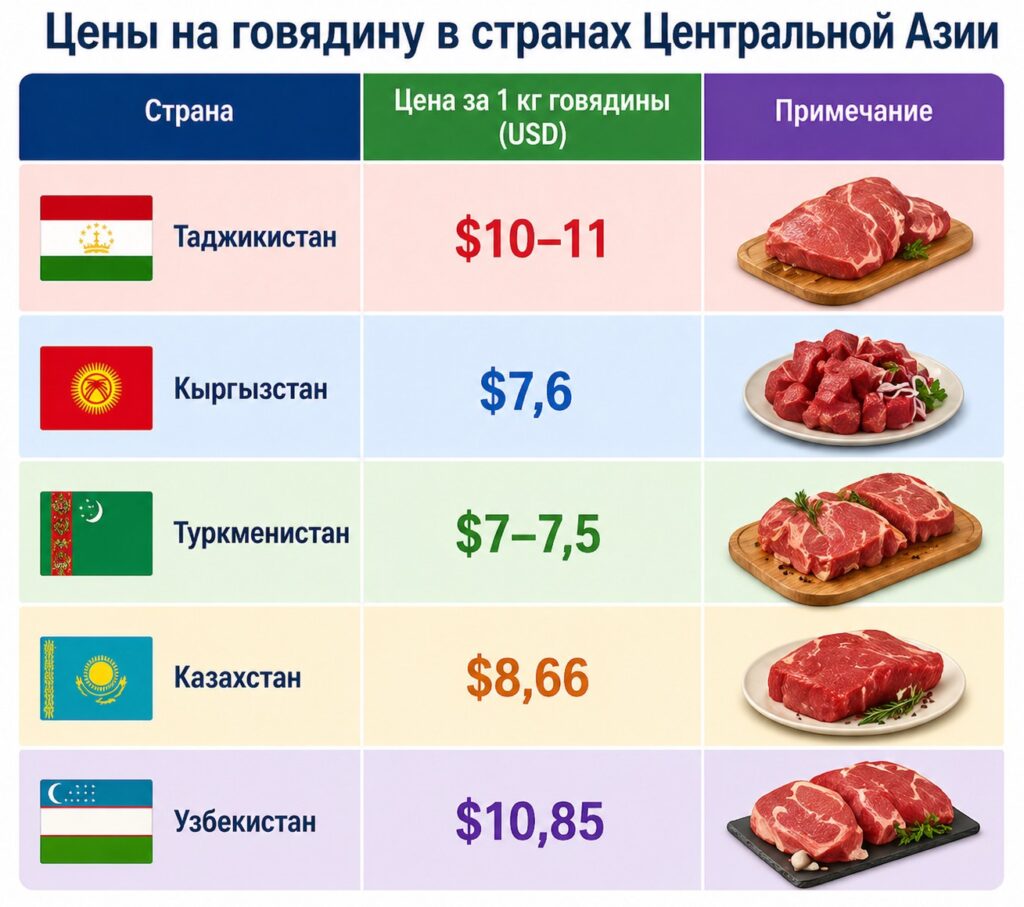
In Tajikistan, the average cost is around $10-11 per kg, which is higher than in some neighboring countries.
The highest price for beef is recorded in Switzerland – $45.72 per kg. Next are Norway ($32.67), Luxembourg ($27.09), South Korea ($25.23), and Singapore ($25.02).
The lowest prices are in Nigeria ($4.56), Pakistan ($4.70), Kenya ($5.17), India ($5.33), and Nepal ($5.40).
Among the former USSR countries, beef prices vary significantly. The highest are in Estonia ($20.48), Latvia ($13.71), and Lithuania ($12.43).
The middle group includes Armenia ($11.59), Russia ($10.80), Azerbaijan ($10.64), and Georgia ($9.91).
Lower prices are in Belarus ($9.25), Moldova ($8.59), and Ukraine ($7.22).
Production is growing in Tajikistan
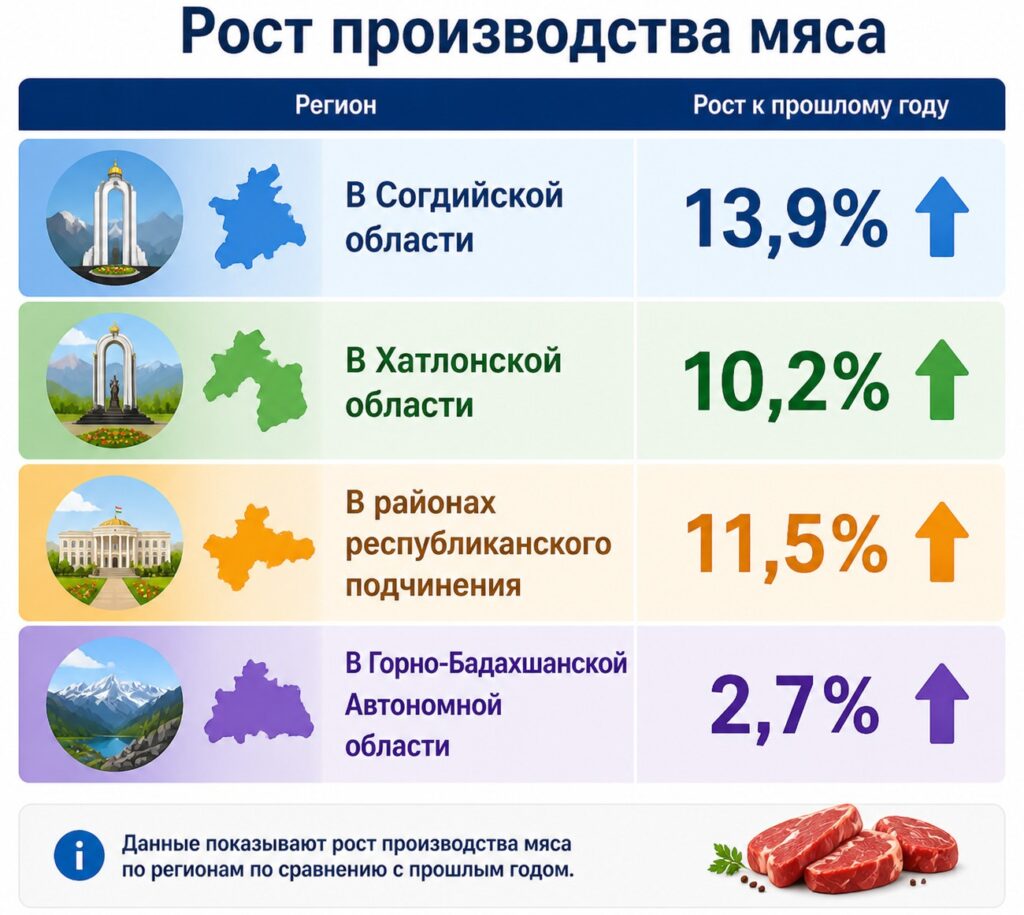
In this context, meat production in Tajikistan is increasing. In January-March 2026, the volume of cattle and small livestock production (in live weight) amounted to 54.7 thousand tons, which is 11.5% more compared to the same period last year.
Growth has been recorded in all regions:
In Tajikistan, meat remains expensive due to a deficit: the country covers only about 58% of the demand, and imports make up just 4-6% of the market. Although foreign meat (especially from Belarus and Kazakhstan) is cheaper and helps curb prices, it is mainly used in public catering and does not replace local meat due to taste preferences.
The high cost of domestic meat is due to the underdevelopment of animal husbandry, a lack of feed, and systemic support for farmers. Imports only provide temporary relief but do not solve the problem of high prices.