
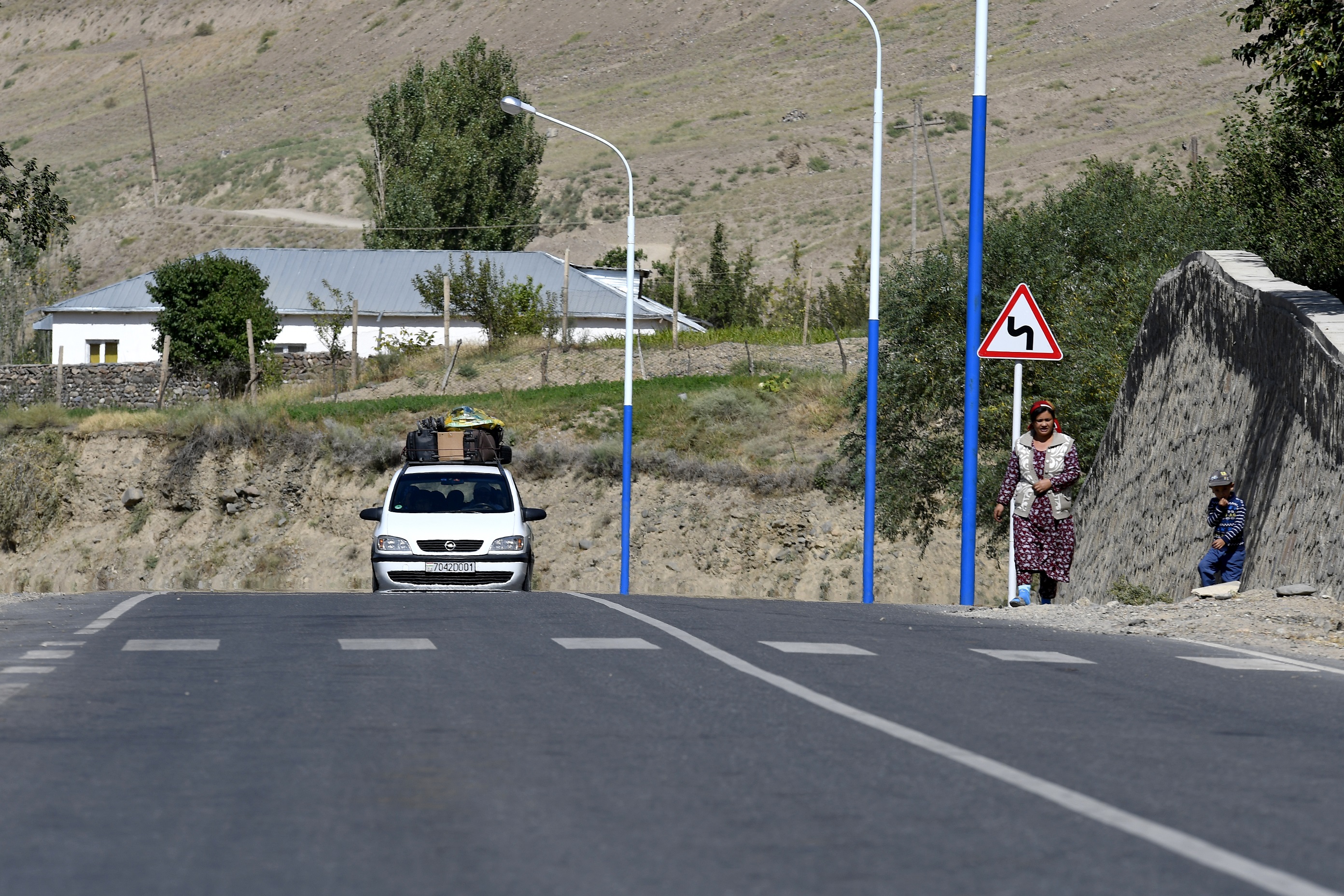
Around 70 participants from the government, private sector, civil society organizations, academia and development partners discussed a framework and priority actions of a Tajikistan national strategy on reducing road crash deaths and injuries during a workshop in Dushanbe on April 25-26.
Organized by the Asian Development Bank (ADB), the discussions focused on safer road infrastructure, vehicles, and road users, as well as post-crash care and road safety management.
“The lack of road safety is a major issue resulting in about 1.25 million deaths and up to 50 million injuries in road crashes annually worldwide,” said Kamel Bouhmad, Transport Specialist of ADB’s Central and West Asia Regional Department. “In making a commitment to road safety, Tajikistan is investing in a safer and more prosperous future.”
Road crashes have significant social and economic costs. Road crashes are estimated to cost up to 5% of gross domestic product for low and middle income countries. This represents about $350 million annually for Tajikistan, according to the ADB Tajikistan Resident Mission (TJRM).
Tajikistan has made a commitment to improving road safety under the Central Asia Regional Economic Cooperation (CAREC) Road Safety Strategy endorsed in October 2016. The strategy aims to reduce number of road crash fatalities on the CAREC road corridors by 50% by 2030, as compared to 2010. Annually, the strategy aims to save 23,000 lives and prevent 250,000 serious injuries.
This year, Tajikistan chairs the CAREC program, which promotes project-based cooperation in transport, energy, trade facilitation, and trade policy. The CAREC partnership comprises Afghanistan, Azerbaijan, the People’s Republic of China, Georgia, Kazakhstan, Kyrgyzstan, Mongolia, Pakistan, Tajikistan, Turkmenistan, and Uzbekistan—and six multilateral institutions. ADB has served as the CAREC Secretariat since 2001.
ADB, based in Manila, is dedicated to reducing poverty in Asia and the Pacific through inclusive economic growth, environmentally sustainable growth, and regional integration. Established in 1966, ADB is celebrating 50 years of development partnership in the region. It is owned by 67 countries—48 from the region.
