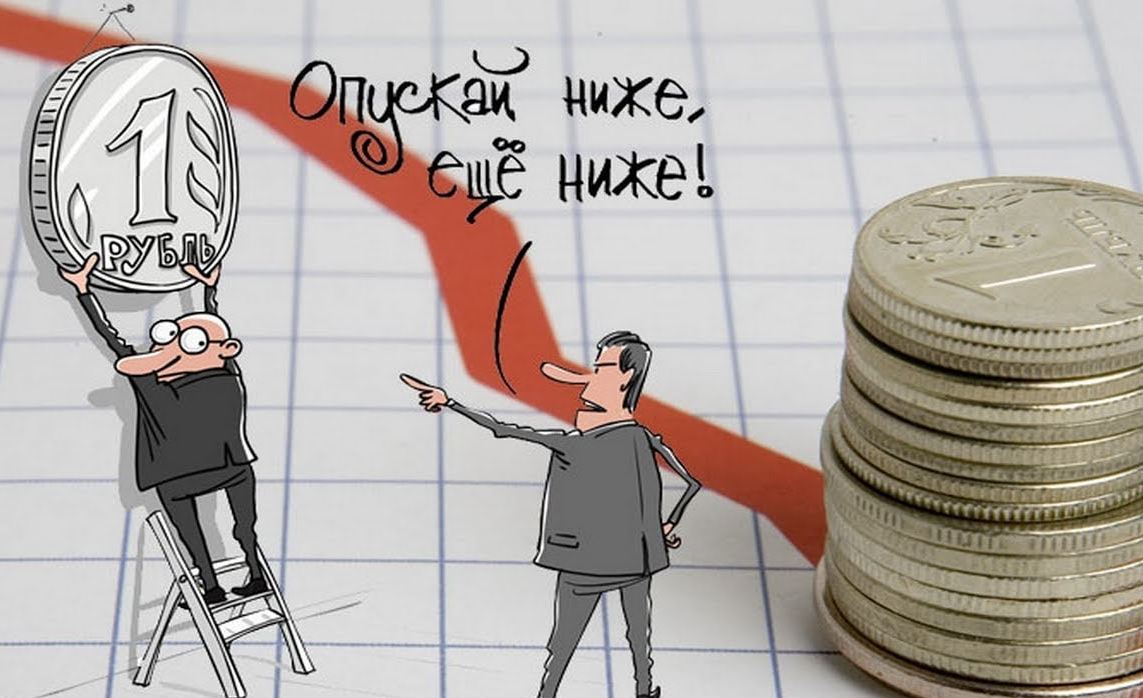
The exchange rate of the Russian ruble (RR) against the Tajik national currency, the somoni (TJS), has sharply depreciated over the past month.
An average exchange rate of RR against TJS at exchange offices of Tajikistan’s commercial banks has dropped from 1:0.114 on September 9 to 1:0.1012 on October 9.
The last time such an exchange rate of RR against TJS (1:0:1012) set by commercial banks was in late February 2016.
Meanwhile, the official exchange rate of RR against TJS set by the National Bank of Tajikistan has also dropped significantly over the reporting period: from1:0.118 on September 9 to 1:0.1092 on October 9.
Such a low exchange rate affects families of Tajik labor migrants.
Until 2016, migrants' money entered the country in Russian rubles and was exchanged at banks and non-bank exchange offices, but since 2016, the National Bank of Tajikistan instructed commercial banks to issue ruble transfers in somoni only.
According to the Interior Ministry of the Russian Federation, more than 1 million Tajik seasonal workers travel to Russia each year.
In Russia, RR weakened beyond a symbolic threshold of 100 to the U.S. dollar in early hours of October 3 as foreign currency outflows and a shrinking balance of trade continue to weigh on the currency. The ruble recovered slightly through the morning, and was hovering just above 99.5 versus the greenback by around 10 a.m. Moscow time. On October 9, the USD/RR exchange rate was 1:101.
Some experts noted last week that the roble has lost support of a favorable month-end tax period that usually sees exporters convert FX revenues to meet local liabilities. Brent crude oil, a global benchmark for Russia's main export, was down 1.9% at $84.21 a barrel, a more than five-week low, extending the previous session's sharp slump.