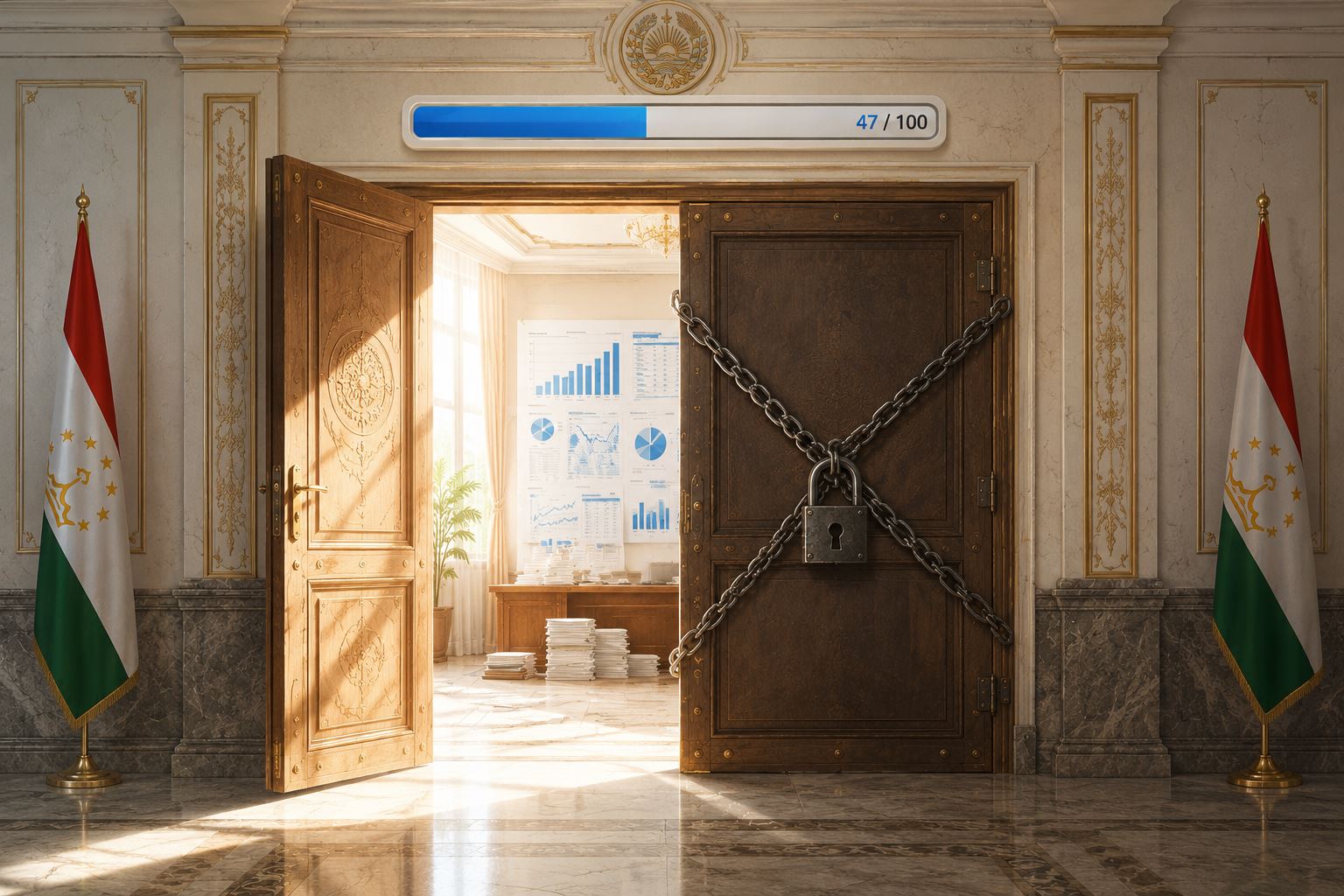
Tajikistan scored 47 out of a possible 100 points in the Budget Transparency Index in 2025, which is 14 points higher compared to 2023, when this index was last published. However, despite the increase in indicators, the result obtained is insufficient for assessing the country’s financial policy, as a score above 61 is considered acceptable.
According to information published by the International Budget Partnership, only Tajikistan and Kyrgyzstan were assessed among Central Asian countries in this year’s ranking, with Kyrgyzstan scoring 69 points, above the established threshold.
At the same time, Tajikistan surpasses China (19 points) and Afghanistan (0).
- Kyrgyz Republic — 69
- Ukraine — 66
- Mongolia — 64
- Armenia — 63
- Tajikistan — 47
- China — 19
- Afghanistan — 0
According to the source, the rating is formed based on the timely online publication of 8 main budget documents. According to the findings, Tajikistan publishes some of them, but others are either published late or not available at all. In particular, the International Budget Partnership assessed the availability of these documents as follows:
- Pre-Budget Statement – 56 points
- Executive’s Budget Proposal – 54 points
- Enacted Budget – 83 points
- Citizens Budget – 50 points
- In-Year Reports – 59 points
- Mid-Year Review – 48 points
- Year-End Report – not prepared
- Audit Report – 38 points.
According to the assessments, Tajikistan has made progress in several areas. In particular, for the first time, it published the Mid-Year Budget Review online, expanded the volume of information in the budget proposal, and provided more detailed information on debt and expenses in the pre-budget statement.
However, the network writes that some issues still persist, and some important information is no longer published. In particular, the distribution of expenses by economic groups has been excluded, the year-end budget report is not prepared, and there is insufficient information on financial risks and debts. Thus, the completeness of budget documents remains insufficient, and some documents show a reduction in the volume of published information.
Public participation — 17 out of 100 points
In this ranking, Tajikistan received only 17 points for the level of citizen participation in the state budget process. This means that citizens have limited opportunities to participate in budget development, public discussions are rare, and the involvement of public organizations in budget consideration remains weak.
At the same time, this indicator is higher than previous results. In 2023, Tajikistan received 7 out of 100 possible points in the budget transparency sub-index for public participation in the budget process. Before that, the republic had no points in this direction at all.
At the presentation of the previous study results, Ukhtam Jumayev, an independent expert from the International Budget Partnership in Tajikistan, who conducted the ranking study, called public participation one of the important elements.
“Public participation at all stages of the budget process is a very important element in improving the efficiency of budget spending and reducing corruption in the area of public finances,” he added.
What is recommended to Tajikistan?
The International Budget Partnership recommended prioritizing the following steps to improve Tajikistan’s position and budget transparency in this index.
- Timely and regular online publication of the Year-End Report in accordance with the best international practices and turning this process into a permanent system.
- Providing more comprehensive information on fiscal risks and macroeconomic forecasts, including data on transfers to state organizations, quasi-fiscal activities, assets, outstanding expenditure arrears, liabilities and fiscal sustainability, contingent liabilities, and sensitivity analysis.
- Including economic classification expenditure data in the Executive’s Budget Proposal.
- Publishing macroeconomic indicators prepared by the Ministry of Economic Development and Trade along with the Pre-Budget Statement.
- Improving the Audit Report by providing an executive summary and publicly publishing specific measures taken by the government to implement audit recommendations.
- Enhancing the Mid-Year Review by providing updated information on debt, revenue, expenditure, and program details for the remainder of the fiscal year, as well as comparing original macroeconomic forecasts with actual outcomes.
This index evaluates the changes in Tajikistan’s position over ten years. According to it, Tajikistan’s scores from 2015 to 2025 changed as follows:
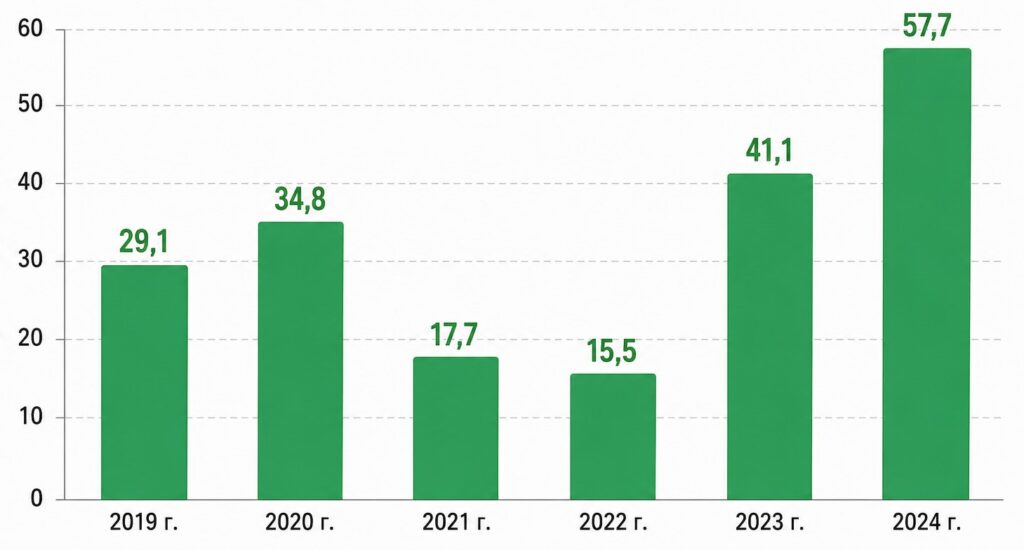
It is worth noting that Tajikistan’s first Budget Transparency Index was assessed by this international non-governmental organization in 2012. In that year, Tajikistan scored 17 out of 100 possible points and ranked last among the former Soviet Union states.