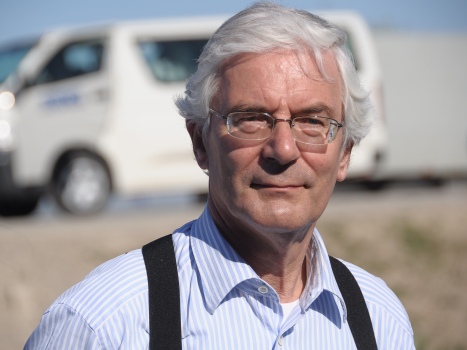
The outgoing Head of the OSCE Office in Tajikistan, Mr. Ivar Vikki answered questions of “Asia Plus”.
– Mr. Ambassador, how would you assess the political situation, including with regard to human rights, and freedom of conscience and expression in Tajikistan? If there are shortcomings, what is their solution in your opinion?
The OSCE’s comprehensive approach to security looks not only at human rights-related aspects of security – such as the promotion, protection and implementation of human rights, rule of law and media freedom – but also at politico-military and economic-environmental aspects of security. The OSCE Office in Tajikistan works in all those fields. Through dialogue with government and civil society, what I call a “triangle” approach, we jointly identify areas for improvement and develop ways to support the implementation of commitments in the areas of civil, political, social, economic and cultural rights. We follow developments and reform processes closely, listen carefully to our partners, and develop actions based on mutual understanding that address challenges in each of the spheres you mention.
I have served three and half years in Tajikistan. Over that period, I have seen notable positive developments, particularly in terms of high-level commitment to human rights issues and willingness to address difficult topics in the public arena. There have been many “firsts” and achievements for Tajikistan: libel and defamation have been decriminalized, police reform has begun, a law on prevention of domestic violence was passed, the government committed to move toward full abolition of the death penalty, authorities have begun new programmes with civil society to make sure that laws forbidding child labour are enforced, and a national effort is underway to prevent torture and ill-treatment, involving prosecutors, judges, defense attorneys, the media and civil society organizations. President Rahmon, in last April’s address to parliament, described “improper methods during inquiry and investigation of crimes as matters of deep and serious concern.”
At the same time, there have been and there will be challenges to progress. This could be said of any of the participating States of the OSCE. Political commitment is a vital first step to reform, but the real work lies in following political commitment with practical implementation of policies, agreements, and legislation. Passage of amendments to legislation or adoption of new conventions or protocols will not affect ordinary citizens unless sustained, genuine commitment to implementation of new measures is displayed on central and local levels.
We are ready to assist the Republic of Tajikistan in fully implementing its commitments in what we in the OSCE call the
Human Dimension
, enhance its legal framework in line with international standards, and further strengthen democratic institutions and processes. In co-operation with the Government of Tajikistan and civil society, we are providing that support day by day, through our Office here in Tajikistan, but also the direct engagement of the OSCE’s institutions: the Office of Democratic Institutions and Human Rights, the Representative on Freedom of the Media, and the High Commissioner on National Minorities.
I see the resolution of current challenges in continued constructive dialogue. The colleagues I leave behind in the OSCE Office in Tajikistan are here to support these processes and to create a space for dialogue in good faith and in view of values shared by all OSCE participating States.
A recent example of the kind of support we provide is the new
State Programme on Human Rights Education 2013–2020
, which was approved by the Government in December. Co-ordinated by the Office of the Human Rights Ombudsman, the programme was supported by the OSCE Office and, in many ways, reflects the growth in the OSCE Office’s co-operation with state bodies and civil society, as well as the Government of Tajikistan’s s growing engagement across the
Human Dimension
.
We commend the recent openness on the side of the government to discuss and concretely address issues related to torture and ill-treatment. Indeed, a vibrant public discussion on this sensitive issue is reflected in the media. The introduction of a new article on torture in the penal code is an important step. I positively note that law enforcement authorities have reacted swiftly in several recent cases of deaths in custody.
While conveying our concern on reported torture incidents, the OSCE Office in Tajikistan, in close co-operation with the relevant authorities, has trained officials in torture prevention and assisted civil society in building capacity to monitor closed institutions. More effective investigation and better access to places of detention on part of the civil society and international organizations would help tackle this issue.
Freedom of media and access to information are important matters. The OSCE Representative on Freedom of the Media and our Office here in Tajikistan have repeatedly expressed their concern over the blocking of news and social media websites, including
Facebook
and
Youtube
, calling for the restoration of access to these sites.
What makes the OSCE a unique platform is that we develop projects and activities, including on sometimes difficult and sensitive political matters, in a joint dialogue with a broad group of state and non-state actors. Together with our partners in the Government of Tajikistan and civil society, our OSCE Office has helped to: draft internal procedures for the conduct of elections and train electoral bodies; build professional skills of penitentiary officials and draft internal instructions on effective investigation of torture; raise awareness of judges on legal standards related to defamation complaints; facilitate co-ordination in the fight against trafficking in human beings and combat domestic violence in local communities; and engage with professional counterparts and expert practitioners from other OSCE participating States.
– What is your opinion regarding the military operation conducted last summer in Khorog? Why did OSCE representatives not visit Khorog at that time? We did not receive an objective assessment of the situation in the east of Tajikistan from the OSCE after all. Why?
The OSCE Chairperson-in-Office, last year Ireland’s Deputy Prime Minister and Minister for Foreign Affairs and Trade Eamon Gilmore, in a statement issued on 25 July 2012, did express his great concern over the violent clashes stressing that the outbreak of violence and the loss of life were deeply regrettable, particularly with a view to reports of civilian casualties.
OSCE Chairmanship, the OSCE executive structures and the OSCE Office in Tajikistan were at all stages closely following the developments in the Gorno-Badakhshan Autonomous Region (GBAO) – during the immediate crisis situation in July, and beyond. Our Office undertook special measures to address the developments in Khorog. Our staff in Dushanbe was on 24-hour duty, in touch with colleagues in Khorog, the host government, international organizations and civil society, keeping the OSCE Chairmanship, OSCE institutions, including the Representative on Freedom of the Media and the High Commissioner on National Minorities, and all OSCE participating States informed of developments.
Until mid-October last year, international organizations, including the OSCE, were not granted access to GBAO by authorities. As soon as the restrictions were lifted, our Office sent a team to GBAO for a preparatory visit to follow up on the implementation of OSCE programmatic activities in the region and to discuss future projects. I myself visited Khorog in November to meet with the Regional Administration, the mayor’s office, the GBAO Department of Internal Affairs, community leaders and representatives from non-governmental organizations, and to discuss practical mechanisms for OSCE engagement in the region.
I would also like to mention in this context that, over the last years, scope and depth of the OSCE Office’s programmatic activities in GBAO have increased. Our Office supports four cross-border trade resource centres on the Tajik-Afghan border providing legal advice to local entrepreneurs. The OSCE-supported Free Economic Zone in Ishkashim and the Aarhus Centre in Khorog contribute to cross-border economic and environmental co-operation. Other OSCE activities in GBAO include the assistance to the work of a civil society advisory group within the Police Reform process, annual Social Partnership Club meetings under the Public Council, contributions to the destruction of small arms and light weapons (among them more than 600 in September collected during the voluntary hand-in process in GBAO), a meeting last autumn of the Tajik Media Council in Khorog and the inclusion of GBAO into a nationwide anti-trafficking mapping exercise. Jointly with partners in government and civil society, we are currently exploring plans to further increase OSCE activities in GBAO.
The OSCE currently has five field offices in the regions – in Garm, Khujand, Kulyab, Kurgan-Tyube and Shaartuz. We are ready to also establish a permanent presence in GBAO once conditions deem it possible.
The OSCE can offer assistance in addressing issues stemming from last summer’s operation and identifying lessons learned with the goal of preventing similar situations in the future. To help restore the bonds of community and trust, we hope that national and regional authorities, civil society and families will come together for a joint and inclusive dialogue. As always, the OSCE stands ready to assist here.
– Presidential elections will be conducted in the country this year. The opposition is already skeptical about them arguing that the election legislation is not perfect, and thus does not ensure transparent and democratic elections. In this regard, the opposition had proposed to introduce three important amendments into the legislation, but the government and parliament of Tajikistan have rejected these proposals. What do you think in this regard?
– I welcome that the mentioned amendments were prepared and submitted for consideration by the parliament, as a contribution and basis for discussion. Dialogue amongst political parties, factions in parliament, the executive, civil society and the general public on legislative initiatives or draft legislation is key for every democratic debate.
The OSCE commitments to democratic principles that all OSCE participating states have agreed to uphold serve as a common platform for dialogue among countries. Within a participating State, those same commitments can serve as a common platform for discussion among stakeholders in the political process.
Our Office, for many years, has offered a venue to conduct and facilitate these discussions. As a platform for dialogue, the OSCE works closely with all eight registered political parties. Our Office regularly conducts working and high-level consultations with the parties’ leaderships. We facilitate political dialogue through the Social Partnership Club under the Public Council and at least 25 informal political roundtable meetings per year at our five field offices. Issues related to elections are among the topics discussed in all of the mentioned dialogue formats.
A working group of female politicians from all eight parties came together in 2011 and issued a joint statement on their common commitment to support women’s participation in public and political life. They have been meeting regularly ever since to continue that work. They appear together to help educate young people about the importance of participating in the democratic process and what a gender perspective means in politics.
– Will the OSCE contribute to the conduct of transparent elections in Tajikistan? Will this be limited to the ODIHR observers’ recommendations after the elections as before, or also include certain activities that will be conducted before the elections? Have the OSCE recommendations been considered after the last presidential elections, as some of them actually had concerned the legislation?
– In response to this question, it first seems worthwhile to recall the difference between our permanent mission in Dushanbe, the OSCE Office in Tajikistan, and the election observation mission under the Office of Democratic Institutions and Human Rights (ODIHR), which will be coming to the country for a short period of time prior to and during the elections, at the invitation of the Government of Tajikistan. ODIHR’s mission is to observe and report on the conduct of elections. The mandate of our OSCE Office is to provide capacity building, help implementing recommendations and offer a platform for an inclusive dialogue.
We provide this support at different levels. The Central Commission for Elections and Referenda (CCER) requested OSCE support in order to achieve improvements in the management of the electoral process, based on the 2010 OSCE/ODIHR Election Observation Mission Final report. At the request of the CCER, an OSCE election expert worked embedded inside the Commission, helping to develop election administration procedures. With the OSCE’s assistance, the CCER – for the first time – developed a curriculum for training precinct and district members on the new procedures. After a roundtable on the voter registry and the legal electoral framework, organized jointly by the CCER, ODIHR and the Office, the CCER requested an expert needs assessment on the current status of Tajikistan’s voter registry and its links to the potential development of a centralized civic registry. The assessment, conducted in a cooperative effort between the Office and the CCER, included several government bodies and generated recommendations that the CCER is now taking into consideration. The CCER has established working groups to develop more new procedures concerning,
inter alia
, the compilation of voter lists and participation of mass media. What’s more, the CCER has worked with the Office and local educators from Rasht Valley and southern Khatlon to support an extracurricular civic education programme for high school students that promotes participation in the democratic process.
Together with the political dialogue activities and the work with female politicians mentioned earlier, our Office will continue to have events in this area throughout 2013 – in the run-up to the presidential elections and beyond.
– What recommendations would you give to the government of Tajikistan?
– During my tenure as Head of the OSCE Office in Tajikistan, we have achieved a lot, together with our partners in government and civil society. Since I talked about programmatic activities relating to human rights and rule of law in the beginning of our interview, allow me also to mention a few selected achievements in the politico-military and economic-environmental area.
Together with the Ministry of Internal Affairs, the OSCE has signed a Memorandum of Understanding on Police Reform; the draft
National Police Reform Strategy
is now awaiting parliament approval. We have trained 1.094 senior border, police and customs officials from 34 OSCE participating States and 4 Partners for Co-operation at the OSCE Border Management Staff College here in Dushanbe since November 2009. In Gissar, we continue to conduct patrol programming and leadership training courses for Tajik and Afghan border guards. Under our OSCE project on Violent Extremism and Radicalization that lead to Terrorism (VERLT), an assessment on radicalization trends in Tajikistan has been presented. The OSCE assisted in establishing a national Humanitarian De-Mining Unit helping to clear minefields on the Tajik-Afghan border, and Tajikistan today has Central Asia’s first incidents response system
allowing authorities to react effectively to situations involving Small Arms and Light Weapons.
The OSCE supported the Government of Tajikistan in further developing the capacities of currently four Free Economic Zones, with notable success particularly in the Sughd FEZ. We assisted in drafting a National Environmental Code, which has been submitted for governmental approval, and policy recommendations to join the Basel Convention on the Control of Transboundary Movements of Hazardous Wastes, and expanded the network of Aarhus Centres promoting access to information and public participation in decision-making in environmental matters. Our Office also helped facilitating a framework agreement with Kyrgyzstan on water management and provided expert policy advice on draft legislation and strategies to promote good governance and fight corruption.
These are just a few examples. Of course, there is a lot that remains to be done. But one should not forget that 21 years since the independence of the country are a relatively short period of time, with the difficult years of the civil war also in mind.
My recommendations stem from the mandate of the OSCE Office in Tajikistan, which I have carried with me in my pocket every day in the past 3.5 years. It tasks our Office to promote the implementation of OSCE commitments in all OSCE dimensions, including the economic, environmental, human and political aspects of security and stability. This mandate serves as the compass for any OSCE Head of Mission, but so too do international regulations and principles, many of which contain concrete recommendations.
In a sense, the very areas the OSCE Office works on – and that I have just outlined – indicate issues that require our joint continued attention. In the OSCE, recommendations derive from an inclusive dialogue with a broad range of interlocutors, and, most importantly, the host country. Tajikistan is an OSCE participating State – one of 57, and an active one. The OSCE Office in Tajikistan is the largest OSCE field mission in Central Asia with currently 225 national and international staff.
Together, all participating States have agreed on a common set of principles and commitments. It is the unique character of the OSCE that the host countries we work in are at the same time members of the organization, with the opportunity for both state and non-state actors to meaningfully contribute to our joint goals of fostering security and promoting stability leading to prosperity. By facilitating dialogue on shared values, we aim to reach these goals.
Finally, on a personal note, I would like to say how much I enjoyed my time in Tajikistan. I am extremely grateful to the many Tajik people from all walks of life, who welcomed me in their homes, shared their bread and prayers, their joys and sorrows. Their generosity, hospitality and kindness will stay with me forever. Back at home in Norway, I will continue to follow the developments in Tajikistan closely, as a true friend of your country. My words would not suffice to express my feelings as I now depart, so I use a quote by Tajikistan’s great poet Rudaki: “There is no joy in the world greater than being with friends. There is no sadness in our hearts greater than the absence of good friends.”