
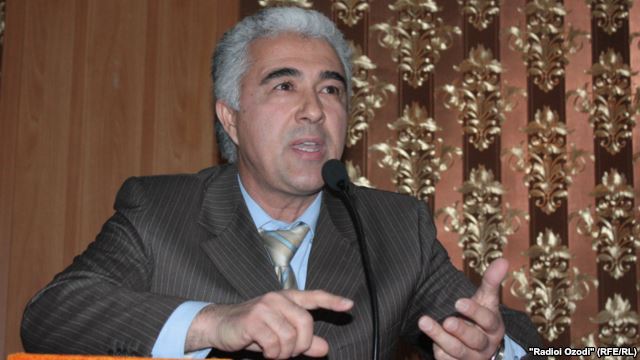
DUSHANBE, December 4, 2014, Asia-Plus — Reduction in the number of polling stations in the Russian Federation from 24 to three violates rights of Tajik labor migrants working in Russia, the Democratic Party of Tajikistan (DPT) leader Saidjaffar Ismonov told Asia-Plus in an interview.
“For example, labor migrants working in St. Petersburg will not go to Moscow to vote in the election,” said Ismonov. “Labor migrants working in other regions have neither time nor money to go for voting to Moscow, Ufa and Yekaterinburg, where Tajikistan’s diplomatic representations function.”
Reduction in the number of out-of-country polling stations has been caused by amendments made to the country’s election legislation. Under these amendments, the polling stations will be established outside the country only in territories where the country’s diplomatic representations function.
Ismonov says parliamentarians have endorsed the amendments to the election legislation in a hurry, “underestimating the scale of the violation of migrants’ rights. “More than 90 percent of parliamentarians are from rural areas and they have not yet got rid of provincial thinking,” DPT leader noted.
“I hope that really professional parliament will function in the country after the February elections,” Ismonov added.
Meanwhile, migrant workers reportedly make up a major portion of the opposition’s support base in Tajikistan. Tajik migrant community leaders in Russia say the majority of Tajiks working in Russia tend to support opposition candidates.
By various estimates, 1 million to 1.3 million Tajiks leave the country every harvest season, mostly for Russia, to take jobs as seasonal laborers. The vast majority of them are eligible voters.
In all, some 40 precinct election commissions (PECs) are expected to the established outside Tajikistan to facilitate out-of-country voting in the 2015 parliamentary elections due in late February next year. Abdumannon Dodoyev, the head of the Central Commission for Elections and Referenda (CCER)’s office says this number is repeatedly fewer than the number of PECs established outside the country during the 2013 presidential election and the number of PECs established outside the country during the 2010 parliamentary elections.
We will recall that during the 2013 presidential election, opposition leaders accused the authorities of excluding more than a million Tajik migrant workers from the signature-gathering campaign.
The CCER had ruled that the migrants have the right to vote in the election, but that they were not allowed to take part in the signature-gathering process. Election officials argued that the majority of Tajiks working in Russia do not have a registered address, making it impossible to verify the authenticity of their signatures.
