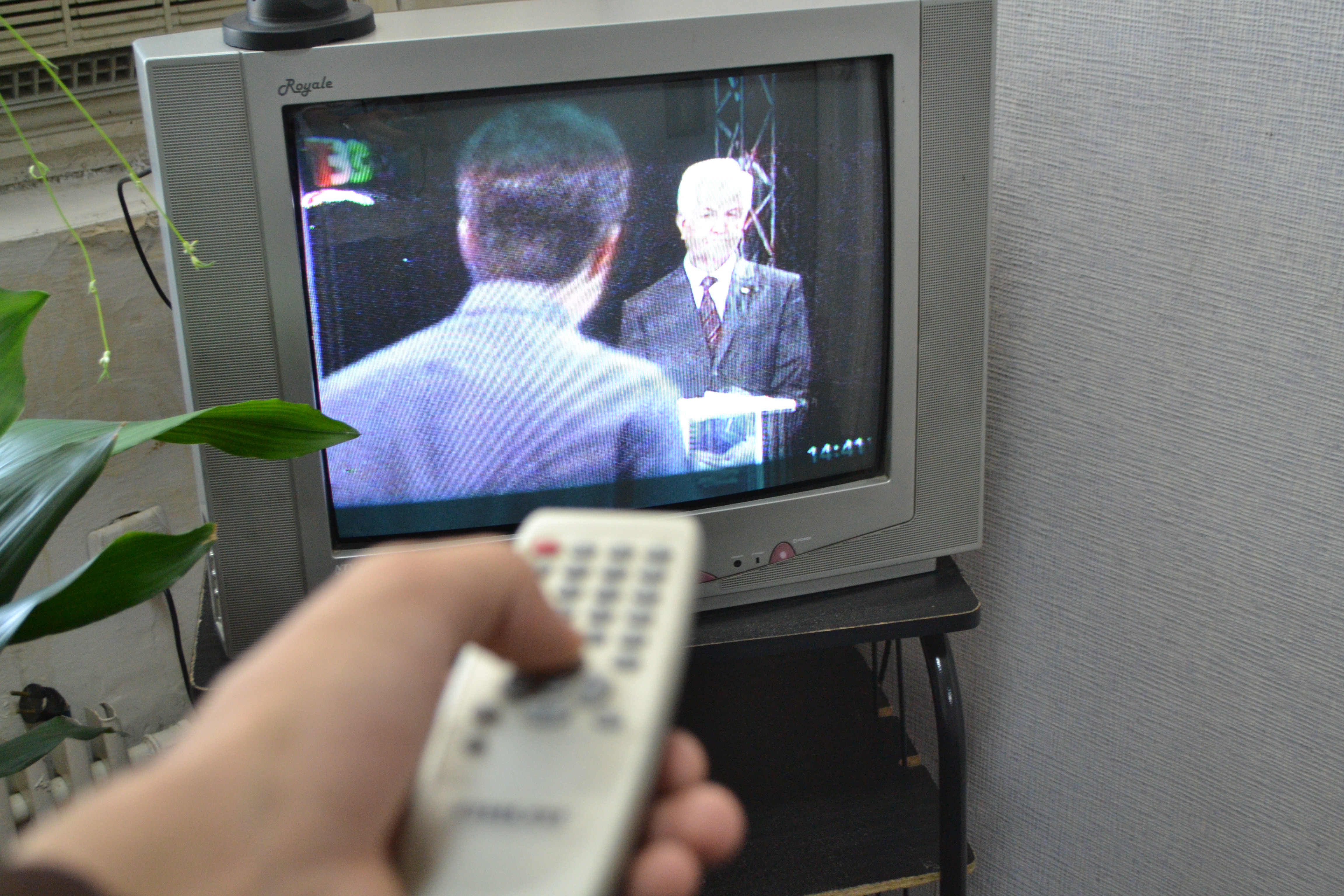
Residents of many border areas of Tajikistan are not able to pick up programs of Tajik national TV and radio channels. This, in turn, creates conditions for filling of the country’s information space by foreign resources, which does not meet national interests of Tajikistan.
Recently, residents of one of mountain villages of Shahrinav district have applied to Asia-Plus, noting that they are forced to watch Uzbek TV channels because Tajik TV channels cannot be picked up in their village.
Earlier, residents of border villages of the Ishkashim district in the Gorno Badakhshan Autonomous Region (GBAO) and Sughd province had complained of that.
Last year, the head of the Committee on Language and Terminology, Ms. Gavhar Sharofzoda, raised that problem, expressing concern that border districts do not have access to the national TV and radio channels. She, in particular, noted that residents Darvoz, Rushan, Shugnan and Ishkashim districts in GBAO as well as Shohin (formerly Shouroobod) and Panj districts in Khatlon province and Tursunzoda (district subordinate to the center) were not able to pick up programs of local TV and radio stations.
One of reasons for such a situation is negligence of local authorities. Instead of providing remote border areas with powerful transmitters, they accuse residents of those areas of lack of patriotism.
The authorities of Qubodiyon district (Khatlon province) noted last year that they had provided residents of border areas with 5,000 television aerials in order to improve their access to the national TV channels.
Meanwhile, residents of border areas in other districts of Khatlon province and Rasht Valley (eastern Tajikistan) had been forced to watch programs of Uzbek and Afghan TV channels. Lately, Tajik TV and radio channels have practically displaced them.
In GBAO, programs of Tajik national TV and radio channels can be picked up in Khorog and district administrative centers. Local TV and radio stations need financial support in order to operate more effectively.
Regional TV and radio stations now operate in many cities in the north and the west of Tajikistan, but they are not able to compete with Uzbek and Russian TV and radio channels for objective reasons.
The local authorities of Sughd, Kulob, and Qurghon Teppa began their own stations in 1990, and the regional station in Khorog (GBAO) was founded in 1992. Local TV stations broadcast a combination of national TV programming with local production.
However, it is to be noted that many people in Tajikistan prefer to watch programs of Russian and Uzbek TV channels because of low quality of national TV programs.