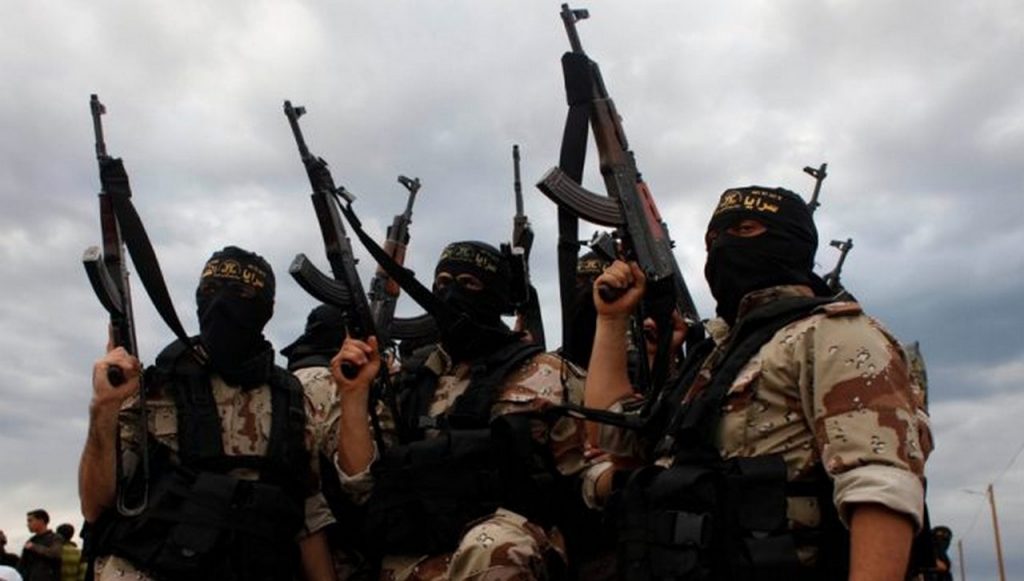
An article, which was posted on the website of the national news agency Khovar on January 21, accuses the Islamic Revival Party of Tajikistan (IRPT) of sending Tajik nationals to Syria.
The article says that the majority of Tajik nationals sent to Syria by the IRPT were killed “and their blood is on IRPT leaders’ conscience.”
The article gives the list of Tajik nationals who reportedly traveled to the Middle East under support to the Islamic Revival Party.
Meanwhile, IRPT leaders who now live in exile reject the accusations of supporting extremist and terrorist groups.
Tajik authorities branded the IPRT a terrorist group and banned it in 2015, claiming it organized an armed mutiny along with former Defense Minister Abdulhalim Nazarzoda in September of that year an attempt to seize power. Nazarzoda and several supporters were killed by Tajik security forces.
Tajikistan’s Supreme Court ruled that the IRP should be included on a blacklist of extremist and terrorist organizations.
The verdict handed down on September 29, 2015 forces the closure of the IRPT’s official newspaper Najot (Salvation) and bans the distribution of any video, audio, or printed materials related to the party’s activities.
More than 12 leading IRPT members and lawyers for the party were convicted of involvement in organizing the mutiny and sentenced to lengthy prison terms in 2016. IRPT members and the party leader Muhiddin Kabiri, who now lives in exile, reject the accusations.
Founded in October 1990, the Islamic Revival Party of Tajikistan is the only Islamic party officially registered in former Soviet Central Asia. The IRP was registered on December 4, 1991. It was banned by the Supreme Court in June 1993 and legalized in August 1999.
Since 1999, the party had reportedly been the second-largest party in Tajikistan after the ruling People’s Democratic Party of Tajikistan.
Once the only registered Islamic political party in any of the five Central Asia’s nations, the IRPT was represented in the Tajik parliament for 15 years. In the 2005 and 2010 parliamentary elections, the IRPT won two out of 63 seats in the parliament, but the party suffered a crushing defeat in Tajikistan’s March 1, 2015 vote, failing to clear the 5 percent threshold needed to win parliament seats.