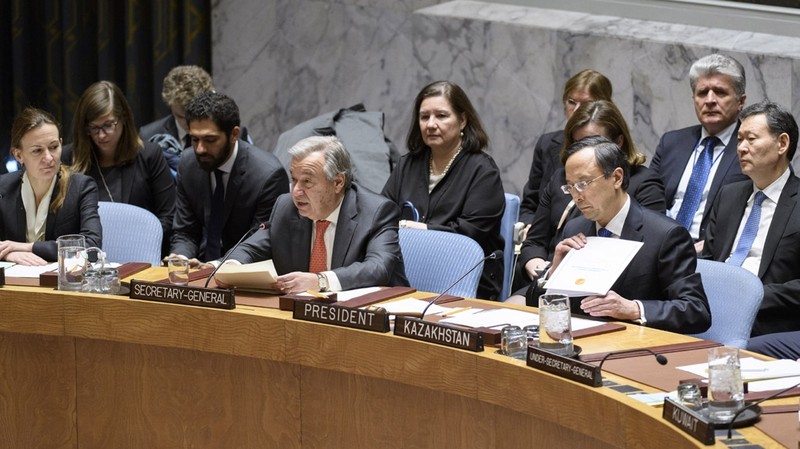
The threats of violent extremism and transnational organized crime in Afghanistan reverberate across Central Asia and the world and countering them cannot be the responsibility of one country alone, United Nations Secretary-General António Guterres said on January 19, urging regional and multilateral cooperation, based firmly on human rights, according to the UN News Center.
“Regional cooperation offers opportunities to address common concerns, including counter-terrorist financing, improving border security, fostering dialogue with religious institutions and leaders, and countering human trafficking and drug smuggling,” said the Secretary-General, briefing a Security Council meeting on building regional partnership in Afghanistan and Central Asia.
“With greater regional cooperation and investment, Central Asia and Afghanistan have the potential to become symbols of dialogue, peace, and the promotion of contacts between cultures, religions and civilizations,” Mr. Guterres continued.
The Secretary-General also highlighted significant opportunities for intra-regional trade and said that even “modest” improvements can result in substantial gains for all the people of the region.
In that context, he noted ongoing recent intensification of cooperation between Central Asian governments on water resources through bilateral water commissions and agreements.
“These developments hold important lessons for Afghanistan, where water-dependent farming and agriculture make up nearly half the economy,” he said, noting also developments in energy cooperation and projects on strengthening trade and transport connectivity.
Mr. Guterres went on to underscore the importance of sustainable development to enable communities and societies flourish and fulfill their potential and in that context, urged Governments to make education, vocational training and jobs “an absolute priority” in national and regional development cooperation.
Inclusive and sustainable development, he underlined, is vital to preventing and ending conflict, and in sustaining peace.
“Only by addressing the root causes of crisis, including inequality, exclusion and discrimination, will we build peaceful societies resilient to terrorism and violent extremism,” the UN Secretary-General added.