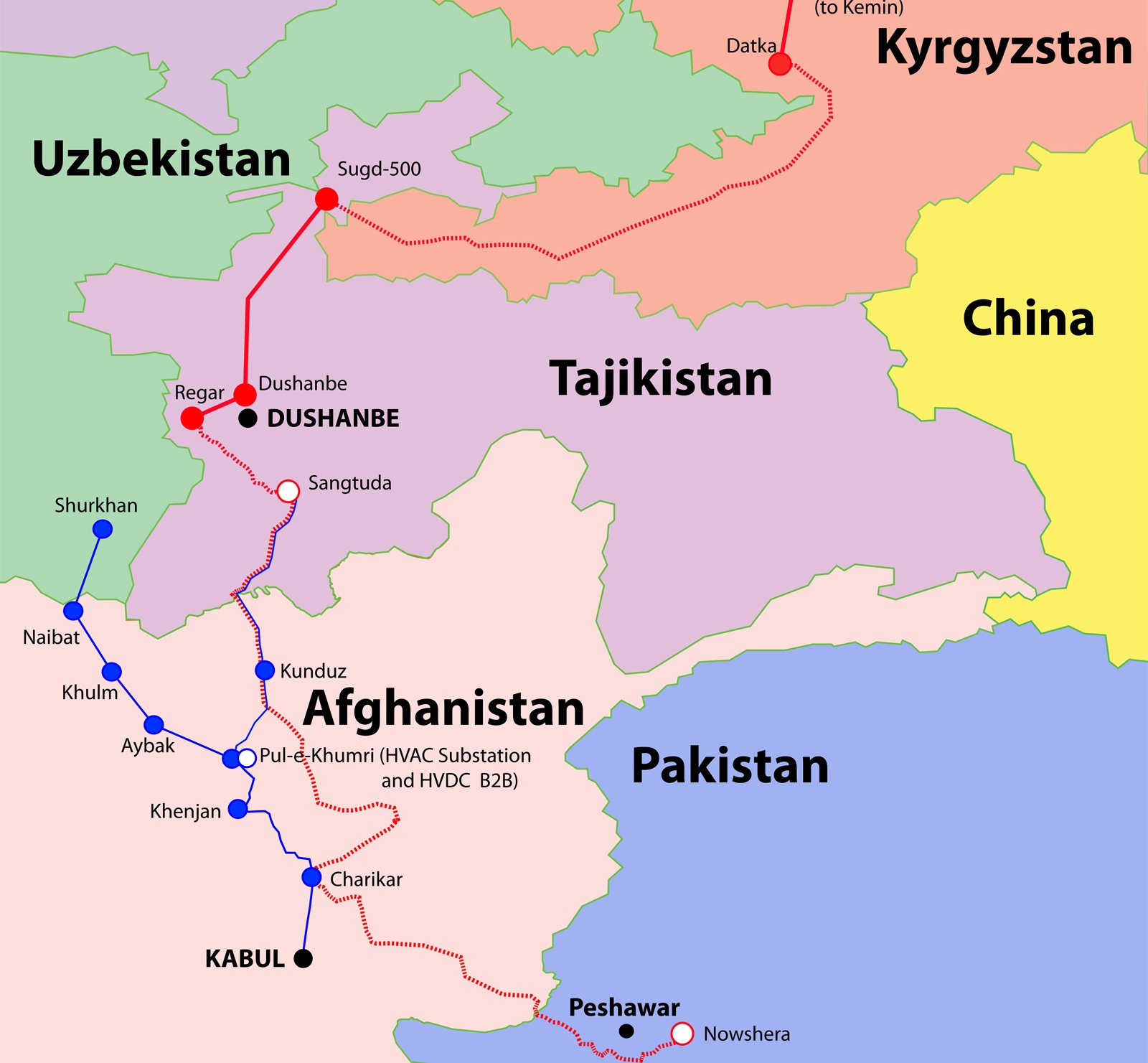

The infrastructure of the high-voltage regional power transmission line CASA-1000 in Tajikistan will be built by the Swedish company ABB and the Indian company Kalpataru Power Transmission Limited.
The corresponding agreements were signed at the end of last week during the meeting of the Intergovernmental Council of the regional project CASA-1000.
The meeting was attended by official delegations of Tajikistan, Kyrgyzstan, Pakistan and Afghanistan, as well as representatives of the World Bank, the Asian Development Bank, the US Department of State, USAID, UK Department for International Development, the International Finance Corporation, experts of the Regional Energy Cooperation Program, reported in the Ministry of Energy and Water Resources of the Republic of Tajikistan.
Tajikistan was represented by the Minister of Energy and Water Resources Usmonali Usmonzoda, Deputy Minister of Energy and Water Resources Jamshed Shodi, head of "Barki Tojik" Mirzo Ismoilzoda, Deputy Head of the International Relations Department of the Executive Office of the President Bahodur Saidzoda.
The meeting, in particular, discussed the issues of preparatory work for the project and the transition to direct construction work.
Following the meeting on the Tajik part of the project, an agreement was signed between Barki Tojik and the Swedish company ABB on the construction of a converter substation in Sangtuda with a capacity of 1300 MW, The agreement between Barki Tojik and the Indian company Kalpataru Power Transmission Ltd for the construction of the Tajik section of the 500 kV AC transmission line, The agreement between Barki Tojik and the Italian company CESI for consulting services on DC facilities of the project.
Earlier, agreements were signed with the Iranian company "Monenko" to provide supervision and conduct coordination work on the objects of alternating current.
«Thus, almost all contract agreements have been signed, and direct construction works begin in the territory of all participating countries of the project», – concluded in the Ministry of Energy.
It is expected that the implementation of the Tajik part of the project will end in 2021.