In the region, there is a widespread perception of water as an unlimited resource, but this is not the case; and if we do not change our attitude, we will have to pay significantly more.
Central Asia is facing a growing water crisis caused by the inefficient use of water. The region’s water resources are being depleted, against the backdrop of some of the lowest water tariffs in the world.
Experts warn that by 2028, water scarcity could become chronic, and the only solution to the problem is to raise tariffs.
Stanislav Pritchin, head of the Central Asia sector at the National Research Institute of World Economy and International Relations of the Russian Academy of Sciences, noted at the roundtable “Climate Change and Water Usage Issues in Central Asia,” held on February 18, 2025, in Bishkek, that the cost of water in Central Asia is among the lowest in the world.
For comparison, in Russia, the price for one cubic meter of water is 49 cents, while in some developed countries, it can cost several dollars. In Central Asian countries, however, this amount barely reaches 10-15 cents, creating a false perception of water as an unlimited resource.
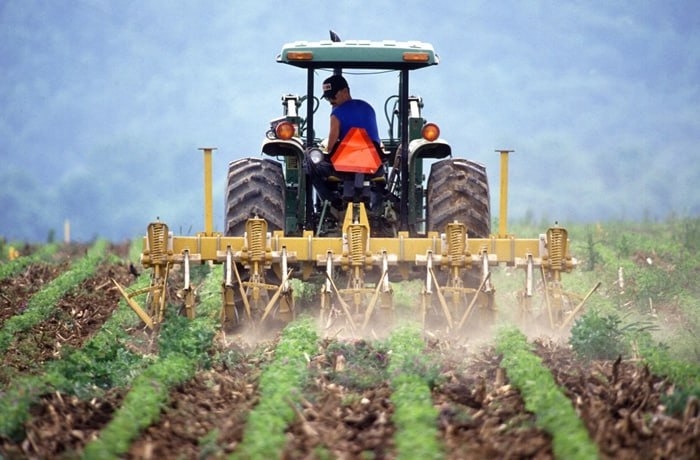
In such conditions, agricultural enterprises and households have no incentive to conserve water, leading to its irrational use.
In Tajikistan, for example, water consumption per capita is 1,895 m³ per year, which is significantly higher than the global average. In Kazakhstan, this figure is lower (1,310 m³ per capita) but still remains high.
These figures indicate the need for measures to curb the growth in consumption.
Raising tariffs as a solution to the problem
One possible step to solve the water issue in Central Asia is to raise water tariffs, which has already become a reality in some countries in the region.
In Tajikistan, in 2024, irrigation water tariffs increased by 150%. This is an important step aimed at promoting more rational use of water resources and improving infrastructure.
As of 2025, the cost of irrigation water is $0.15 per cubic meter in Uzbekistan, $0.05 in Tajikistan, and $0.14 in Kazakhstan. Despite the increase, these prices are still extremely low and do not provide sufficient funds for modernizing water supply networks.
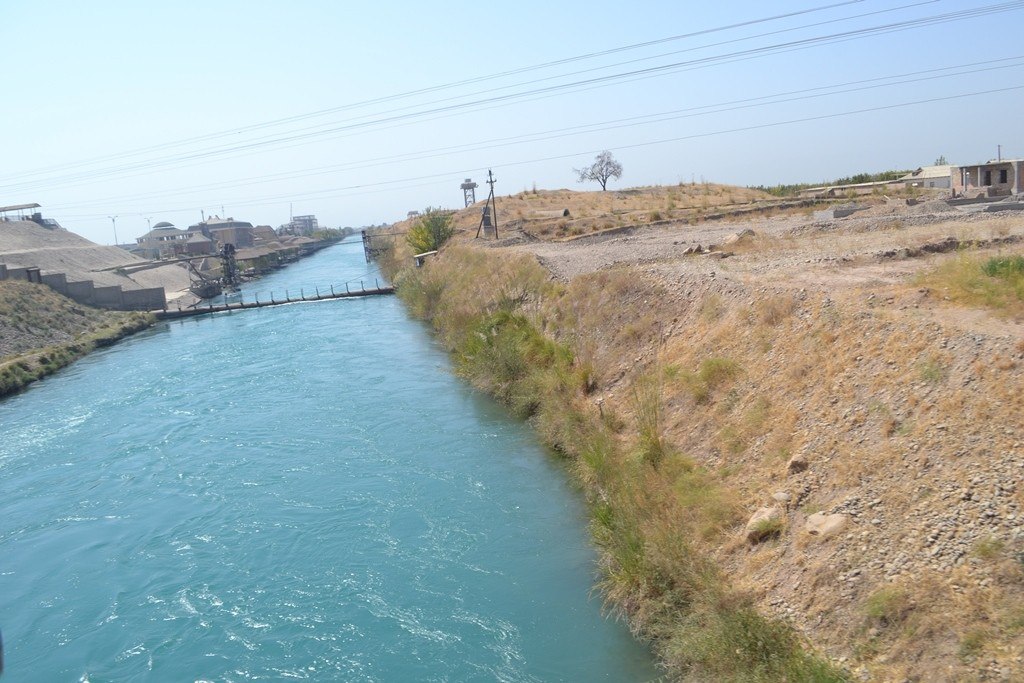
Experts believe that raising tariffs should also help attract private investors to the water sector, allowing for the modernization of aging infrastructure. Water supply in Central Asian countries suffers from technical losses due to outdated pumping stations and main canals, which need major repairs.
Raising tariffs should partially cover the costs of maintaining and modernizing these facilities.
Risks and consequences of raising tariffs
While raising water tariffs is an important step to ensure the financial sustainability of water supply enterprises, it comes with several risks and potential negative consequences.
One of the main risks is an increase in social tension. In Central Asian countries, where income levels are low, raising water prices could exacerbate economic difficulties, especially for agricultural producers who rely on irrigation water.
For example, in Tajikistan, where the average wage is lower than in neighboring countries, the increase in irrigation water prices could lead to dissatisfaction among farmers.
Raising tariffs could also become a burden on agricultural enterprises, especially under unstable climatic conditions. This could affect crop yields, particularly in countries where agriculture is the backbone of the economy.
Facts
- Water deficit forecast: by 2028, Central Asia could face a chronic water deficit of 5-12 cubic kilometers, leading to a crisis in agriculture, industry, and energy.
- Water supply infrastructure: technical wear and tear on water supply infrastructure is up to 80%; water losses in distribution networks reach 55-60%.
- Water conservation: efficient use of water and land resources could save up to 56% of water without harming agriculture.
- Water consumption in Central Asian countries: Turkmenistan – 5,319 m³/year per capita; Uzbekistan – 2,295 m³/year; Kyrgyzstan – 1,989 m³/year; Tajikistan – 1,895 m³/year; Kazakhstan – 1,310 m³/year.
- Water losses in irrigation canals: Losses in irrigation canals amount to 20-25 billion cubic meters of water annually.




