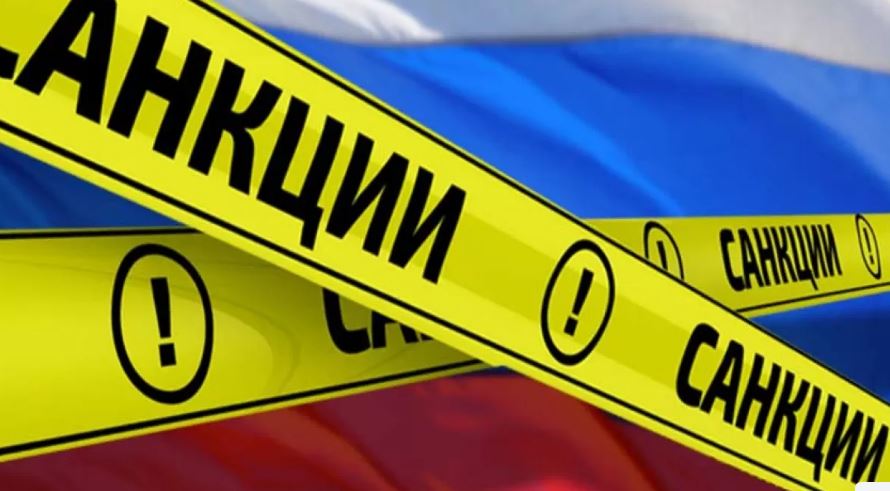
EU, UK include companies from Central Asia on the anti-Russian sanctions lists by the UK and the EU

On February 24, the European Union and the United Kingdom announced an expansion of anti-Russian sanctions.  Companies from Central Asia were also included on the updated lists, Fergana news agency says. The UK government says around 70 entities were added on the consolidated list of individuals and legal entities subjected to restrictions. Among the “newcomers” […]

Asia-Plus

On February 24, the European Union and the United Kingdom announced an expansion of anti-Russian sanctions.  Companies from Central Asia were also included on the updated lists, Fergana news agency says.

The UK government says around 70 entities were added on the consolidated list of individuals and legal entities subjected to restrictions.

Among the “newcomers” are two companies based in Kyrgyzstan.  Specifically, Keremet Bank was added to the register as a "foreign financial institution supporting Russia."

According to British officials, the Bishkek-based bank provides services to Russian partners in the financial sector, which is strategic for the Russian government.

In addition to the credit institution, Rama Group, which also has its legal address in Kyrgyzstan’s capital, was added on the sanctions list.  The company is suspected of supplying technologies and goods related to microelectronics to Russia.

The European Union Council issued a press release on the approval of the 16th package of anti-Russian sanctions. The new list includes 83 entries, including 48 individuals and 53 organizations.

It is noted that the companies on the list are not only Russian enterprises but also foreign entities from China, India, Singapore, the UAE, Turkey, Kazakhstan, and Uzbekistan. Specifically, this includes firms from Almaty, MetallStan and Kazstanex, as well as the Tashkent-based LLC Uzstanex.

There is no detailed information on the reasons for the inclusion of these enterprises in the EU sanctions list, but the European organization’s press release emphasizes that the companies included in the updated list were involved in circumventing trade restrictions or supplying goods for the Russian military-industrial complex, such as components for drones and missiles.

It is worth noting that other representatives from Central Asia are also on the EU’s full list of entities subjected to restrictions. Kazakhstan's Elem Group and Da Group 22 were added to the list in February and June of last year, respectively.

In the summer of the same year, Kyrgyz companies Muller Markt and Profflab appeared on the list. As for the Uzbek companies Alfa Beta Creative, GFK Logistics Asia, and Mvizion, they were added to the blacklist in 2023.
 

Join us on social media!

Article translations:

Related Article

Оби зулол
Оби зулол

Most Read

Recent Articles

The only GPW veteran in Dushanbe allocated more than 80,000 somoni

The mayor's office of Dushanbe allocated him 25,000 somoni.

GITEX AI Kazakhstan 2026: how Almaty became the main AI hub of Central Asia

More than 300 companies and startups, over 200 speakers and 100 investors from 50 countries — the region is entering the global stage.

A trade and economic park to be built at the border junction of Tajikistan, Kyrgyzstan, and Uzbekistan

President of the Kyrgyz Republic Sadyr Japarov familiarized himself with the project.

A project to protect soil from degradation to be developed in Central Asia

The initiative is of great significance for the mountainous countries of the region, including Tajikistan.

Mudslide, death, and destroyed homes: hundreds of families in Tajikistan left homeless

A correspondent from "Asia-Plus" visited Kulob and spoke with the families of those who died and were affected by the disaster.

Spring 2026 bright event: new issue of VIPzone now on sale

This issue is about people and ideas that change everything: from business and investments to fashion, food, and urban environment.

Godfrey Sullivan: “Tajikistan is a promising market for Visa to develop digital payments”

The Vice President of Visa explained why Tajikistan is becoming a promising market for digital payments and how artificial intelligence is influencing the future of finance.

Seven students in Dushanbe were threatened with expulsion for arriving at universities in personal cars

The materials for each case have been sent to the Ministry of Education and Science for appropriate actions.

India’s blockchain push and lessons for the global south

The Indian Government has started pushing aggressively its agenda...

India’s blockchain push and lessons for the global south

The Indian Government has started pushing aggressively its agenda...