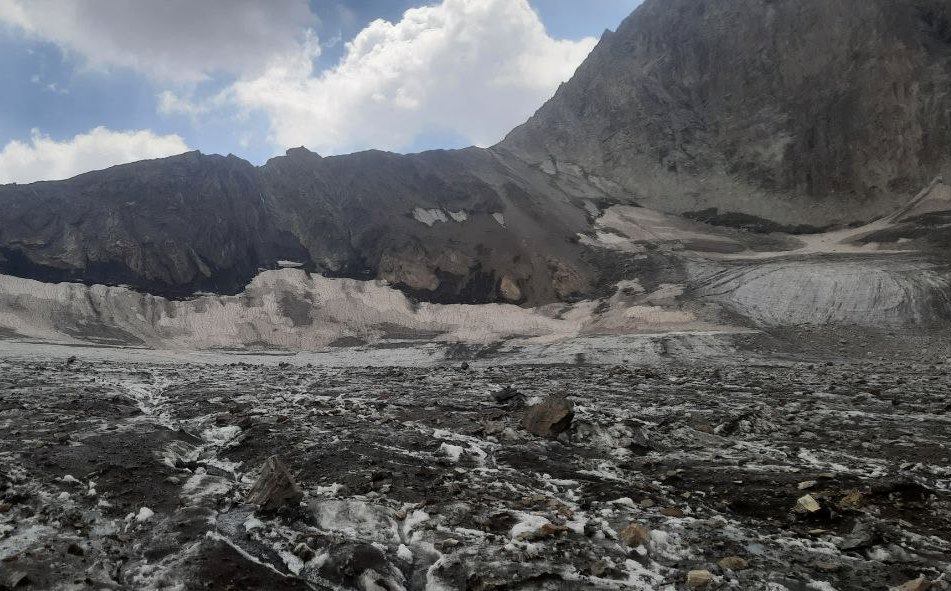
There was practically no permanent snow cover in the feeding area in August, and the Yakarcha Glacier, located on the Gissar Ridge in the upper reaches of the Varzob River in Tajikistan, has decreased by 3.5-4 meters over the past two years. This conclusion was reached by scientists from the Glacier Research Center of the National Academy of Sciences of Tajikistan together with colleagues from the University of Fribourg in Switzerland.
The international expedition that took place on August 22-28 showed that the glacier is in a state of active melting and is undergoing deep degradation. In the area of its supply, where snow and firn usually accumulate, there is practically no permanent snow cover in August, which endangers the glacier's mass balance.
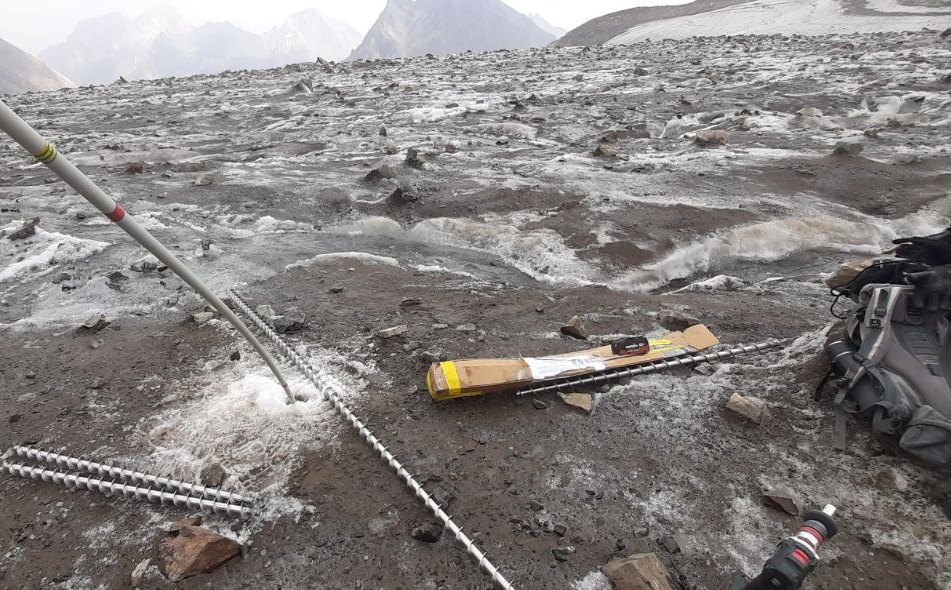
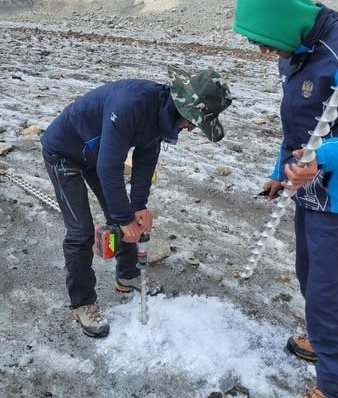
Scientists note that it is seasonal snow that plays a key role in preserving glaciers and ensuring the region's water resources. During the expedition, ablation rails were installed on the surface of the Yakarch to determine the melting rate, as well as a thermistor immersed to a depth of 15 meters. The data from this sensor will make it possible to study the impact of climate change on the internal structure of the glacier in the coming years.
At the same time, hydrological studies were conducted in the Maikhura riverbed, which flows at the foot of the glacier. The results confirm that the increase in average air temperatures in recent decades has accelerated the degradation of Tajikistan's glaciers, which can have serious consequences for the ecosystem and water resources of Central Asia.
The study of the Yakarcha Glacier became part of a series of glaciological expeditions conducted from July 30 to August 28 this year with the support of the GEF-UNDP-UNESCO project. In addition to Yakarch, work took place on the Zulmart Glacier in the Eastern Pamirs, Glacier No. 457 in the Gunt River basin and the Nusai Glacier in the Obikhingov (Obikhingou) River basin.
Interdisciplinary teams, including young researchers and women scientists, participated in the expeditions, which highlights Tajikistan's growing scientific potential in the field of climatology and glaciology. The scientists measured ablation and snow accumulation, recorded runoff from glaciers, installed smart rails, and collected meteorological data. These studies will help to better understand the dynamics of glaciers in Central Asia and will form the basis for developing regional strategies for adaptation to climate change.