
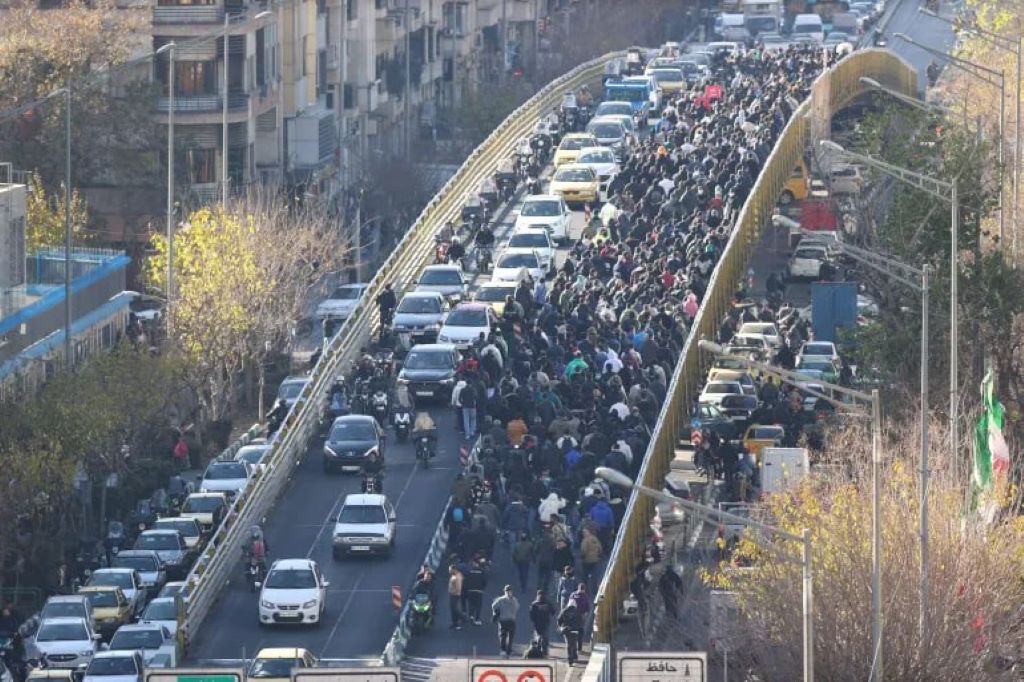
For the tenth consecutive day, protests have continued in several Iranian cities. The demonstrations were sparked primarily by socio-economic problems, most notably the sharp depreciation of the national currency and rising inflation.
Iranian authorities have acknowledged serious economic difficulties and expressed readiness for dialogue with protesters. At the same time, officials warned that they would take firm action against what they describe as instigators of unrest, claiming that the protests bear signs of “foreign interference.”
Meanwhile, the US president has issued a second warning, saying that a harsh crackdown on protesters would have negative consequences.
What triggered the protests?
The protests began on December 28, 2025. According to Iran’s state news agency IRNA, traders at Tehran’s largest bazaar closed their shops in protest against the country’s worsening economic situation.
A key trigger was the collapse of the Iranian rial and soaring inflation. On December 28, the currency fell to a record low of about 1.42 million rials per US dollar. Al Jazeera reports that the rial has lost roughly 56% of its value over the past six months.
Amid the unrest, Central Bank Governor Mohammadreza Farzin resigned on December 29. Since his appointment in 2022, the dollar exchange rate had more than tripled. He was replaced by Abdolnaser Hemmati.
Conflicting reports on casualties and arrests
Reports on the number of those killed and detained vary widely. Official Iranian sources say hundreds have been arrested but provide no precise figures. State media have also reported injuries and deaths among law enforcement officers.
Foreign media and rights groups operating outside Iran claim that more than ten people have been killed during the protests and their suppression. According to the BBC, at least 19 protesters and one security officer were killed over the past week. More than 1,200 people, including women and students, have reportedly been detained nationwide.
Iranian authorities have neither confirmed nor denied these figures, while international media remain unable to report directly from inside the country.
Government response
On January 3, 2026, Supreme Leader Ayatollah Ali Khamenei addressed the protests for the first time, drawing a distinction between protesters and what he called “rioters.”
“We will talk to the protesters, officials must talk to them. But talking to rioters is useless,” he said, again pointing to alleged foreign involvement.
President Masoud Pezeshkian acknowledged the legitimacy of economic grievances, warning that failure to address people’s daily problems would have grave consequences. Parliamentary Speaker Mohammad Bagher Ghalibaf and government spokesperson Fatemeh Mohajerani also stressed the need to address living standards while condemning attempts to exploit protests for destabilization.
Economic measures
In response, the government introduced a series of economic steps, including changes to the state budget. These measures include a phased wage increase of up to 43%, a reduction in VAT from 12% to 10%, and the allocation of $8.8 billion at a preferential exchange rate to curb price growth on essential goods.
Additional funds were earmarked for wheat purchases and pension support.
US warnings and Iran’s reaction
US President Donald Trump issued repeated warnings, stating that Washington would respond if Iranian authorities used violence against protesters. Iranian officials sharply rejected the remarks, warning that any US interference would destabilize the region and be met with a strong response.
Russia and China, Iran’s key partners, have so far refrained from commenting publicly.
Analysts note that the current protests differ from previous waves, as they are driven primarily by economic hardship. Authorities appear to be taking a more measured approach, drawing lessons from past unrest.
