
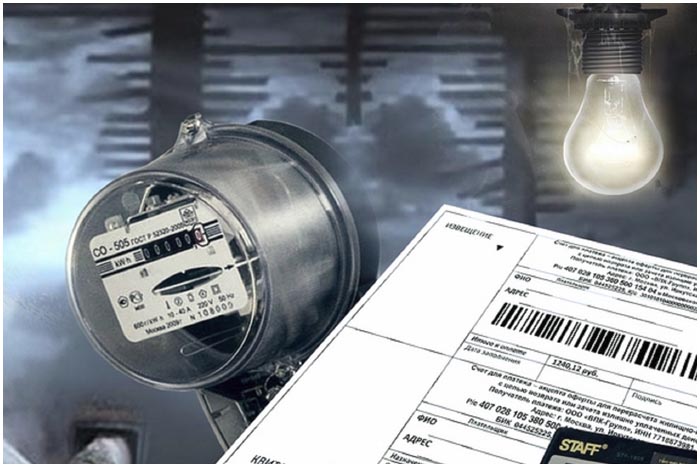
Starting February 1, 2026, electricity tariffs in Tajikistan will increase, with unofficial sources indicating a 17% hike for residential customers. Authorities justify this move as necessary for the financial recovery of the energy sector, but experts and residents are increasingly questioning whether the price rise reflects actual production costs or systemic losses and inefficiencies.
The new tariffs, outlined in the "Electricity and Heat Energy Tariffs" decree, were approved on December 29, 2025, during a government meeting. The decree aims to develop the energy sector and achieve financial self-sufficiency for the state-owned companies Barqi Tojik, Electricity Transmission Network, and Electricity Distribution Network.
While ministries have withheld specific details, anonymous sources claim the new rates will raise electricity costs for households from the current 35.36 dirhams (3.84 USD cents) per kWh to 41.37 dirhams (4.49 USD cents) per kWh. Other categories of consumers will see similar increases across ten sectors.
Electricity tariffs in Tajikistan have been rising annually since 2016, with the only exception being 2020-2021, when the government froze increases due to the economic impact of the COVID-19 pandemic. The last tariff hike occurred on April 1, 2025, just nine months ago.
Higher prices, heavier burden
For ordinary citizens, the price increase will add more pressure to household budgets. For vulnerable groups—such as pensioners, large families, and rural residents—even moderate hikes can significantly reduce their real income. Electricity is used in nearly every sector, from production and storage to transportation, trade, and services. Thus, the impact on small businesses, such as bakeries, workshops, and retail stores, is significant.
While tariff hikes rarely lead to immediate price increases, they often trigger a "second wave" of inflation, as businesses gradually pass on higher costs to consumers. Growing tariffs also raise concerns about "energy poverty," where households must limit their energy use to meet basic needs. This is especially relevant in regions with limited alternative energy sources and low-income populations.
Comparing tariffs across Central Asia
To understand the scale of the price hike, it is essential to compare Tajikistan’s tariffs with those of its Central Asian neighbors.
In Kyrgyzstan, electricity remains one of the cheapest in the region. The rate for the general population is 1.37 soms per kWh for consumption up to 700 kWh/month (around 1.6 USD cents), and for higher consumption, the rate rises to 2.6 soms per kWh (2.97 USD cents). For low-income families receiving benefits and consuming up to 700 kWh, the rate is 0.5 som per kWh (0.57 USD cents). Even with the upcoming price hike in Tajikistan, the country’s rates (3.84 USD cents) are significantly higher than Kyrgyzstan’s.
Kazakhstan, in contrast, has the highest rates in Central Asia, with consumers paying around 30-31 tenge per kWh (about 6 USD cents). However, rates vary by region in Kazakhstan.
In Uzbekistan, a tiered system applies: rates are relatively low for consumption up to 200 kWh/month (around 4.99 USD cents), but prices can rise to 6.65-8.31 USD cents per kWh for higher consumption, bringing them closer to Kazakhstan's levels.
Turkmenistan is an outlier, with electricity heavily subsidized by the government, resulting in symbolic tariffs. Before January 1, 2019, electricity in Turkmenistan was provided free of charge to the population.
Thus, the idea that Tajikistan has the lowest electricity tariffs in the world is a misconception, even within the region. While the country pays less than Kazakhstan and Uzbekistan, it pays considerably more than Kyrgyzstan and Turkmenistan.
Benchmarking against Kyrgyzstan
Given the similar hydroelectric bases of both countries, Tajikistan’s electricity tariffs should be compared with Kyrgyzstan’s rather than with Kazakhstan or Uzbekistan, where thermal power plants dominate. Around 94% of Tajikistan’s electricity comes from hydropower, and in Kyrgyzstan, hydropower accounts for around 90% of electricity generation.
This is important because hydropower stations use water as a "free fuel" and primarily incur maintenance and network costs. In contrast, thermal power plants rely on gas, coal, or oil, making their production costs much higher due to the need to purchase and transport fuel.
Therefore, it is reasonable to compare Tajikistan’s tariffs with those of Kyrgyzstan, as both countries rely heavily on hydropower, rather than with Kazakhstan or Uzbekistan, where a significant portion of electricity is generated by more expensive thermal power plants.
"Low tariffs" or high losses?
Tajik authorities often justify tariff increases by claiming that current prices are "too low" and do not cover the energy sector’s costs. However, the comparison with Kyrgyzstan, where tariffs are lower despite a similar hydropower base, raises questions: could the issue be not just the price for consumers, but how the system operates?
The primary concern with tariff hikes is the efficiency of electricity production and distribution. How much energy is lost in the networks due to outdated lines and equipment, and how much is lost due to unaccounted consumption, theft, and human error? And most importantly, why do these losses continue to be passed on to consumers through higher tariffs?
President Emomali Rahmon recently acknowledged that significant portions of these "losses" may have been related to human factors and abuses. He explained that before the implementation of the digital billing system, 30-40% of the population did not pay for electricity. However, after the system was introduced, it was discovered that 100% of the population in certain areas were fully accounted for as paying customers.
Before justifying another price hike with "low tariffs," it would be prudent for the authorities to address the question: how much money is lost due to theft, unrecorded consumption, and systemic failures, and why are these losses consistently transferred to the population through higher rates?
