
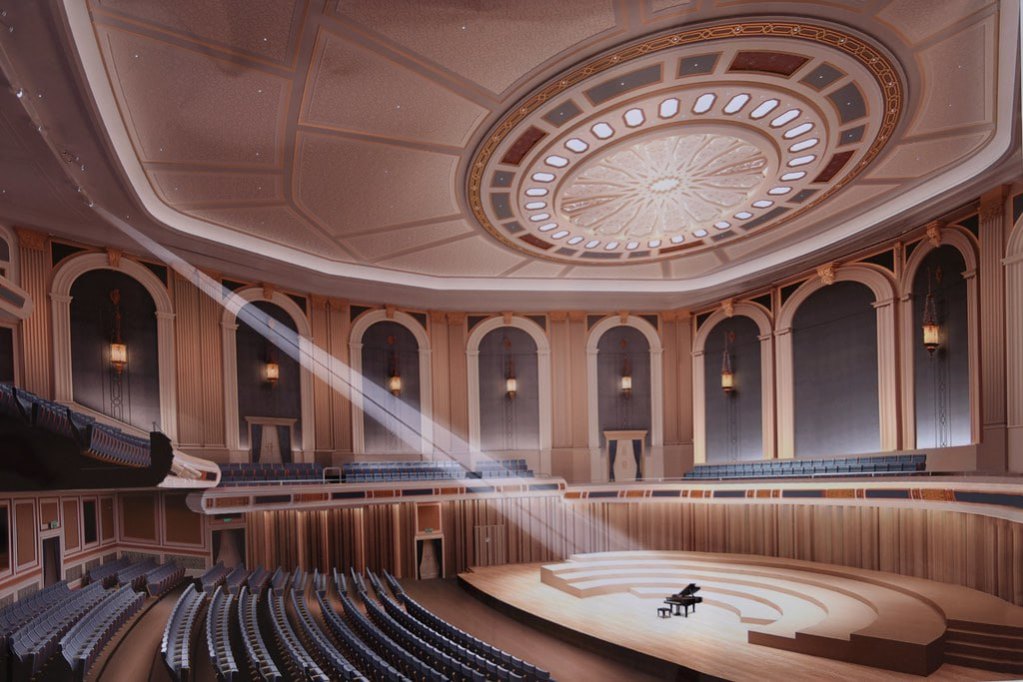
A National Theater has been officially established in the capital of Tajikistan by presidential decree. The newly created institution will operate under the authority of President’s Executive Office. While a director has already been appointed, the theater does not yet have a permanent building.
The decree establishing the National Theater was signed on December 1. The Ministry of Finance has been instructed to secure funding from the state budget and other sources, while the State Committee on Investment and State-owned Property Management (GosKomInvest) has been tasked with providing temporary premises until construction of the theater’s building is completed.
Construction of the National Theater building began in 2015 but was suspended in 2017 due to a lack of funding. Work resumed only in July 2024.
Following the announcement, Asia-Plus sought information on the theater’s artistic staff, but neither the Ministry of Culture nor the Executive Office of the President provided details. Calls to the GosKomInvest regarding the location of the temporary venue also went unanswered.
Currently, Tajikistan has 18 professional theaters: one in the Gorno-Badakhshan Autonomous Region (GBAO), seven in Sughd province, four in Khatlon province, and six in the city of Dushanbe.
Who will lead the National Theater
On January 7, 2025, President Emomali Rahmon appointed Manouchehr Sharifzoda as Director of the National Theatre. Since 2020, he had served as Deputy Minister of Culture.
Sharifzoda, 48, is a graduate of the Tajik Institute of Arts and the Russian-Tajik (Slavic) University. He began his career in 1994 and has worked in education, management, and economics. From 2015 to 2020, he headed the Ayni State Academic Opera and Ballet Theater.
Sharifzoda declined to comment in detail on the theater’s structure and future plans, promising to share information at a later date.
Reaction from theater professionals
Representatives of the Dushanbe-based drama theaters have voiced concerns over possible consolidation.
Abdukarim Mashrab, head of the Lohouti State Academic Drama Theater, said he had not received official information about the creation of the National Theater. However, he noted that celebrations marking the 35th anniversary of Tajikistan’s independence are expected to take place in the new building.
“At present, there are no orders to demolish the Lohouti Theater. It remains unclear whether we will stay in our current building or move to the National Theater. There were earlier discussions about housing several theaters in the new complex, but for now we are only involved in preparations for the anniversary celebrations,” Mashrab said.
He added that he has no information about whether his theater’s troupe would be divided following the establishment of the National Theatre.
People’s Artist of Tajikistan Qurbon Sobir also said he was unaware of the theater’s creation but expressed concern over rumors of merging all Dushanbe theatres into a single building.
“We welcome the creation of the National Theater and hope it will foster the development of theatrical arts and promote our culture domestically and internationally. However, consolidating all capital theatres in one building would be a mistake and could lead to stagnation,” he said.
Five years earlier, People’s Artist of Tajikistan Ubaydullo Rajabov voiced similar concerns, warning that such consolidation would eliminate creative competition and hinder artistic progress.
Mandate of the National Theater
Asia-Plus obtained a copy of the National Theater’s charter. Under the document, the theatre’s director is appointed and dismissed by the president, while deputy directors and the chief accountant are appointed by President’s Executive Office. Other staff members are hired by the theater’s management.
The charter outlines the theater’s mission, including preserving and developing professional artistic traditions, staging theatrical productions and concert programs, promoting cultural heritage, representing national theatre at home and abroad, training specialists, and ensuring public access to the arts.
Concerts and cultural events will also be held at the theater, with authorization granted exclusively by the Executive Office of the President.
What the National Theater building will look like
The National Theater is being built near the National Flag Park in Dushanbe. The project includes two underground and five above-ground floors, with a total height of 34.5 meters.
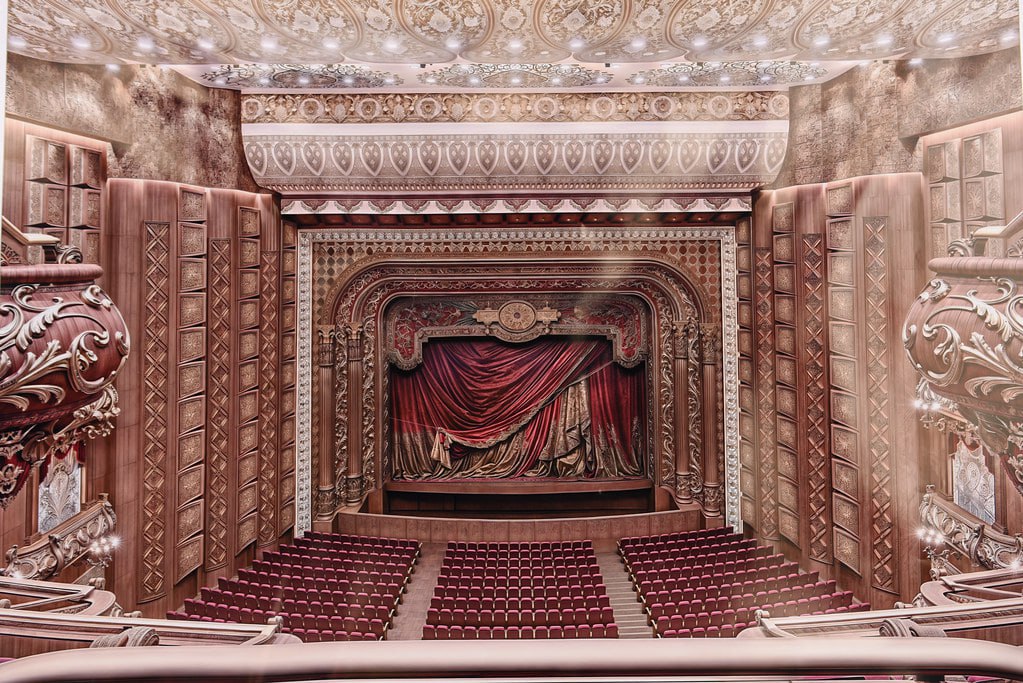
The building will house three large auditoriums with seating capacities of 2,500, 1,200, and 1,000, along with several smaller halls and service areas. The design includes an orchestra pit, side and rear stages, rehearsal halls, and training facilities.
Upper floors will accommodate art halls, workshops, and rehearsal spaces. An underground parking facility for nearly 250 vehicles is also planned. The total cost of construction is estimated at 680 million somonis.
Meanwhile, some experts say Tajikistan does not appear to have an abundance of theatergoers, nor does it need more theaters.
Thus, the 500-seat hall of Dushanbe’s Abulqosim Lohouti Academic Theater is reportedly often nearly empty. Only when school groups come, it is half full. It is a similar story at other theatres in Dushanbe.
Theater lovers say the end of state subsidies after the fall of the Soviet Union left drama troupes and art schools underfunded.
