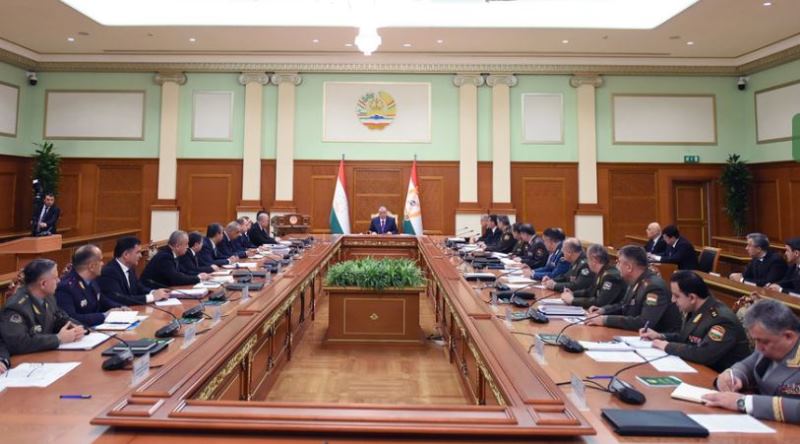
On February 19, a significant meeting of Tajikistan's Security Council was chaired by President Emomali Rahmon, who also serves as the Chairman of the Security Council.
The Tajik president’s official website says the session brought together permanent members of the Security Council, heads of law enforcement agencies, military leaders, representatives from various ministries and departments, and employees from the Security Council's Secretariat.
The meeting focused on reports from the heads of law enforcement and military bodies regarding their activities in 2025. In light of the complex and rapidly evolving global situation, President Rahmon issued specific directives aimed at strengthening the country's security apparatus. These included enhancing the security of the state and society, upholding the rule of law, combating crime, ensuring the readiness of the Armed Forces, and improving the living and service conditions of military and law enforcement personnel.
President Rahmon also addressed existing shortcomings within various security bodies, particularly with regard to official misconduct and violations of the law. He emphasized the need for decisive action to protect Tajikistan’s borders, combat terrorism and extremism, fight drug trafficking, and curb transnational organized crime.
Additionally, military leaders were instructed to bolster personnel training, focusing on proper selection, placement, and the development of expertise in modern equipment and technologies. The President stressed the importance of advancing Tajikistan's defense industry, enhancing cybersecurity, and fostering greater professionalism, patriotism, and national pride within the military and law enforcement sectors.
Following the discussions, several important decisions were made to address the issues raised during the meeting.