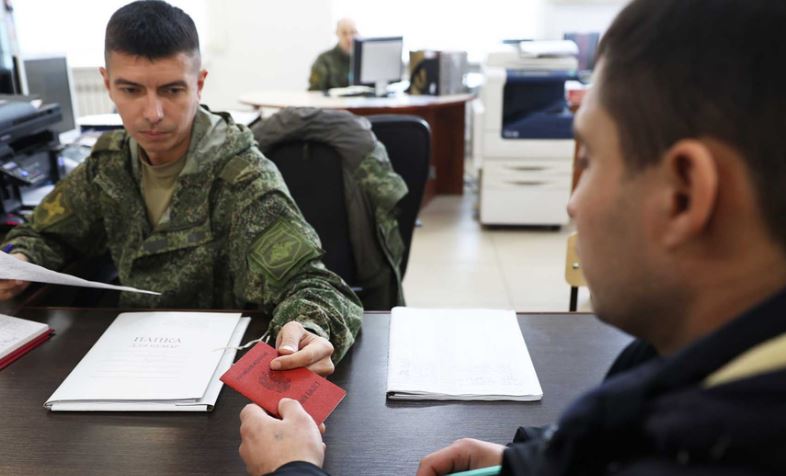
The State Duma (Russia’s lower chamber of parliament) has approved a bill in its second and third readings that will prevent the extradition of foreigners who have served in the Russian Armed Forces under contract.
The bill amends Article 464 of the Russian Criminal Procedure Code, which outlines the grounds for refusing extradition. The proposed amendment adds a provision that prohibits the extradition of foreigners who are or have been contracted military personnel in the Russian Armed Forces, Meduza reports.
The bill was submitted for consideration to the parliament on November 20, 2025, and was passed in the first reading on January 21. After final approval, it will be sent to the Federation Council and then to the president for signing.
Faridaily notes that the bill is "aimed at increasing the number of foreigners who may take part in the war against Ukraine on Russia's side."
The number of foreigners fighting in the Russian military remains unclear. Four years have passed since Russia's war in Ukraine began, and media reports have documented the presence of hundreds of people from Tajikistan in the conflict. However, the official authorities in Tajikistan state that none of their citizens have been punished for participating in the war.
Meanwhile, several individuals in other countries in the region have been convicted and sent to prison for their involvement in the war.
Tajikistan's Prosecutor-General, Habibullo Vohidzoda, explained on February 13 at a news conference in Dushanbe that Tajik citizens who also hold Russian citizenship are "obligated to fulfill military duties for Russia."
"According to Tajikistan's legislation, we are not allowed to initiate criminal proceedings against citizens who hold Russian citizenship and participated in this conflict under an agreement with Russia," said Vohidzoda.
He noted that if a person is a Tajik citizen and does not hold Russian citizenship but participates in the war against Ukraine, criminal charges will be filed. "In such cases, the provisions of the Tajik Criminal Code will apply. This is Article 401, Part 1, which covers illegal participation in armed conflicts abroad," he clarified.
The Prosecutor-General also mentioned that his office currently does not have official data on such cases. Vohidzoda made similar comments in the summer of 2025.
On January 12, Tajikistan's Interior Minister, Ramazon Rahimzoda, told reporters in Dushanbe that no Tajik citizen had been criminally prosecuted for participating in the war in Ukraine.
"We do not keep track of how many of our citizens are involved in the war in Ukraine, and we have no obligations regarding this matter," said Rahimzoda.
Over the past four years of the war, media outlets have reported thousands of Tajik nationals participating in the conflict, with some reports stating that the number of casualties among them could be in the hundreds. However, no official bodies have confirmed or denied these reports.
The latest news about the death of a Tajik national and the return of his body to his homeland appeared on February 12. The body of a 26-year-old Karomatullo Odinayev, who had gone to Russia for work and died in the war in Ukraine, was laid to rest in his native village of Basmand in the Vahdat jamoat of the Devashtich district in Sughd province.
In 2025, several other bodies of fallen Tajik nationals were brought back to Tajikistan and buried.