
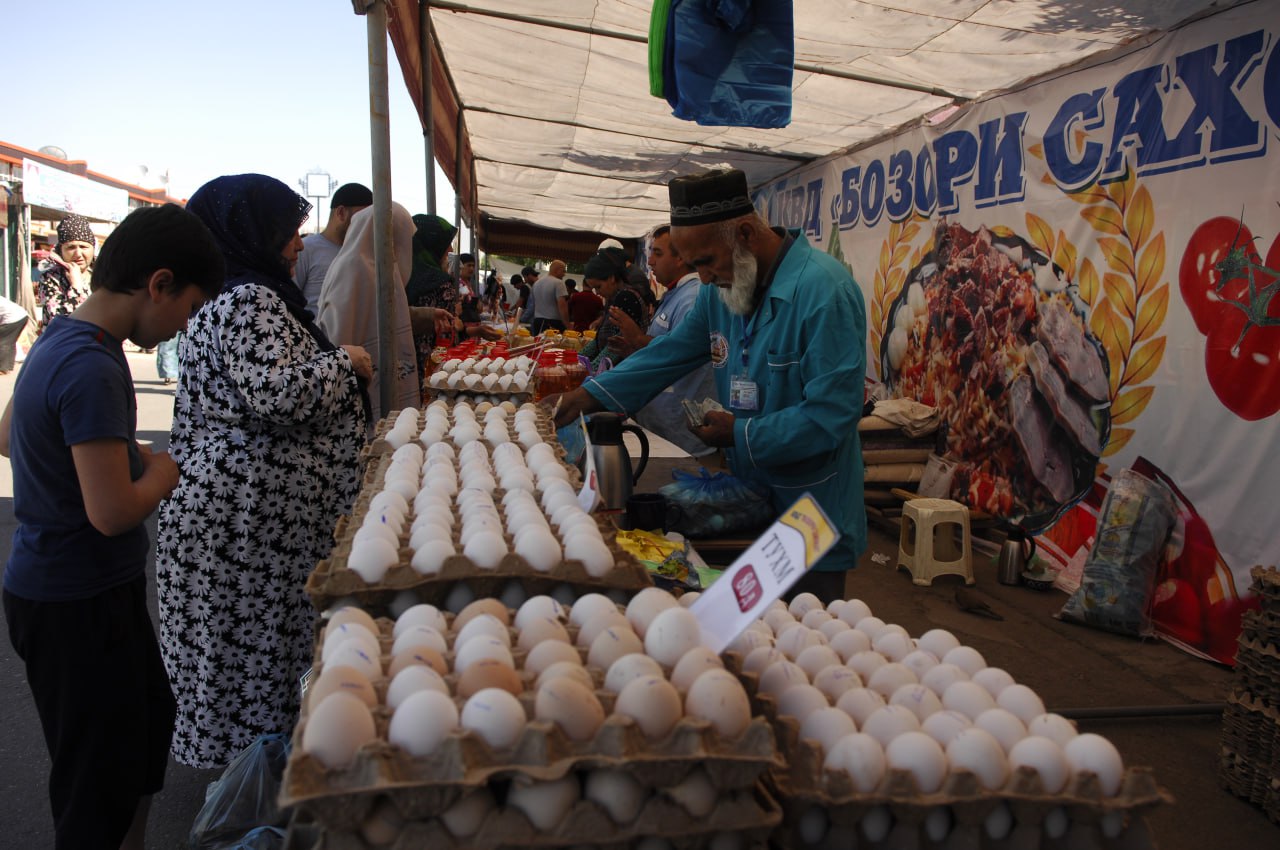
Food prices in Tajikistan are expected to rise by 3.8% in 2026, slightly above the global average, says a report from the Food and Agriculture Organization of the United Nations (FAO) covering 160 countries worldwide.
The FAO estimates that global food prices will increase by an average of 3.2%. However, in some countries, the growth rate will be significantly higher due to currency instability, inflationary pressures, and supply chain issues.
Against the backdrop of global trends, Tajikistan is showing a relatively moderate price increase. The predicted 3.8% growth is close to the regional average for Europe and Central Asia (4.2%) and remains significantly lower than in several neighboring countries.
For comparison, food inflation in 2026 is expected to reach 12.7% in Kazakhstan, 9.4% in Kyrgyzstan, 9.2% in Ukraine, 8.9% in Belarus, 8.2% in Georgia, 6.8% in Azerbaijan, 5.5% in Uzbekistan, 4.9% in Moldova, 4.6% in Russia, and 3.1% in Armenia.
The highest food price increase is anticipated in Iran, where the FAO predicts food inflation may reach 55.9% year-on-year. Iran’s currency depreciation and prolonged inflationary pressures have already pushed food inflation to extreme levels in recent years. The 2026 forecast suggests those pressures may persist.
Argentina (33.2%) and Turkiye (25.1%) also make the top three, with long-standing inflation and pressure on national currencies continuing to be key factors driving price hikes.
Food prices continue to be one of the most persistent cost pressures for households worldwide. According to the FAO report, grocery bills are expected to rise sharply in some countries in 2026, while remaining relatively stable in others. The report highlights that inflationary pressures are currently strongest in emerging and import-dependent economies.
Food inflation is influenced by a range of factors, including currency movements, commodity prices, trade disruptions, and domestic supply conditions. Countries facing currency depreciation or ongoing economic instability are likely to experience sharper increases in food costs, the FAO notes.
