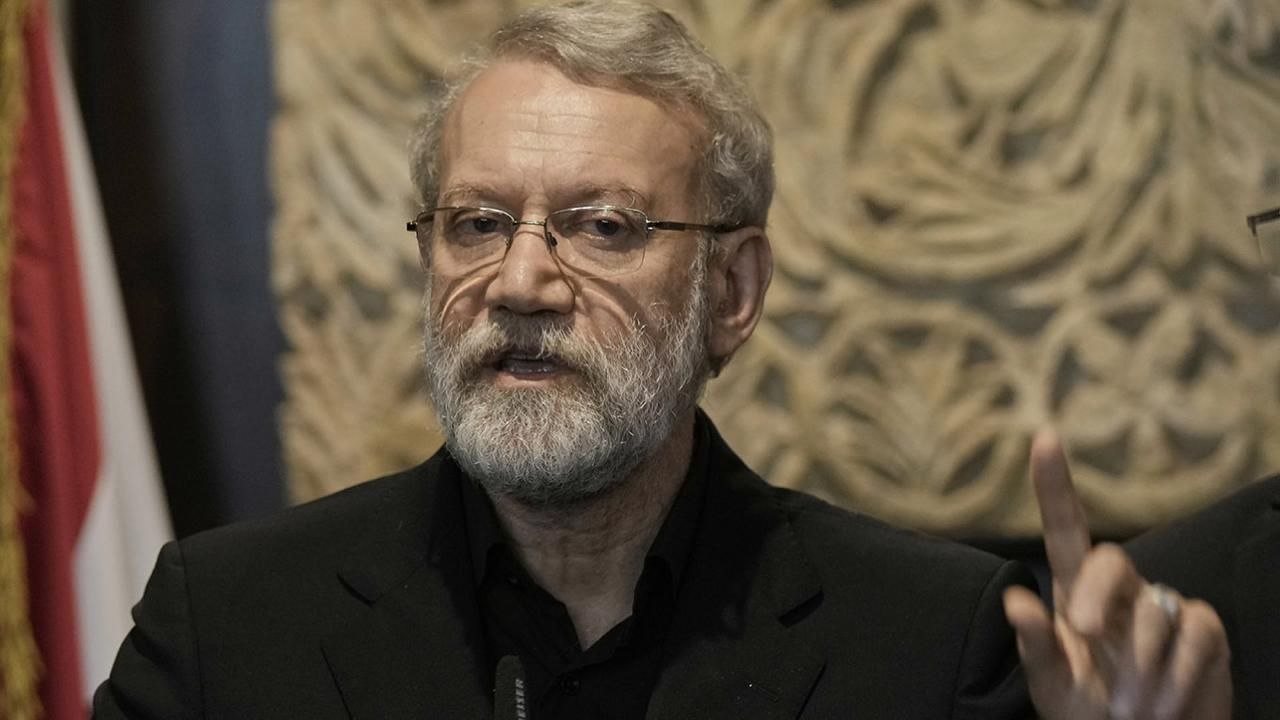
The BBC’s Russian Service reported yesterday that Iranian state-run media have confirmed the death of Ali Larijani, Secretary of the Supreme National Security Council. According to official reports, he was killed along with his son, another official, and several bodyguards.
According to the BBC’s Russian Service, the first report of Larijani’s killing came from Israeli Defense Minister Israel Katz, who said the operation was carried out overnight.
Tehran did not comment on the reports during the day but officially confirmed Larijani’s death by the evening.
The Israel Defense Forces reportedly also said that in a separate strike, Gholamreza Soleimani, commander of the paramilitary Basij organization, was killed. His death was later confirmed by the Islamic Revolutionary Guard Corps.
 ИЗОБРАЖЕНИЕ Gholamreza Solemani; photo: Tasnim news agency
According to Israeli media, the strike on Larijani targeted an apartment where he was reportedly hiding from potential attacks.
CNN, citing an Israeli military official, reports that following the death of Supreme Leader Ali Khamenei on February 28, Larijani had effectively become Iran’s leader and coordinated attacks against Israel and Gulf countries.
In August 2025, Iranian President Masoud Pezeshkian appointed Larijani as Secretary of the Supreme National Security Council and as the Supreme Leader’s representative in the body. Iranian media also described him as one of Khamenei’s closest allies.
Iranian media report that funerals for Ali Larijani and Gholamreza Soleimani, as well as for sailors of the vessel Dena sunk by the United States, will take place in Iran today.
Who was Ali Larijani
Ali Larijani was born in 1958 in the Iraqi city of Najaf into the family of an influential Iranian cleric, Ayatollah Hashemi Mirza Amoli, who had been exiled to Iraq by Shah Mohammad Reza Pahlavi.
After the 1979 Islamic Revolution, the family returned to Iran, where Larijani later earned a doctorate in philosophy.
He was among the early members of the Islamic Revolutionary Guard Corps and later headed the state broadcasting company IRIB for several years, exerting significant influence over the country’s information policy.
From 2005 to 2007, he served as Iran’s chief nuclear negotiator and defended the country’s right to enrich uranium. At the time, he compared European proposals to abandon nuclear fuel in exchange for economic incentives to “trading a pearl for a chocolate bar.”
Larijani also sought to build a political career. In 2005, he ran for president but did not win. In 2021 and 2024, he again attempted to take part in presidential elections but was disqualified both times by the Guardian Council.
His brother, Sadegh Larijani, is another influential figure in Iranian politics. He heads the Expediency Council, which acts as an arbiter in disputes between parliament and the Guardian Council.