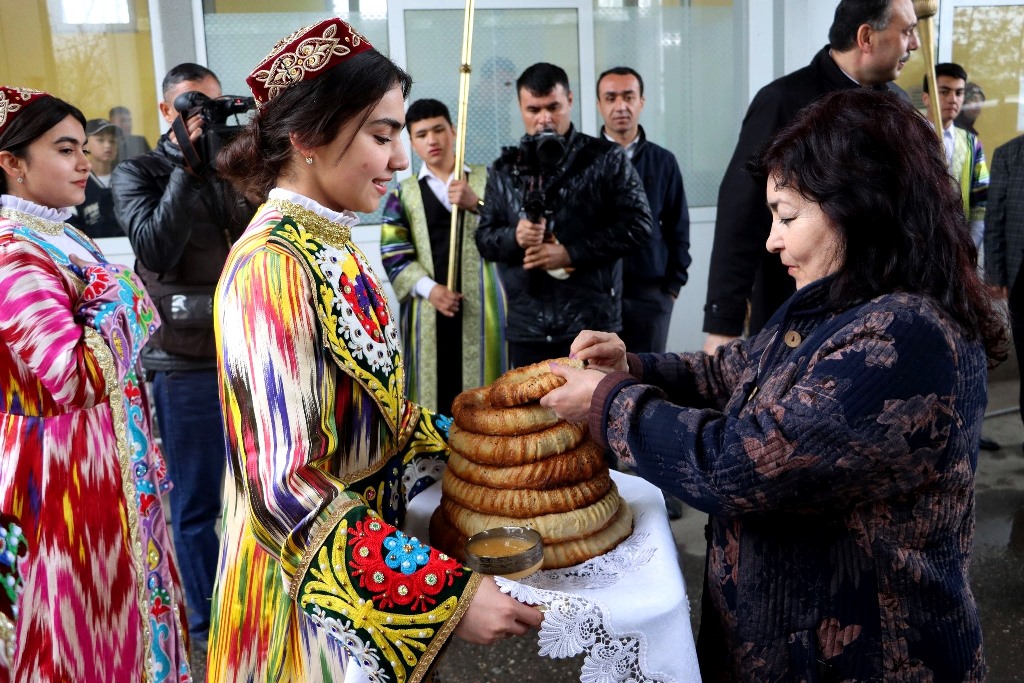
While Navrouz was previously viewed as a cultural heritage, today it is time to consider it as a strategic tourism asset, believes tourism expert Umedjon Saidov.
In many countries, national holidays have become true tourism brands: numerous visitors from abroad come to experience and participate in unique folk traditions.
But can the celebration of Navrouz in Tajikistan become such a tourist highlight? How can this truly national holiday be made attractive for foreign visitors? Experts provide their answers.
Number of Tourists Is Growing
In recent years, Tajikistan has been attracting increasing interest from foreign visitors. According to the Committee for Tourism Development of Tajikistan, from January to December 2025, the country was visited by 2,104.7 thousand foreign citizens for all purposes of travel. This figure is 19% higher than in 2024.
“Out of the total number, 1,784.4 thousand people were classified as tourists, including 1,634.5 thousand from CIS countries and 149.9 thousand from non-CIS countries,” said the Chairman of the Committee for Tourism Development of Tajikistan, Jamshed Jumakhonzoda, at a press conference in February this year.
The largest number of tourists arrived from Uzbekistan — 1,046,672 people. From Russia — 396,475 tourists, from Kyrgyzstan — 137,530 people, from Kazakhstan — 37,288 people, and from China — 33,178 people.
However, there is still little information about Tajikistan and its services on the internet for effective travel planning. This has been previously noted by the head of the State Tourism Committee and was also highlighted at a roundtable last autumn dedicated to promoting Russian-Tajik tourism.
The event pointed out the problem of the lack of high-quality online information about Tajikistan, its tour companies, and its overall tourism potential. Some websites may not function properly, or the information on them may be outdated, making it difficult to learn more about the country and plan a trip.
According to experts, the focus should be placed on unique tourism products—areas in which the country has particular strengths.
The Navrouz period presents an excellent opportunity to showcase Tajikistan to the world and highlight the distinctive features of how the holiday is celebrated in the country. Culinary master classes during Navruz could become a key highlight of tours, as one of the main symbols of the holiday is sumalak (sumanak).
Not Just a Holiday
“Today, the main question is not how to celebrate Navrouz, but how to ‘sell’ it to the world as a ready-made tourism product,” says Umedjon Saidov, General Director of Somon Travel and Ambassador for Tourism Development of Tajikistan.
The approach to promoting Navrouz and positioning it as a brand has already evolved, even compared to last year. According to the expert, the first steps are now supported by concrete figures and new formats.
For example, on March 23 this year, an organized group of about 90 tourists from Kazakhstan will arrive by train. For the local tourism market, this could become a landmark event.
“In fact, we are testing a new format—railway tourism. This is a more accessible segment that could open Tajikistan to a much wider audience,” Saidov explains.
According to him, if this model proves successful, it could lead to regular regional routes in the future, including trips to Samarkand during the tourist season.
The Problem Is Not Navruz — but Its “Packaging”
“Navrouz already has everything a modern tourist is looking for: culture, gastronomy, traditions, and atmosphere. But there is one nuance. We are not yet selling Navrouz as a product. We simply celebrate it. However, the key task is to turn it into a clear and marketable offering.
According to market participants, organized tour packages increase a tourist’s average spending by 20–40%, as they include more services and experiences. We need to move from isolated events to a comprehensive offer—from arrival to departure,” Saidov says.
In his view, the country needs to shift from fragmented events to ready-made tour packages, where visitors receive a complete experience covering every stage of their stay.
The expert emphasizes that a tourist’s first impression is formed within the first hours. Therefore, it is proposed to organize cultural programs already at railway stations, featuring performers and elements of national culture.
“Last year, this approach for Iranian tourists not only increased their satisfaction but also encouraged them to share their experiences on social media,” Umedjon Saidov notes.
The Whole Country as One Stage
Today, different regions offer various formats of celebration, which is an advantage but requires coordination. Experts note that tourists spend on average 3–5 days in the country, and it is crucial to showcase maximum diversity within this period. Synchronizing events and routes can extend the length of stay, increase tourist spending, and distribute visitor flows more evenly across regions.
“A key trend in recent years is the shift toward experiential tourism. According to international estimates, up to 60% of tourists are willing to pay more for interactive experiences rather than standard excursions. Navrouz is perfectly suited to this format:
· participation in preparing sumanak;
· traditional games;
· national clothing;
· family-oriented activities.
Today’s tourist seeks emotions, not just attractions,” the expert emphasizes.
Social media also plays an important role in current conditions. According to tour operators, publications by international bloggers about Tajikistan have already garnered 20 million views. There is a need to further develop promotion on platforms such as TikTok and YouTube.
This trend is already reflected in the country’s economy. Data shows that hotel occupancy rates in the capital can reach 80–100%, while passenger traffic, as well as revenues in the restaurant and transport sectors, continue to grow.
According to expert estimates, with a systematic approach, Navrouz could increase tourist inflows by 10–20% during the spring season.
Navrouz Pass, Fixed Tour Packages, and Night Markets
Among the initiatives currently under discussion are:
· tourist trains under the Navruz Railway Package;
· a unified ticket (Navruz Pass);
· development of the nighttime economy;
· positioning Dushanbe as the center of the celebrations;
· active international promotion.
According to experts, Tajikistan’s key advantage is that there is no need to artificially create anything.
“Navrouz already exists as a strong cultural product. Our task is to better organize it, package it, and present it to the world. If this approach is implemented, the country has every chance to establish itself as the center of spring tourism in Central Asia, with sustainable growth in tourist flows and industry revenues,” says Umedjon Saidov.
It is also important to consider Navrouz as a standardized product in the form of fixed tour packages such as “Navrouz Week,” similar to the city pass systems in Europe. This would allow visitors to use transport, visit museums, and attend various events. Such packages could be sold through international platforms, meaning it would go beyond simply “including Navrouz in tours.”
Tourists could take part in traditional rituals, cook sumanak, try on national clothing, and create ornaments with local craftsmen, experiencing Navrouz rather than just observing it.
In the evenings, visitors could explore night markets, attend gastronomic festivals, while younger audiences could take part in dedicated festivals and even digital content-driven challenges.
Special attention should also be given to launching a Navrouz Hospitality Program for guides, drivers, and restaurant staff—training aimed at improving service quality.
“If Navrouz was previously viewed as cultural heritage, today it should be seen as a strategic tourism asset. With proper coordination between the state and business, Tajikistan can become the main center of Navrouz celebrations in Central Asia and one of the key spring tourism destinations in Eurasia,” Umedjon Saidov concluded.