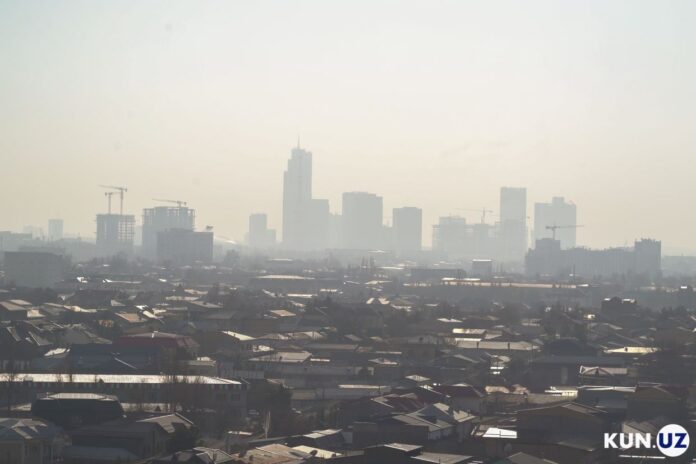
In Uzbekistan, unsatisfactory air quality will be the basis for a decision to transfer civil servants to remote work. In case of severe air pollution, government institutions will change their work schedules or switch to remote work to reduce the burden on cities and protect the health of staff, reports Podrobno.uz citing the presidential decree “On measures for the implementation of the National Project ‘Clean Air’, aimed at improving the quality of atmospheric air”.
Additionally, an emergency alert system for citizens will be introduced in the country. Within a month, a mechanism for sending alerts via SMS, media, and digital channels will be developed to inform the population about declining air quality and ecological risks.
Restrictions will also affect educational institutions. In adverse situations, outdoor classes in schools and kindergartens will be canceled, offering alternatives indoors. Recommendations will also be given to limit outdoor activities, especially for children, the elderly, and those with chronic illnesses.
Medical institutions will prepare special recommendations for the most vulnerable groups of the population, which will include advice on self-isolation until the ecological situation normalizes.
Moreover, during periods of severe pollution, industry and energy sectors will switch to a softer mode of operation. This may include reducing the burning of fuel oil or even halting emissions at large enterprises. Construction will be restricted, and road services will intensify efforts to combat dust using watering systems and other technologies.
All these measures, from remote work to restrictions on industrial facilities, will be consolidated into a single regulatory act. It is expected that the document, linking air quality with mandatory actions for all government bodies, will be submitted for consideration by December 30, 2026.
Furthermore, according to the decree of the head of state, starting April 1, 2026, a permanent moratorium on the creation of new industrial zones will be introduced in Tashkent, except for areas designated for service and financial activities. By May 1, 2026, enterprises involved in the production of thermal and electrical energy in the capital and surrounding areas must install automatic stations for monitoring emissions into the atmosphere, and integrate the data with the Unified Geoinformation Database of the Committee for Ecology, writes Ferghana.
From July 1, owners of greenhouses will be prohibited from using boilers without compliance certificates and combustion process control.
By the end of 2026, as part of the “Ecological Transport” program, Tashkent will be divided into “red”, “yellow”, and “green” zones. Drivers will begin to receive stickers to confirm the ecological category of their vehicles. From May 1, Tashkent will start initiatives “Car-Free Day” and “Car-Free Week,” during which officials will be prohibited from using official vehicles on certain days. Starting August 1, a program will be introduced to reimburse part of the interest on car loans for citizens and companies that have traded in old cars through the trade-in program.
There are also plans to create dendrological parks near the Institute of Nuclear Physics and Green University, as well as a green park on the site of the former oncology hospital in Chilanzar. Fountains and four artificial lakes will be constructed in the city and universities.
By October 1, 2027, phased implementation of technologies for artificial rain and wind generation based on foreign experience will begin.
Requirements for developers are also being tightened, including the mandatory consideration of the “wind rose” during environmental expertise.