In 2026, the authorities of Tajikistan expect to maintain high economic growth through investments, energy, gold exports, and remittances from migrants, despite warnings about external risks and potential slowdowns.
The main focus of the latest address by President Emomali Rahmon to the Parliament of Tajikistan was the continuation of sustainable economic growth and the achievement of a new level of prosperity for citizens.
The President noted that over the past ten years, the country’s GDP has increased 3.4 times, with an average annual growth rate of 7.6%, and in 2025 the economy grew by 8.4%.
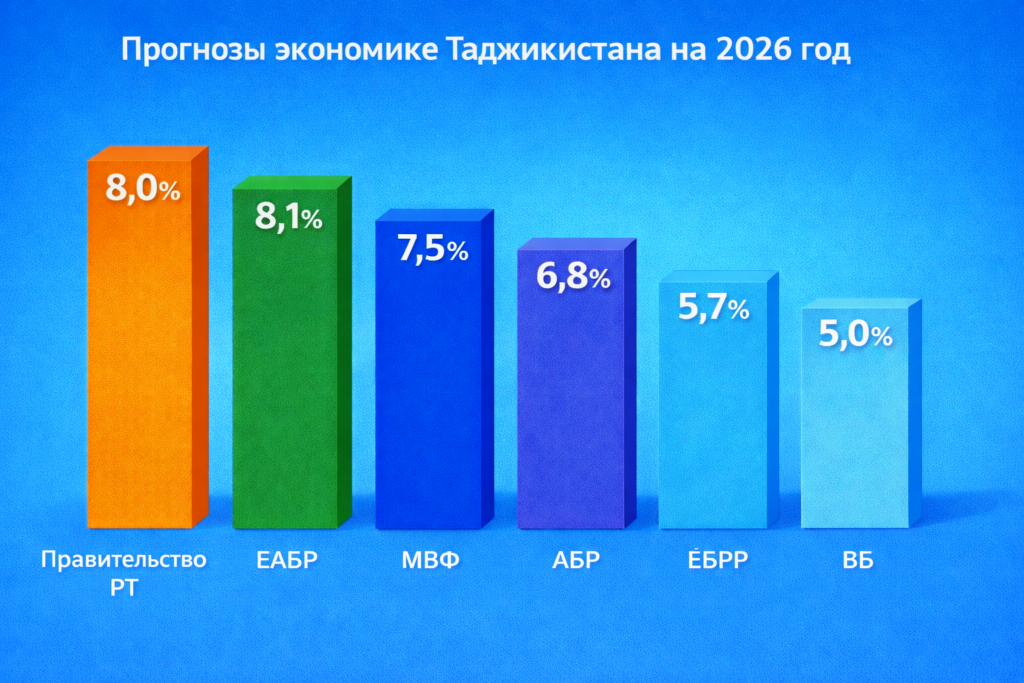
For 2026, an ambitious goal has been set to maintain growth at no less than 8%, which indicates the intention to continue the strategic course towards strengthening economic resilience.
Through Investments and Innovative Solutions
The key areas of the economic strategy for 2026 outlined by the President of Tajikistan include industrialization, attracting foreign investments, developing energy and infrastructure, as well as implementing digitalization and artificial intelligence technologies. All these directions aim to expand the production base, modernize infrastructure, and enhance the technological readiness of the economy.
Emomali Rahmon emphasized the importance of supporting the private sector and stimulating export-oriented production. These two factors should become the main drivers of economic growth in the country, helping to ensure resilience and mitigate external economic shocks, such as fluctuations in commodity prices or changes in migration policy.
Partners’ Forecasts
The Eurasian Development Bank (EDB) supports the optimism of the country’s leadership, forecasting Tajikistan’s economic growth at 8.1% in 2026, the same as in the previous year.
According to EDB analysts, the key growth factors are energy, manufacturing, precious metal exports, and stable remittances from labor migrants.
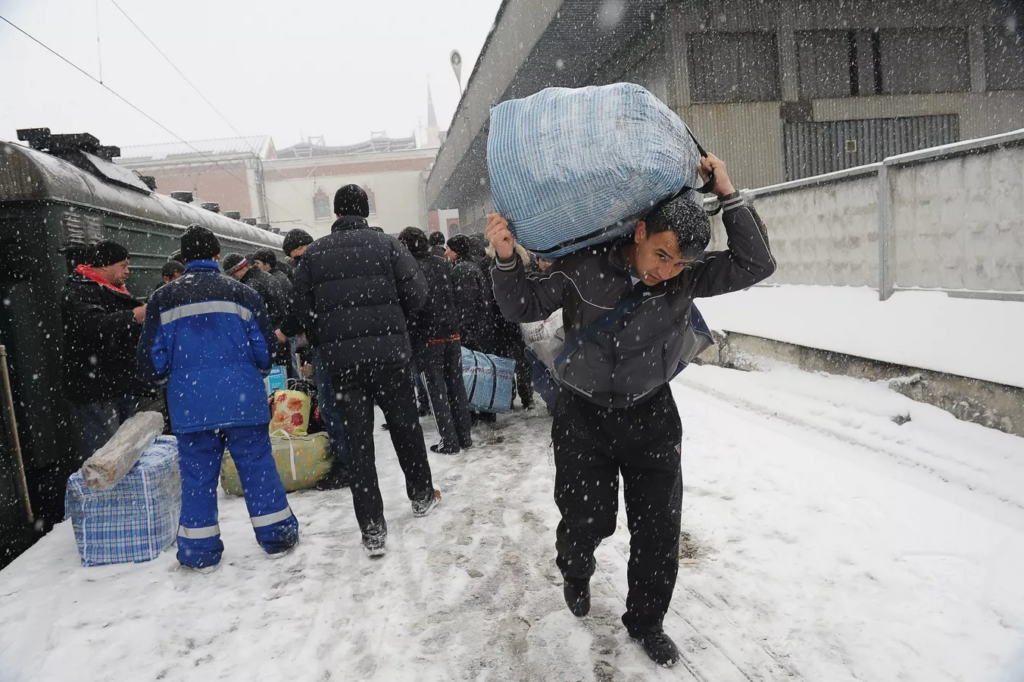
However, despite high growth rates, the EDB forecast notes dependence on external factors, such as commodity prices and the stability of migration flows. Experts from this organization recommend diversifying the economy to reduce its vulnerability to external fluctuations.
The World Bank (WB) in its forecast for the coming years warns of a slowdown in growth to 5% in 2026, which, according to the economists of this organization, is closer to the country’s potential level. The slowdown is linked to the normalization of remittance volumes, which are an important source of consumption growth in Tajikistan.
Despite this, WB analysts expect that support for the economy will come from the services sector and gold exports, while inflation remains within target ranges.
The Asian Development Bank (ADB) also predicts a moderate slowdown in Tajikistan’s economic growth. ADB forecasts for 2026 suggest growth at 6.8%, attributed to a decrease in remittances and a slowdown in domestic demand.
At the same time, economists note that construction, mining, and exports remain the main drivers of growth, although additional diversification is required.
The International Monetary Fund (IMF) notes the “impressive growth” of Tajikistan’s economy in recent years, but emphasizes the need for structural reforms to maintain growth resilience in the long term. In particular, the Fund highlights the importance of diversifying the economy, improving social infrastructure, and raising living standards.
The projected growth for 2026 is about 7.5%, which places Tajikistan among the leaders in economic growth in Central Asia.
The European Bank for Reconstruction and Development (EBRD) expects Tajikistan’s economy to grow at 5.7% in 2026. This growth will be supported by high gold prices, continued investments in infrastructure, and stable remittances.
Despite positive trends, the risk of declining remittance inflows remains an important factor that could impact economic dynamics.
Overall, the economy is expected to continue showing moderate growth, which will contribute to further strengthening of key sectors such as agriculture, transport, and industry.
Main Challenges and Risks
Despite positive forecasts, development partners expect that Tajikistan’s economy will face a number of challenges. Among the main risk factors, analysts highlight:
– dependence on external factors, including remittances from labor migrants;
– fluctuations in migration policy and the volatility of the global economic situation may significantly impact the economy;
– low diversification of the economy and significant dependence on the export of raw materials and metal mining. This leaves the country vulnerable to changes in international markets;
– vulnerability of the agricultural sector to climate change and natural disasters. The reduction of agricultural resilience may affect growth rates, especially in the context of climate change.
Future Strategy
The key directions for Tajikistan, according to international analysts, remain:
– diversification of the economy, including the development of the processing industry, agriculture, and high-tech sectors;
– implementation of large projects, such as the construction of the Rogun Hydropower Plant, will play a crucial role in ensuring the country’s energy independence;
– sustainable infrastructure development, including modernization of the energy grid and transport infrastructure, which is critically important for maintaining growth and creating new jobs;
– stimulating private investments and improving the business climate. Attracting foreign investments into innovative projects and supporting small and medium-sized enterprises should be a priority for the government;
– human capital development, including investments in education, healthcare, and vocational training, which will help increase labor productivity and create conditions for innovative growth.
Thus, experts conclude that Tajikistan’s economy in 2026 and the coming years will remain on a growth path, although the pace of this growth may slow somewhat due to declining remittances and the need for structural reforms.
It is important to continue efforts to diversify the economy, attract investments, and improve the quality of life for citizens to ensure sustainable and long-term development. It is also essential to consider external risks and prepare for possible economic challenges to minimize their impact on the country’s stability.
What About the Neighbors?
Forecasts from international financial institutions for the economic growth of Central Asian countries in the coming years suggest a stable dynamic, although growth rates vary depending on the internal and external situation in each country.
Kazakhstan
The economy of Kazakhstan is expected to continue demonstrating moderate growth. The expected GDP growth will be 5.5% in 2026 and will further slow to 4.5% in 2027. The reasons for this slowdown include stabilization of oil production, declining global hydrocarbon prices, and weakening export revenues.
However, domestic demand and investments in various sectors of the economy, including non-raw material exports, remain important growth drivers.
In the long term, Kazakhstan’s economy is expected to rely primarily on internal sources of growth, such as investment potential and regional development.
Kyrgyzstan
Kyrgyzstan is expected to have the highest growth among Central Asian countries, with a projected GDP increase of 9.3% in 2026. This growth is driven by strong domestic demand supported by active consumer crediting and stable remittances.
Significant impact on economic growth is also made by state investment activity aimed at infrastructure development, especially in transport, energy, and water supply. In the future, as dynamics normalize, growth rates may decrease to 7.5% in 2027–2028.
Uzbekistan
In Uzbekistan, economic growth is forecasted at 6.8% in 2026, with a gradual slowdown to 6.4% in 2027 and 6.3% in 2028.
The country’s economy will be supported by stable domestic demand, high investment activity, and favorable external trade conditions, including rising gold prices.
Key factors supporting growth include structural reforms aimed at diversifying the economy and stimulating the private sector. However, tighter monetary conditions may slow consumer activity, leading to a gradual decrease in growth rates.
Turkmenistan
Growth forecasts for Turkmenistan’s economy in 2026 show a variety of estimates. The IMF expects a moderate GDP increase of 2.3% per year, while the EBRD predicts a higher growth rate of 6.3%.
According to the UN, the GDP could grow by 6%, and according to the government program, Turkmenistan aims for 6.3%.
Key growth drivers remain energy, infrastructure projects, and agriculture. Inflation forecasts for 2026 range from 5% to 8%, while government debt is expected to decrease to 2.9% of GDP, according to Fitch.
General Trends in the Region
The region as a whole maintains high growth rates, but there are several risks affecting economic development. External factors, such as changes in oil and gold prices, as well as fluctuations in global economies, will influence the stability of growth.
Additionally, the slowdown in the Russian economy and the reduction in remittances from labor migrants may have a dampening effect on consumer demand growth in the countries of the region.
At the same time, internal factors, such as investments in infrastructure and the development of production capacities, remain the main growth drivers.
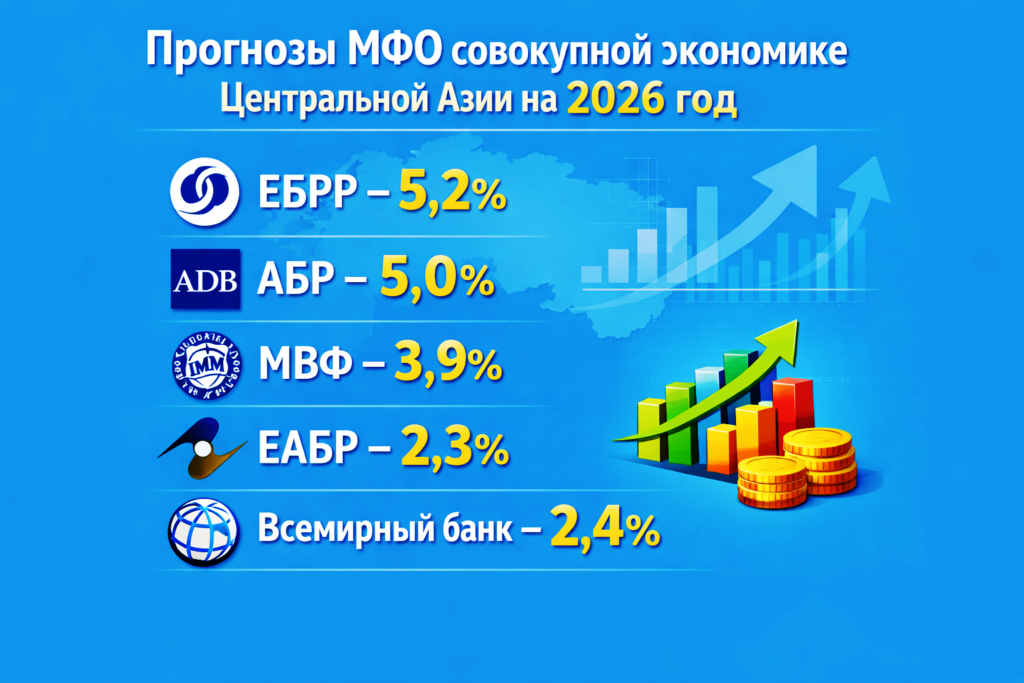
Thus, according to international specialists, Central Asia will continue to demonstrate positive economic dynamics in 2026–2028, but growth rates will vary depending on factors such as dependence on external conditions, the pace of structural reforms, and domestic demand.
Results of 2025
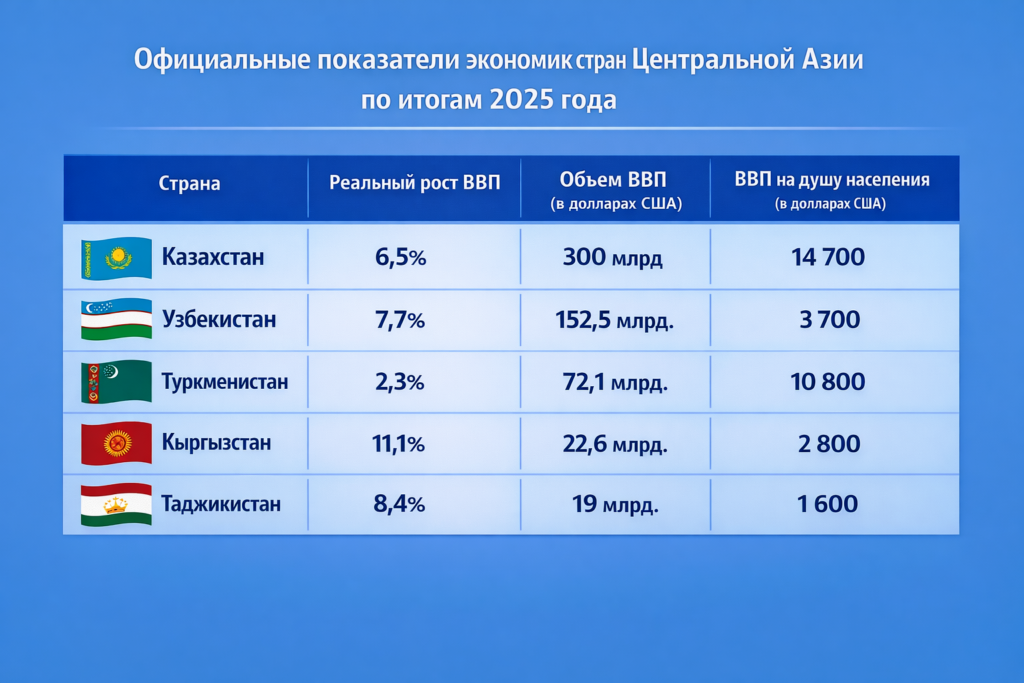
According to national statistical agencies of the countries in the region (for Turkmenistan, data from the IMF), the highest growth in 2025 was demonstrated by Kyrgyzstan’s economy (11.1%), while the most modest growth was in Turkmenistan (2.3%).
Tajikistan ranks second (8.4%), ahead of Uzbekistan (7.7%) and Kazakhstan (6.5%). In terms of economic volume and GDP per capita, Tajikistan is last in the region.
Kazakhstan remains the largest economy ($300 billion). It is followed by Uzbekistan ($152.5 billion) and Turkmenistan ($72.1 billion). Kyrgyzstan ($22.6 billion) and Tajikistan ($19 billion) close out the final table.